

When Your Furnace Quits: A Fishers Homeowner’s Guide
Service for gas furnaces in fishers, in is essential when your heating system fails during a cold snap and you need help to restore warmth to your home. When your furnace stops working in the middle of winter, every minute without heat feels like an eternity—especially when temperatures drop below freezing and your family’s comfort and safety are on the line.
If you need furnace service in Fishers, IN:
- Check your thermostat – Make sure it’s set to “heat” and the temperature is above your current room temperature
- Inspect your circuit breaker – A tripped breaker might be the quick fix you need
- Look at your air filter – A clogged filter can cause your furnace to shut down
- Listen and smell – Strange noises, rotten egg odors, or burning smells mean you need professional help
- Call a licensed HVAC technician – If basic troubleshooting doesn’t work, don’t wait
For comprehensive heating solutions, explore our Gas Furnaces services in Fishers, IN, or schedule furnace repair to get your system running again.
Furnace failures can happen unexpectedly, often during the coldest parts of the year. A broken furnace isn’t just uncomfortable—it’s a safety concern. Without heat, your pipes can freeze and burst, carbon monoxide risks increase if your system is malfunctioning, and vulnerable family members like children and seniors are at risk.
Fishers winters can be brutal, with average lows in the teens and twenties. Your gas furnace is your home’s first line of defense against the cold, and when it stops working, you need someone who can diagnose the problem correctly. That’s where knowing what to look for and who to call makes all the difference.
As Jeff Rich II at Star Heating, Cooling & Plumbing, I’ve spent years helping families restore heat when they need it most, and I’ve seen how critical reliable service is for gas furnaces in fishers, in. Growing up in the trade and working alongside my family taught me that solving heating problems isn’t just about technical skills—it’s about understanding what’s at stake for the people we serve.
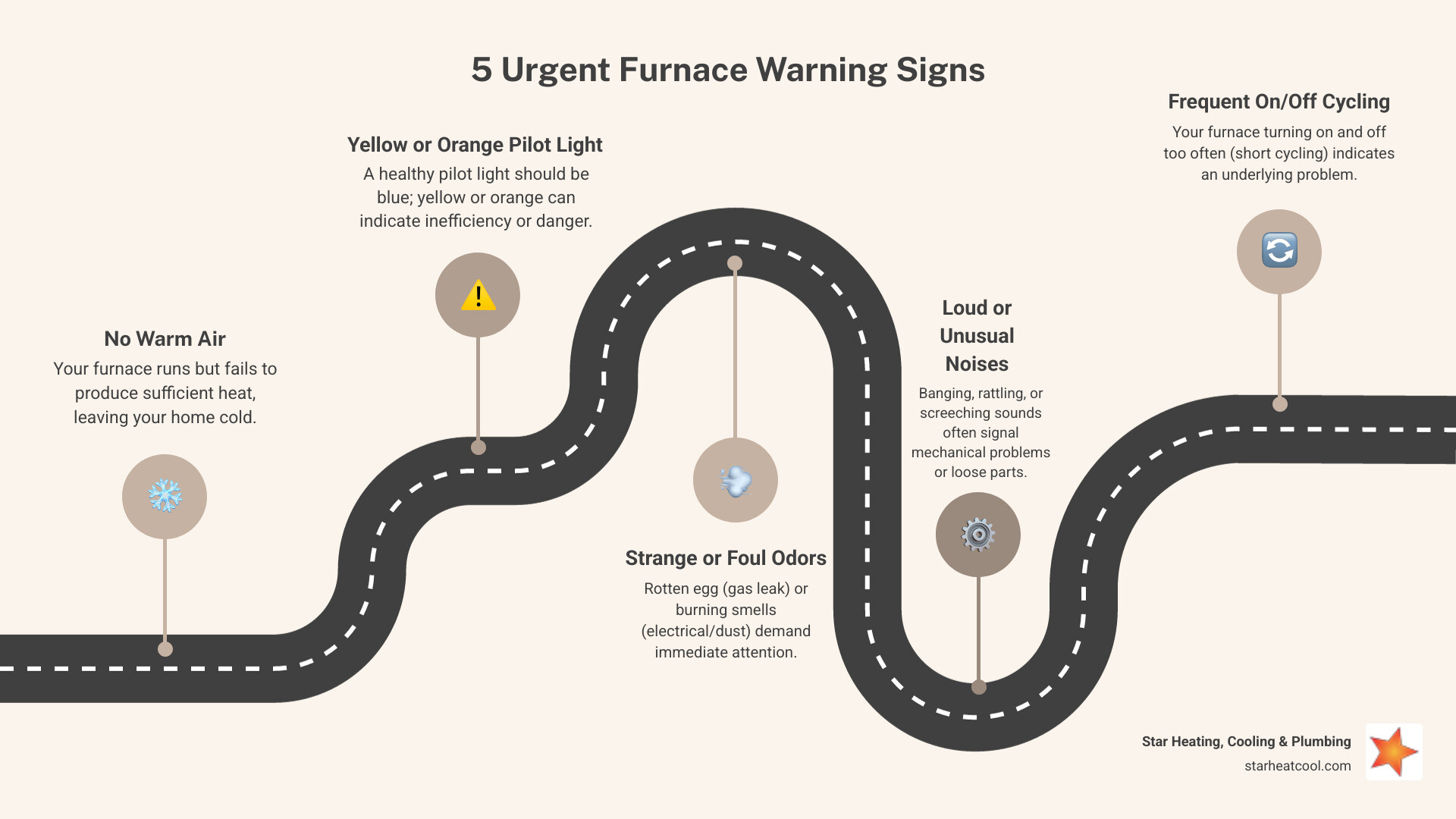
Signs Your Gas Furnace Needs Repair
When your furnace starts acting up, it’s not just an inconvenience; it can be a warning sign that something serious is brewing. Knowing these indicators can help you seek assistance, potentially preventing a complete system breakdown or, more importantly, ensuring the safety of your household. We believe in empowering homeowners with the knowledge to recognize these critical signs.
Here are some signs that your gas furnace in Fishers, IN, needs professional attention:
- No Warm Air From Vents: This is perhaps the most obvious sign. If your furnace is running but the air coming out of your vents is cold or barely warm, your heating element or another critical component might be failing. This could be due to a thermostat issue, a clogged filter, or a more serious mechanical problem.
- Yellow or Orange Pilot Light: A healthy pilot light should always be blue. If you notice a yellow or orange flame, it could indicate incomplete combustion, which is a serious safety concern. This often suggests a lack of oxygen reaching the burner, potentially leading to the production of dangerous carbon monoxide. This is one of those signs that you should never ignore and always leave to the professionals. Schedule furnace repairs if you notice a yellow pilot light.
- Rotten Egg or Burning Smell: While a slight burning smell when you first turn on your furnace for the season can be normal (as dust burns off), a persistent rotten egg smell is a strong indicator of a gas leak. This odor is added to natural gas to make leaks detectable. If you smell gas, turn off your furnace, open windows, and leave your home. Electrical odors or a strong burning smell could also signal an overheating component or electrical issue.
- Loud Banging, Rattling, or Squealing Noises: Furnaces are generally quiet. Any unusual or excessively loud noises—such as banging, rattling, squealing, or grinding—are red flags. Banging sounds might indicate issues with the burner or ducts, while rattling could point to loose parts. A high-pitched squeal often suggests a failing blower motor or belt. Ignoring these noises can lead to more extensive damage down the line.
- Frequent Cycling (Short Cycling): If your furnace turns on and off frequently, running only for short bursts, it’s known as short cycling. This can be caused by a variety of issues, including an oversized furnace, a clogged air filter, or a malfunctioning thermostat. Short cycling not only wastes energy but also puts excessive wear and tear on your system, shortening its lifespan.
- Carbon Monoxide Detector Alarms: Your carbon monoxide detector is a life-saving device. If it goes off, take it seriously. Carbon monoxide is an odorless, colorless gas that can be deadly. A malfunctioning furnace is a common source of CO leaks. If your detector sounds, evacuate your home and call for professional help.
- Increased Dust in Your Home: While not as dramatic as other signs, an unusual increase in dust could indicate issues with your furnace’s filtration or ductwork. A dirty filter or leaky ducts can reduce your furnace’s ability to clean the air, leading to more dust circulation.
- Thermostat Malfunctions: If your thermostat isn’t accurately reading the temperature, or if you’re constantly adjusting it to achieve comfort, it might be faulty. A malfunctioning thermostat can lead to inefficient heating and an uncomfortable home.
For more detailed information on these critical indicators, you can refer to our guides on signs your furnace needs repair and what are signs that your furnace is not working.
Recognizing Dangerous Furnace Smells
Our sense of smell is a powerful warning system, especially when it comes to potential furnace problems. While some smells are benign, others demand attention. Understanding the difference is key to your safety.
- Rotten Egg Smell: This is the most critical smell to recognize. Natural gas is odorless, but utility companies add a chemical called mercaptan to give it a distinct “rotten egg” or sulfur-like smell. If you detect this odor, it signals a potential gas leak. Turn off your furnace, evacuate your home, and contact your gas provider and a professional HVAC technician from outside your home. Never try to find the source yourself or turn on any electrical switches, as this could ignite the gas.
- Burning Dust Smell: It’s quite common to notice a burning dust smell when you first turn on your furnace for the season. This is usually harmless, as dust accumulated over the warmer months burns off the heating elements. The smell should dissipate within a few hours. If it persists, or if it’s unusually strong, it could indicate excessive dust buildup or a more serious issue.
- Electrical Odors: A smell resembling burning plastic or electrical wiring typically points to an electrical problem within your furnace. This could be an overheating motor, faulty wiring, or a short circuit. Electrical issues can pose a fire hazard and should be addressed by a professional.
- Metallic or Oily Smell: A metallic or oily smell could indicate an overheating mechanical component or an oil leak in oil-fired furnaces (though less common with gas furnaces, it’s good to be aware). This suggests a part is under stress and needs inspection.
For more insights into what these odors might mean, please visit our guide on why does my furnace smell star heating and cooling. When in doubt about any unusual furnace smell, always err on the side of caution and contact a qualified technician.
Interpreting Your Pilot Light
The pilot light is a small but mighty component in many older gas furnaces, responsible for igniting the main burner. Its color and behavior can tell you a lot about your furnace’s health and safety.
- Healthy Blue Flame: A pilot light should consistently burn with a strong, steady blue flame. This indicates proper combustion and a good air-to-fuel ratio, ensuring your furnace operates efficiently and safely.
- Yellow or Orange Flame: As mentioned earlier, a pilot light with a yellow or orange flame is a significant warning sign. This hue suggests incomplete combustion, often due to an insufficient oxygen supply or a dirty burner. Incomplete combustion can lead to the production of carbon monoxide, a highly toxic gas. If you observe a yellow or orange pilot light, it’s crucial to seek professional help. This is not a problem to ignore, as it poses a serious health hazard. For more information, refer to the safety tips from the state of Indiana regarding A pilot light with a yellow or orange flame.
- Flickering Pilot Light: A pilot light that flickers, struggles to stay lit, or goes out frequently can indicate issues with gas supply, a faulty thermocouple (a safety device that detects the pilot light), or a draft affecting the flame. A pilot light that keeps going out means your furnace isn’t reliably heating your home and needs attention.
If you’re experiencing issues with your pilot light, our resource on why is my furnace pilot light going out can provide further guidance. Furnace issues, especially those involving gas or combustion, should always be handled by experienced professionals.
The Risks of Delaying Furnace Repair in Cold Weather
When your furnace falters in the depths of a Fishers winter, it’s easy to hope the problem will resolve itself or to put off calling for help. However, delaying furnace repair, even for a short time, carries significant risks that extend beyond simple discomfort. We’ve seen the consequences of putting off essential heating system care, and we want to help you avoid them.
Here’s why taking action is crucial when your furnace needs repair:
- Safety Hazards: This is our top concern. A malfunctioning furnace, especially a gas unit, can pose serious safety threats. A cracked heat exchanger, for instance, can allow carbon monoxide to leak into your home. This odorless, colorless gas can be deadly. Electrical issues can lead to fire hazards. Ignoring these problems puts your family’s health and safety at risk.
- Worsening System Damage: What starts as a minor issue can escalate into a major, more expensive repair if left unaddressed. A small worn-out part, if not replaced, can cause strain on other components, leading to a domino effect of failures. For example, a struggling blower motor might eventually burn out completely, or a minor leak could damage sensitive electrical parts. Addressing problems early can save you from a complete system overhaul.
- Higher Energy Bills: A furnace that isn’t operating efficiently has to work harder to heat your home. This increased effort translates directly into higher energy consumption and, consequently, inflated utility bills. Delaying repair means you’re wasting precious resources during the coldest months.
- Risk of Frozen Pipes: In Fishers, winter temperatures often plummet below freezing. Without adequate heat, especially in basements, crawl spaces, or areas with exterior walls, your water pipes are at a high risk of freezing and bursting. A burst pipe can cause extensive water damage, mold growth, and a massive headache. This is a common and serious consequence we often see when furnaces fail in winter.
- Discomfort and Health Risks: Beyond the structural and financial risks, there’s the immediate impact on your family’s well-being. A cold home is uncomfortable and can exacerbate health conditions, particularly for children, the elderly, or individuals with respiratory issues. Prolonged exposure to cold can lead to hypothermia and other health complications.
Understanding what to do if your furnace goes out in winter is essential, but the best course of action is always to address furnace problems. Don’t let a small issue turn into a winter nightmare.
Your Guide to Service for Gas Furnaces in Fishers, IN
When your home’s warmth depends on it, service for gas furnaces in fishers, in is a necessity. We understand that a furnace breakdown isn’t something that can wait. Our goal is to provide reliable service to get your heating system back up and running. We pride ourselves on our professional repair process, ensuring that when our technicians arrive, they’re ready to diagnose and resolve a wide range of furnace issues with efficiency and expertise. For a comprehensive overview of our approach, check out our furnace repair fishers, in guide.
What to Do When Your Furnace Fails
Before you pick up the phone, there are a few simple troubleshooting steps you can take. Sometimes, the solution is easier than you think!
- Check Your Thermostat: Ensure your thermostat is set to “Heat” and the desired temperature is at least a few degrees higher than the current room temperature. Also, check the battery if it’s a digital model.
- Inspect Your Circuit Breaker: Head to your electrical panel and look for a tripped breaker labeled for your furnace. If it’s tripped, reset it. If it trips again, do not attempt to reset it repeatedly; this indicates an electrical problem that requires professional attention. You can learn more about this common issue on our page, why does my furnace keep tripping the breaker.
- Check the Furnace Switch: Many furnaces have a power switch located on or near the unit, often resembling a light switch. Ensure it’s in the “On” position. Sometimes, it gets accidentally flipped.
- Examine Your Air Filter: A clogged or dirty air filter can restrict airflow, causing your furnace to overheat and shut down as a safety measure. Replace it if it looks dirty. This is a simple,, solution.
- Clear Air Vents: Make sure all supply and return air vents in your home are open and not blocked by furniture, drapes, or other obstructions. Restricted airflow can impact performance.
- Check the Pilot Light (if applicable): If your furnace has a pilot light, check if it’s lit. If not, follow your manufacturer’s instructions for relighting it. If it won’t stay lit, call for service.
If these steps don’t resolve the issue, it’s time to call in the professionals. Attempting complex repairs yourself, especially with gas furnaces, can be dangerous and may void warranties.
Common Issues That Require an Expert for Gas Furnaces in Fishers, IN
While some furnace issues can be resolved with simple troubleshooting, many problems with gas furnaces in fishers, in require the expertise of a trained technician. These issues often involve intricate components, gas lines, or electrical systems, making DIY repairs unsafe and potentially damaging.
Here are some common furnace issues that we frequently resolve:
- Ignition Control Failure: Modern gas furnaces use an electronic ignition system or a pilot light. If either of these fails, your furnace won’t be able to ignite the gas to produce heat. Problems can stem from a faulty igniter, dirty pilot light, or issues with the gas valve.
- Blower Motor Problems: The blower motor is responsible for circulating heated air throughout your home. If it malfunctions, you might hear unusual noises, experience weak airflow, or find that no air is coming from your vents at all. A failing motor can often produce a rattling or squealing sound, which you can read more about in our article, why is my furnace making a rattling noise.
- Cracked Heat Exchanger: This is a very serious and dangerous issue. The heat exchanger separates the combustion gases from the air circulating in your home. A crack can allow carbon monoxide to leak into your living space. This problem requires attention and often necessitates replacing the heat exchanger or the entire furnace. Learn to recognize the signs of a cracked heat exchanger for your safety.
- Faulty Thermostat: While sometimes a simple battery change can fix it, a truly faulty thermostat can send incorrect signals to your furnace, leading to erratic heating, short cycling, or no heat at all.
- Clogged Condensate Drain: High-efficiency furnaces produce condensation during operation. If the condensate drain line becomes clogged, a safety switch will typically shut down the furnace to prevent water damage.
- Gas Valve Malfunctions: The gas valve controls the flow of gas to the burners. If it’s sticking, not opening, or not closing properly, it can lead to ignition problems or, more dangerously, gas leaks.
- Safety Control Failures: Furnaces are equipped with various safety controls (like limit switches and flame sensors) designed to prevent overheating or gas accumulation. If any of these fail, your furnace will likely shut down as a safety precaution. These components are critical for safe operation and require expert diagnosis and replacement.
When these issues arise, it’s reassuring to know that experienced technicians are equipped to handle them. We arrive with the tools and knowledge to diagnose these complex problems and provide lasting solutions.
The Importance of Professional Maintenance for Gas Furnaces in Fishers, IN
Preventative maintenance is the unsung hero of home comfort, especially for gas furnaces in fishers, in. Just like your car needs regular oil changes, your furnace benefits immensely from annual tune-ups. This isn’t just about avoiding breakdowns; it’s about optimizing performance, ensuring safety, and extending the life of your investment.
Here are the key benefits of professional furnace maintenance:
- Preventative Benefits: Regular maintenance helps identify small issues before they escalate into major repairs. Our technicians can spot worn-out parts, loose connections, or potential problem areas during a routine visit, addressing them proactively. This approach significantly reduces the likelihood of an unexpected breakdown during the coldest days of winter.
- Safety Inspections: A crucial part of furnace maintenance involves thorough safety checks. Our technicians inspect your gas lines, heat exchanger, and ventilation system for any signs of leaks or hazards, such as carbon monoxide. This ensures your furnace operates safely, giving you peace of mind.
- Improved Efficiency: A well-maintained furnace runs more efficiently. Over time, components can accumulate dirt, become misaligned, or lose calibration. A tune-up includes cleaning, lubrication, and adjustments that restore your furnace to its optimal operating condition, ensuring it uses less energy to produce the same amount of heat. This helps you manage energy usage.
- Extended System Lifespan: By keeping your furnace in peak condition, maintenance helps to reduce wear and tear on components. This proactive care can significantly extend the overall lifespan of your heating system, delaying the need for a replacement. We want you to get the most out of your furnace for as long as possible.
- Improved Comfort: An efficient furnace provides more consistent and reliable heating. You’ll experience fewer cold spots and a more evenly heated home, contributing to overall comfort throughout the heating season.
- Maintained Warranty: Many furnace manufacturers require proof of annual professional maintenance to keep your warranty valid. Neglecting maintenance could void your warranty, leaving you responsible for future repairs.
The Energy Star program also emphasizes the importance of regular furnace maintenance. Their Furnace repair and maintenance checklist highlights many of the same points, reinforcing that this is a best practice for all homeowners. To prepare your furnace for the demands of winter and ensure it operates reliably, consider scheduling a fishers, in furnace tune up star heating cooling with us. It’s an investment in your home’s comfort and safety.
Restoring Warmth and Peace of Mind in Your Fishers Home
As we’ve explored, recognizing the signs of a furnace in distress, understanding the risks of delay, and knowing when to call for professional service are all critical for homeowners in Fishers, IN. Your furnace is more than just a machine; it’s the heart of your home’s comfort and safety, especially when the Indiana winter bears down.
We’ve seen that issues like a yellow pilot light, the smell of rotten eggs, or a complete lack of warm air are not just inconveniences—they are calls for attention. Delaying action can lead to dangerous carbon monoxide exposure, burst pipes, and more extensive repairs down the road. While basic troubleshooting can sometimes resolve minor issues, many complex problems with gas furnaces in fishers, in require the skilled hand of an experienced technician.
That’s where we come in. At Star Heating, Cooling & Plumbing, we’re more than just a service provider; we’re your neighbors, committed to ensuring your home remains a haven of warmth and comfort. As a family-owned business, we’ve been serving the greater Indianapolis area since 1987, building a legacy of trust and reliability. We understand the unique heating challenges that Fishers residents face, and we approach every service call with “heartfelt comfort, brainy solutions, and courageous care.”
Our commitment to you means providing transparent service, professional and friendly technicians, and educating you on your options so you can make informed decisions about your home’s heating needs. As a Carrier Factory Authorized Dealer, we uphold the highest standards of service and expertise, ensuring that whether you need repair, maintenance, or even a new installation, you’re receiving top-tier service. This prestigious status is achieved by less than 3% of Carrier dealers nationally, reflecting our dedication to quality.
Don’t let a furnace problem leave you in the cold. For all your needs concerning gas furnaces fishers, in, we’re here to help. We are dedicated to restoring your warmth and peace of mind with reliable and expert service.
Whether you require installation, repair, or maintenance, our technicians will assist you with top-quality service at any time of the day or night. Take comfort in knowing your indoor air quality is the best it can be with MOE heating & cooling services Ontario's solution for heating, air conditioning, and ventilation that’s cooler than the rest.
Contact us to schedule a visit. Our qualified team of technicians, are always ready to help you and guide you for heating and cooling issues. Weather you want to replace an old furnace or install a brand new air conditioner, we are here to help you. Our main office is at Kitchener but we can service most of Ontario's cities
Source link