
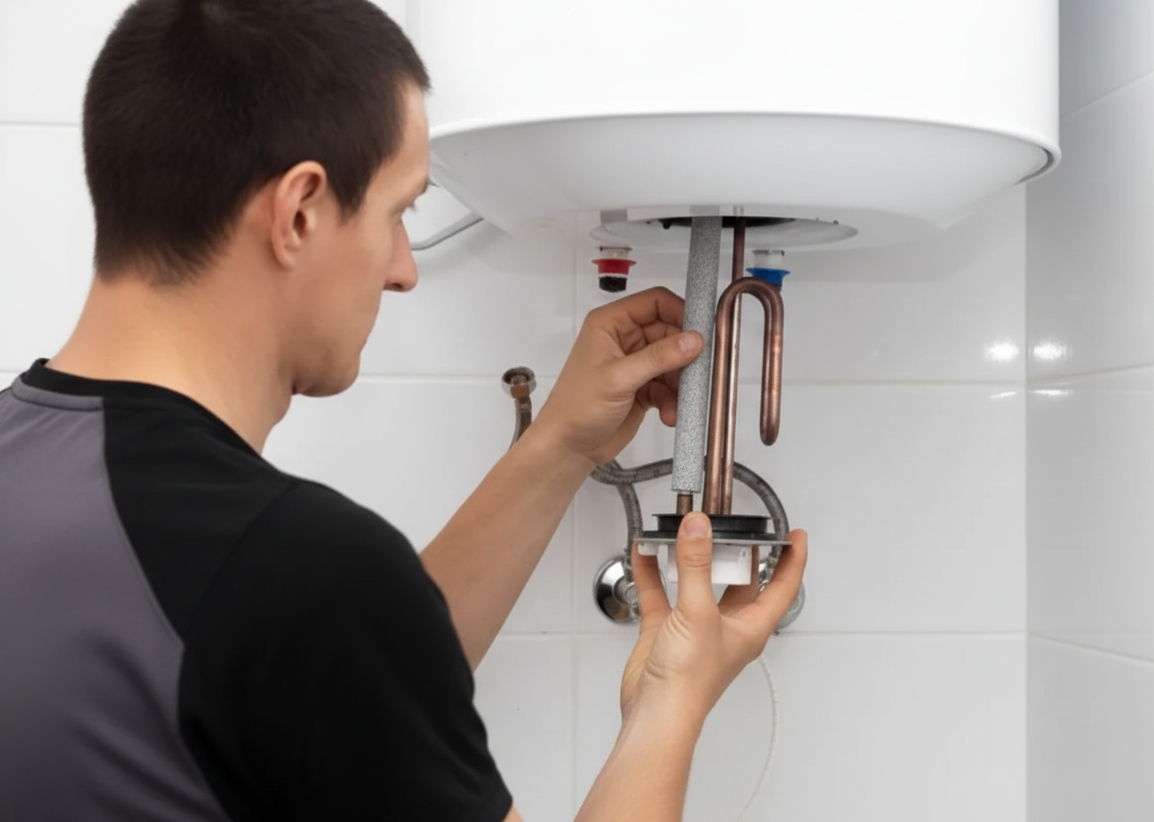
Your water heater works quietly in the background, heating water for showers, dishes, and laundry without asking for much attention. Most homeowners never give it a second thought until something goes wrong. Here’s the thing: draining the water heater is one of those maintenance tasks that takes just an hour but could add years to your unit’s life. If you live in San Marcos, Texas, you’re dealing with some of the hardest water in the country. Mineral sediment builds up faster. Your system loses efficiency quickly. And without regular maintenance, replacement comes sooner than you’d expect.
How often should you actually drain it? The answer depends on your water quality, your unit’s age, and a few other factors. Let’s break it down in a way that actually makes sense for your situation.
How Often Should You Drain Your Water Heater?
Most homeowners should drain and flush their water heater at least once a year. That’s the baseline. But if you’re in San Marcos or anywhere in Texas Hill Country where water hardness exceeds 300 parts per million, you should do it every six months.
Sediment accumulation isn’t random. Cold water comes in, minerals settle at the tank bottom, layer after layer. After a few months in hard-water areas, you’ve got a noticeable layer of gunk your heating element has to work through. That’s when your efficiency tanks and your energy bills spike.
Here’s what the schedule actually looks like:
- Soft-water Regions: Once yearly is generally fine. Some experts say you could stretch it to every 18 months if your water test shows low mineral levels.
- Moderately Hard Water: Twice yearly, spring and fall work well. This covers most of Texas outside the Hill Country.
- Hard Water Areas like in San Marcos: Every four to six months, if you want peak efficiency. At a minimum, twice yearly. In our area, draining the water heater every six months isn’t excessive.
If your unit is over 10 years old, increase frequency slightly. Older tanks are more prone to corrosion, and flushing exposes existing weak spots. Also, check your water heater’s manual, as some newer models have self-cleaning features or different maintenance requirements.
Why Does Sediment Buildup Become Your Problem?
Sediment buildup isn’t just building there without causing any issues. It’s actively harming your water heater. Understanding what happens inside that tank helps explain why the draining of the water heater schedule matters so much. The minerals in water, calcium, magnesium, and iron, don’t vanish. They accumulate, harden, and create all sorts of problems you’ll eventually notice and feel in your wallet.
How Sediment Reduces Your Heater’s Efficiency
Picture sediment as an insulation blanket wrapped around your heating element. That sounds cozy, but it’s not. The buildup forces your heater to work significantly harder to reach the same water temperature. Your energy consumption climbs. In San Marcos, where summer temperatures push your AC and water heater into overdrive, this inefficiency adds real dollars to your monthly utility bill.
- Sediment acts as an insulating barrier between the heating element and the water.
- Your thermostat keeps calling for heat, but it takes longer to reach the target temperature.
- The system cycles more frequently, consuming more energy than necessary.
If you are experiencing short-cycle issues with your water heater, read our article, “What Causes My Water Heater to Short-Cycle and How Do I Fix It?“
The Corrosion Problem: When Rust Starts the Clock
Sediment creates a secondary problem that’s harder to see but worse in the long term: corrosion. When minerals accumulate, they trap moisture against your tank’s steel walls. Rust begins. It starts small, but rust spreads. A corroded tank can’t be repaired; it can only be replaced. That’s a $1,500 to $3,000 bill that started with neglected draining.
- Sediment traps moisture against the tank steel, accelerating rust formation
- Rust weakens the tank structure and creates pinhole leaks that spread quickly
- Flushing removes sediment before corrosion damage becomes irreversible
The Noise That Means Something’s Happening
Ever heard your water heater popping, banging, or crackling? That’s sediment. As new water enters the tank and heats, hardened mineral chunks get knocked around. They scrape against the metal walls. It’s annoying, but it’s also a warning signal your system’s telling you: “Water Heater needs attention.” The noise stops after flushing, but more importantly, San Marcos homeowners often don’t realize how hard their water is until they hear these noises and call an HVAC and plumbing company for help.
- Popping and banging sounds indicate loose sediment settling and colliding
- These noises mean minerals are active inside, not dormant and harmless
- Silencing them requires removing the buildup, not ignoring the heater
What Happens if You Skip This Maintenance?
Neglecting to drain the water heater will cost you as much as the new system. Not immediately, but steadily. To prevent this, you’ll first notice that your water takes longer to heat up. Your bills spike up. Maybe you hear those weird noises and assume it’s normal, but it’s not. Your unit’s working harder and damaging faster. At some point, usually when it’s most inconvenient, like mid-winter, you get cold showers. Your water heater quits. The repair bill arrives, and often replacement is the only option.
If you are skipping water heater maintenance for five to seven years on a unit in hard water? You’re likely replacing the whole system prematurely. That’s a minimum of $2,000 out of pocket. Compare that to spending 45 minutes twice yearly, and it’s obvious what wins. San Marcos homeowners who maintain their units tend to get 12 to 15 years out of them.
When To Call a Professional and Do It Yourself?
Honest answer? If your water heater is newer and you maintain it regularly, DIY draining saves you $100 to $150 per flush. Over two flushes yearly for five years, that’s real money. Professionals charge $75 to $200, depending on location and complexity. Worth it if peace of mind matters to you.
Call a professional if your heater’s over 10 years old (they catch problems you’d miss), if it’s leaking or showing rust, or if it’s a tankless unit (a different process that requires descaling chemicals). A water heater technician does this regularly and can spot issues before they become expensive emergencies. When you call water heater repair service in San Marcos, TX, experienced technicians don’t just drain and leave. They inspect the tank while it’s open, check your anode rod, test the pressure valves, and give you honest feedback on your unit’s remaining lifespan.
Final Thoughts
Draining your water heater will prevent high-cost bills and extend the life of your water heating system. Once yearly minimum. Twice yearly, if you’re smart about keeping your unit running strong. If you’re in San Marcos, every six months during hard seasons makes sense. Pay attention to what your system tells you. Strange noises, temperature swings, or rust-colored water mean it’s time right now, not “sometime next month.” Your water heater’s trying to tell you something.
Not sure when your last drain was? Or unsure if your water heater’s ready for one?
The team at Woods Comfort Systems knows San Marcos water. We handle draining the water heater, repairs, and maintenance for families throughout our area. Call us for a free assessment. We will inspect your unit and tell you exactly what it needs.
Whether you require installation, repair, or maintenance, our technicians will assist you with top-quality service at any time of the day or night. Take comfort in knowing your indoor air quality is the best it can be with MOE heating & cooling services Ontario's solution for heating, air conditioning, and ventilation that’s cooler than the rest.
Contact us to schedule a visit. Our qualified team of technicians, are always ready to help you and guide you for heating and cooling issues. Weather you want to replace an old furnace or install a brand new air conditioner, we are here to help you. Our main office is at Kitchener but we can service most of Ontario's cities
Source link