No furnace fails at once. Homeowners frequently notice minor changes, such as the air feeling different, the system cycling for more extended periods, or a crackling sound developing in the system. Minor issues typically indicate a more serious problem in the furnace system, such as a cracked heat exchanger, which is one of the most serious issues that can arise in a furnace.
Recognizing early heat exchanger failure symptoms can protect the home and homeowners from costly repairs later. The heat exchanger is the most critical component of the entire furnace system, as it protects the air you breathe from combustion byproducts and toxic gases produced during operation. If the heat exchanger cracks, the furnace cannot operate safely.
This guide covers the early warning signs, causes of failure, and when to schedule heat exchanger inspection services in San Marcos, TX, to prevent issues from escalating.
What Are the Causes of Heat Exchanger Failure?
Several specific conditions speed up this breakdown and lead to early failure. Here are the most common heat exchanger failure symptoms:
- Continuous dynamic expansion and contraction of the metal during operation.
- A lack of airflow from dirty filters, obstructed vents, or undersized ductwork can cause the furnace to run too hot.
- Overheating that warps the exchanger and creates stress points where cracks form.
- Corrosion is likely when the furnace interior becomes wet due to rust, condensation, or weakened metal walls, conditions commonly seen when high indoor humidity causes furnace problems inside the home.
- Inadequate venting or condensation can accelerate internal rusting and structural deterioration.
- Soot buildup that blocks heat transfer and increases furnace temperatures.
- Short cycling from an oversized furnace, causing repeated rapid heating and cooling.
- Even when properly maintained, natural ageing occurs after 12–15 years of heating cycles.
- Installation errors or mismatched components that disrupt airflow and temperature control.
- Failure to regularly schedule tune-ups can allow minor issues to escalate into major problems, leading to heat exchanger failure in your furnace.
What Are The Symptoms Your Heat Exchanger Is Failing?
Failing heat exchangers rarely remain hidden. Before the furnace breaks down, it will start to send out minor signs. By catching these early warning signs, you can save money on heating and protect your home. Here’s how homeowners can identify problems before they become dangerous.
1. Strange or Unusual Odors
If a heat exchanger is failing, you might notice a sharp, chemical-like, or metallic odor drifting through the home while the furnace is running. These odors can indicate that combustion gases are not contained as intended.
- Chemical or metallic smells near the furnace
- Odors that grow stronger when the heat cycles on
- Smells are coming from the supply vents.
2. Soot or Burn Marks
If the heat exchanger struggles, the burn process becomes uneven. That imbalance produces soot, which collects around the burners or inside the furnace cabinet.
- Dark soot around the burner compartment
- Black streaks on furnace components
- Burn marks or discoloration inside the cabinet
3. Changes in Flame Color
A healthy furnace flame burns steady and blue. When cracks or airflow issues appear inside the heat exchanger, the flame shifts. A flame color change is a classic sign of a cracked heat exchanger and should never be ignored.
- Yellow or orange burner flames
- Flickering or unstable flames
- Flames that jump when the blower starts
4. Unusual or Crack Noises
Metal that begins to warp or crack doesn’t expand evenly during heating cycles. As the temperature rises, those weakened areas flex at different rates. That’s when the furnace starts making unfamiliar sounds. Those noises usually mean the metal surface is no longer uniform and is reacting unevenly to heat.
- Popping or clicking during startup
- Rattling inside the furnace cabinet
- Loud clanging when the burners ignite
5. Higher Heating Bills
A failing heat exchanger disrupts the furnace’s ability to transfer heat into the home. Because the system can’t efficiently transfer heat, it runs longer to maintain the set temperature. These patterns typically precede major problems with furnace heat exchangers. Signs are:
- Sudden increase in monthly energy costs
- Longer run times without better heating
- Furnace cycling on and off more often
6. Carbon Monoxide Alerts
If the heat exchanger develops cracks or holes, combustion gases can leak out. Any carbon monoxide alarm requires the furnace to be shut down immediately; if it does not shut down, carbon monoxide detectors may sound during heating cycles.
- Alarms are triggered only when the furnace runs.
- Symptoms like headaches or dizziness while heating is on
- Indoor air feels stale or irritating.
7. Uneven Heating Across the Home
A compromised heat exchanger can disrupt proper burner operation, leading to uneven heat distribution and noticeable temperature imbalances throughout the home.
- Some rooms feel cooler than others.
- Weak airflow from specific vents
- Longer warm-up times in particular areas
8. Excess Moisture on the Furnace
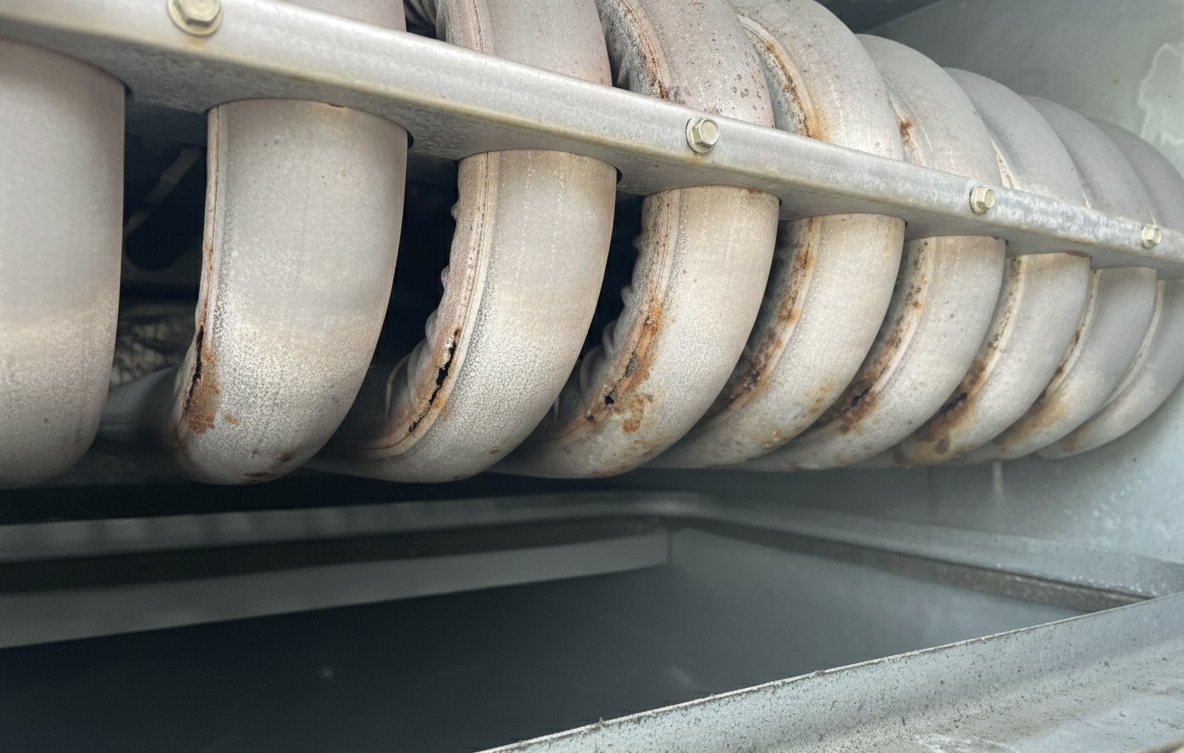
Moisture inside the furnace promotes rust and corrosion, which often indicates that the heat exchanger is already compromised. If this deterioration goes untreated, the damage can progress rapidly and further weaken the system.
- Visible rust on the burners or exchanger
- Condensation inside the cabinet
- Water staining near furnace components.
If you recognize any of these warning signs, it’s time to arrange professional heat exchanger inspection services. Prompt attention not only prevents further damage but also safeguards system performance and maintains a safe, consistent level of comfort in the home.
Final Thoughts!
Heat exchanger problems develop gradually, and the system sends clear warnings along the way. Recognizing these heat exchanger failure symptoms early helps homeowners protect their furnace and avoid expensive repairs. When these signs appear, a thorough examination is the only way to determine the true extent of the damage.
For trustworthy diagnosis, durable protection, and dependable care, Woods Comfort Systems – the local HVAC and plumbing company is committed to serving you with superior service and skilled technicians who can keep your property running well. Visit our website to make an appointment. Let Woods Comfort Systems handle that from here on out – we’ve got your comfort covered.
Whether you require installation, repair, or maintenance, our technicians will assist you with top-quality service at any time of the day or night. Take comfort in knowing your indoor air quality is the best it can be with MOE heating & cooling services Ontario's solution for heating, air conditioning, and ventilation that’s cooler than the rest.
Contact us to schedule a visit. Our qualified team of technicians, are always ready to help you and guide you for heating and cooling issues. Weather you want to replace an old furnace or install a brand new air conditioner, we are here to help you. Our main office is at Kitchener but we can service most of Ontario's cities
Source link