The North American commercial refrigeration industry is reaching a critical point in its move toward low-GWP refrigerants. In the United States, it is driven by the AIM Act, while Canada is advancing parallel measures through the Canadian Environmental Protection Act (CEPA). These two acts strive to regulate refrigerants in support of the Kigali Amendment, which is an international agreement to phase down the production and consumption of HFCs.
Now the directions for the commercial refrigeration industry are clear: engineer the shift to low-GWP refrigerants while maintaining familiar performance. This move is not just a refrigerant substitution, but a re-evaluation of how systems are designed, certified, and validated from product development to field commissioning as per UL and CSA product safety standards.
Understanding A2Ls
ASHRAE Standard 34 classifies refrigerants by toxicity and flammability. In the mildly flammable A2L category, ‘A’ indicates lower toxicity, ‘2’ indicates lower flammability, and ‘L’ denotes low burning velocity. The following properties govern how an A2L refrigerant behaves in a leak event:
- Lower flammability limit (LFL) is the lowest concentration of refrigerant in air at which ignition can occur. Since A2Ls have higher LFLs, a larger release is required to reach flammable conditions.
- Minimum ignition energy (MIE) refers to the amount of energy required to ignite a refrigerant. A2Ls require more energy to ignite than Class 2 or Class 3 refrigerants, making accidental ignition highly unlikely.
- The heat of combustion (HOC) for A2Ls is low, meaning the total energy released during combustion is small and limits heat output even if ignition occurs.
These safety characteristics allow A2Ls to balance safety with environmental performance. Since A2Ls are not drop-in replacements, manufacturers simply adapt existing proven system architectures by making targeted adjustments to controls, component ratings, and charge management.
Building on those design changes, the next step is to evaluate systems through a different risk baseline based on industry safety standards such as UL 60335-2-89 (second edition). Systems are modeled to ensure any refrigerant release remains below a defined concentration of the LFL, while maintaining isolation from ignition sources. The key design measures include:
- Charge limitation: OEM software or modeling tools for charge limitations provide the minimum room area for each based on refrigerant LFL, system volume, and occupancy parameters. This minimum room area determines whether a design falls within the required safety strategy, such as M1, M2, or M3.
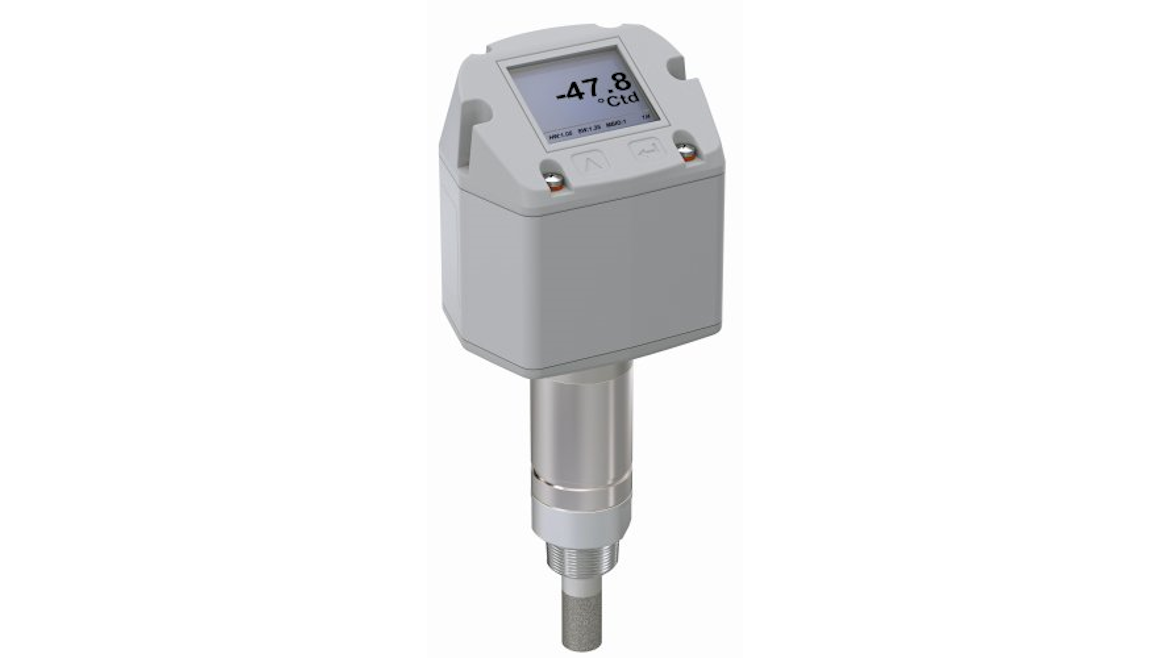
- Integrated leak detection and mitigation: Sensors or transducers are built into the system to initiate ventilation or controlled shutdown when refrigerant concentrations approach threshold levels.
- Electrical component protection: Components located within potential leak zones must be A2L rated and specifically tested for spark suppression to eliminate ignition sources.
- System labelling and documentation: nameplates, service ports, and control panels carry standardized red identifiers to clearly mark A2L systems throughout manufacturing and field service.
Installing A2L Systems
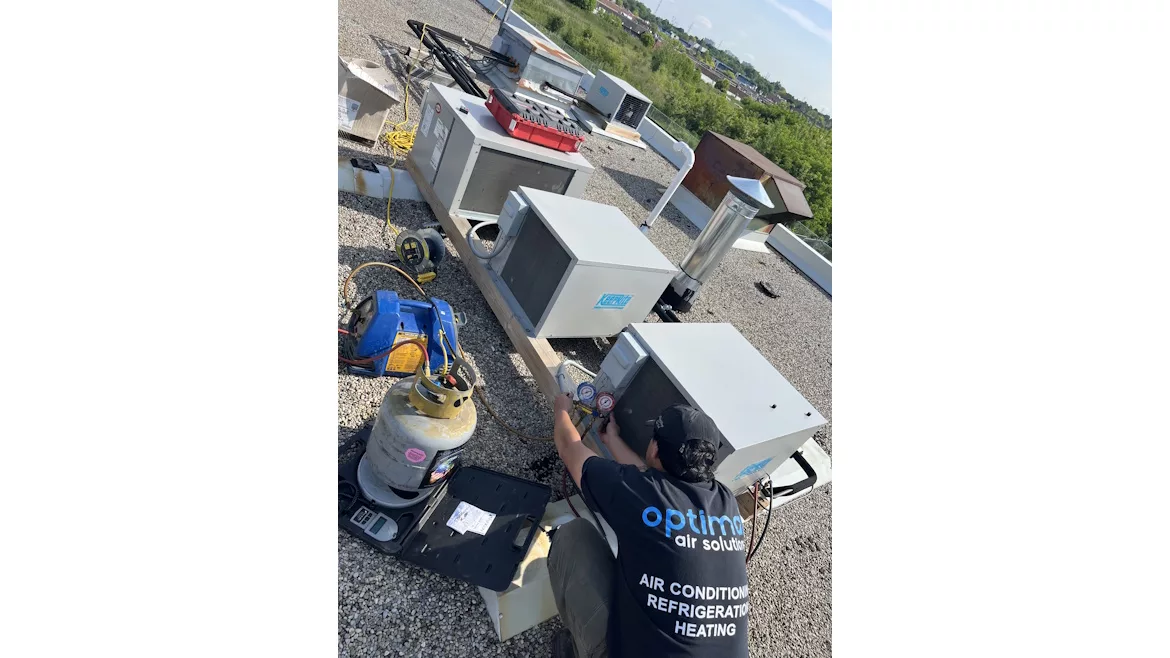
Installing A2L systems is similar to installing traditional systems but requires tighter control and greater attention to detail. Some of the important considerations are listed below.
When selecting A2L equipment, ensure:
Looking for quick answers on air conditioning, heating and refrigeration topics?
Try Ask ACHR NEWS, our new smart AI search tool.
Ask ACHR NEWS
- The product is certified for A2L use under the applicable UL/CSA standard;
- The total refrigerant charge is within the allowable limits for the space volume and refrigerant used;
- Integrated detection and mitigation logic has been verified at the factory and checked during commissioning; and
- Electrical components located near potential leak points are rated for A2L use.
During pre-installation:
- Verify adequate ventilation and use auxiliary airflow in confined areas;
- Isolate ignition sources before opening or charging circuits; and
- Confirm that recovery and service tools are rated for A2L refrigerants.
For brazing and repair:
- Maintain a dry nitrogen purge through tubing during brazing until joint cools; and
- Recover all refrigerant and isolate the section before applying heat.
When charging and leak checking:
- Charge as liquid to maintain blend composition accuracy;
- Use A2L-approved leak detectors; and
- Confirm that integrated leak detection and mitigation controls function properly.
Mature Transition
The commercial refrigeration industry’s legacy of innovation continues with the transition to A2L refrigerants, supported by a coordinated framework from chemical formulation to installation code. What makes this shift unique is its maturity and alignment. A2L refrigerants, components, and control technologies have been engineered and validated together, and OEM suppliers and regulatory bodies are unified, providing a clear and standardized path forward.
With certified products and unified safety standards now in place, adoption is no longer a question of feasibility, but simply of timing. The managed evolution ensures that the North American commercial refrigeration industry meets environmental goals while sustaining the reliability and safety standards that define its success.
Whether you require installation, repair, or maintenance, our technicians will assist you with top-quality service at any time of the day or night. Take comfort in knowing your indoor air quality is the best it can be with MOE heating & cooling services Ontario's solution for heating, air conditioning, and ventilation that’s cooler than the rest.
Contact us to schedule a visit. Our qualified team of technicians, are always ready to help you and guide you for heating and cooling issues. Weather you want to replace an old furnace or install a brand new air conditioner, we are here to help you. Our main office is at Kitchener but we can service most of Ontario's cities
Source link