
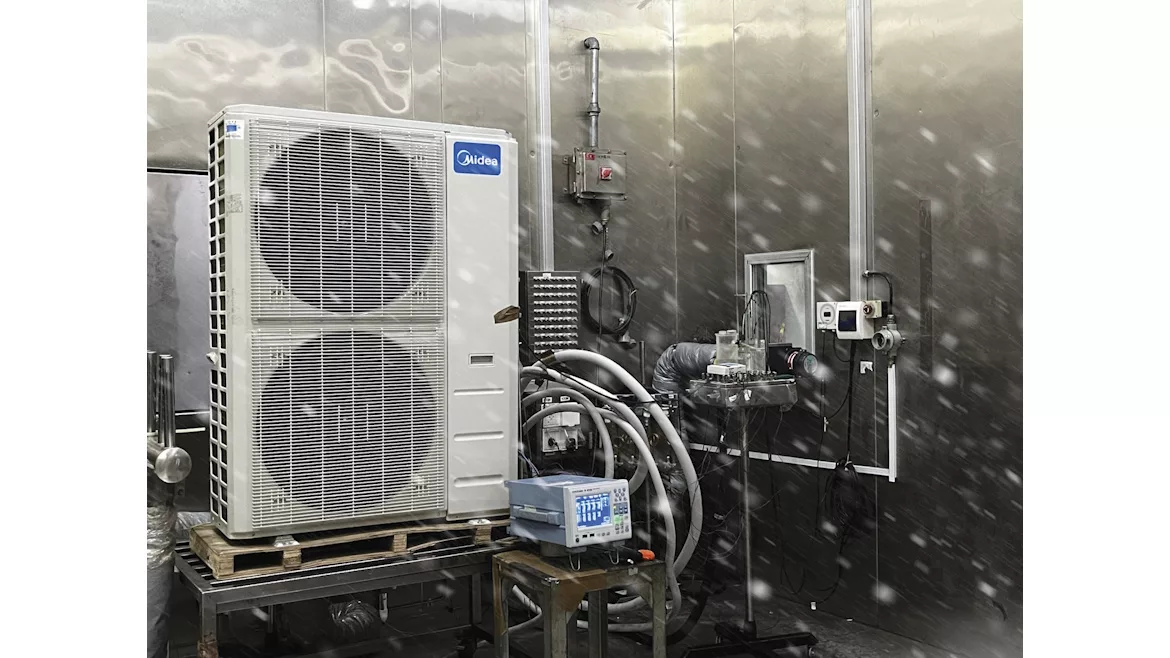
Electricity prices have been climbing faster than inflation in many regions, raising questions about how contractors should present high-efficiency equipment to customers. For heat pumps, the conversation around affordability is shifting. Are rising rates a deterrent, or do they actually strengthen the case for efficient systems? Four industry voices offered different but complementary answers, providing a roadmap for contractors navigating this new landscape.
Panama Bartholomy, executive director of the California Heat Pump Partnership, dismissed the idea that electricity price headlines are slowing down consumer interest in heat pumps.
“We aren’t seeing any sign of it — nothing at this point. We’ve just finished our third straight year of heat pumps outselling furnaces across the country,” Bartholomy said, adding that the United States is actually now the No. 1 market in the world for heat pumps, up from third place just three years ago.
And during those three years when the U.S. was becoming the biggest market, utilities weren’t exactly getting cheaper.
“Electricity prices have been going up around the country for the past six years, and the only thing going up faster with electricity prices was people’s demand for heat pumps,” Bartholomy said.
According to Bartholomy, the bigger picture is that all forms of energy are becoming more expensive, not just electricity — gas is also going up dramatically, and it looks like that is about to get even worse.
“Since 2019, we’ve had almost a 40% increase in people’s gas rates around the country,” Bartholomy said. “In a time of rising electricity costs and rising gas costs, you really want to be able to find a way to lower your bills, and a heat pump is actually the cornerstone of affordability as we move into this new era.”
Looking for quick answers on air conditioning, heating and refrigeration topics?
Try Ask ACHR NEWS, our new smart AI search tool.
Ask ACHR NEWS
He added that aging gas infrastructure is an underappreciated driver of future costs.
“About a third of all of our gas distribution lines in this country are over 50 years old and coming up for replacement … we’re about to have a huge bill to pay for that,” he said. “And heat pumps actually allow you to avoid that large bill that’s coming for all that replacement. We’re looking at hundreds of billions of dollars for replacing those gas pipes. You put in a heat pump, you’re going to avoid paying for all those pipes out into the future.”
The Case for Hybrid Systems
Jack DiEnna, executive director of the Geothermal National & International Initiative (GEO-NII), has been promoting heat pumps since the 1970s, when he worked for a utility. His view: Contractors should not sell customers “just cooling” when replacing outdoor a/c units. Instead, they should be guiding homeowners toward hybrid systems that pair air-source heat pumps with existing fossil fuel furnaces.
“What we should be pushing is buying a heat pump rather than just an air conditioner, because you can actually reduce the amount of electricity used,” DiEnna said.
DiEnna pointed out that the real culprit for high electric bills with a heat pump is resistance backup heat — something that hybrid systems avoid.
By leaning on fossil backup only in extreme cold, contractors can deliver the best of both worlds: “Let’s promote the hybrid concept,” DiEnna said. “If I’ve got to replace an air conditioner, replace it with an air-source heat pump, and it actually will lower your energy use.”
DiEnna also emphasized the volatility of fossil fuels compared to electricity, which is more tightly regulated, translating to more stability.
“Whether you’re a co-op, whether you’re municipal, whether you’re investor-owned — they all have to go through regulatory processes (before rate increases),” DiEnna said. “On the other hand, oil dealers, propane dealers, can raise it every time they deliver.”
Long-Term Economics and Market Forces
While Bartholomy and DiEnna highlighted current adoption momentum, Nate Adams, founder of Nate the House Whisperer, framed the conversation in terms of long-term market forces.
“Rising electricity prices should, in theory, be bad for heat pumps. The question is if they will be balanced out by heating fuel cost increases,” Adams said.
Adams pointed to the United States’ growing role as an energy exporter as a reason fuel costs may have a rocky road ahead.
“The U.S. is now exporting significant amounts of compressed natural gas, which ties us to world prices more strongly than we ever have been — our capacity is due to triple by 2030,” Adams said. “You could easily argue that this will increase natural gas prices in the U.S.”
Policy also plays a role, he noted.
“The administration’s anti-renewable stance is a major reason behind the likely increased costs,” Adams said. “Solar and wind are now some of the cheapest, if not the cheapest, energy sources in human history. Handicapping them only drives up cost.”
Adams also believes that expanding electricity sales could ultimately lower rates, even as grid upgrades are needed.
“The grid needs updating, which is also a major cost driver,” he said. “In the past, increased electricity sales have ended up driving down overall prices because the grid is utilized more, similar to a factory going from two shifts to three. If we sell more electricity, overall, the cost should go down. There has been very little usage growth in the last 25 years.”
In the end, for contractors and their customers, the bottom line is timing.
“Overall, I expect the economics of heat pumps to get marginally worse in the near term, while getting better over the long term,” Adams said.
Manufacturer Perspective: Efficiency, Incentives, and Grid Readiness
David Rames, senior product manager at Midea, agreed that electricity price increases create anxiety for homeowners. But like Bartholomy and DiEnna, he argued that efficiency and system design mitigate the impact.
“Rising electricity prices are a concern for many households, but they also highlight the value of upgrading to more efficient systems. A modern inverter-driven heat pump can deliver up to 400% efficiency under NEEA Tier 4 standards, compared to 95% for a high-efficiency gas furnace or nearly 100% for electric resistance heating. For many homeowners, that means lower monthly energy use and reduced exposure to rising rates.”
Total cost of ownership is another area where heat pumps retain an advantage.
“Total cost of ownership still favors high-efficiency heat pumps in most climates. Unlike a gas furnace, which only provides heating, a heat pump covers both heating and cooling needs in a single system, reducing equipment and maintenance costs. For example, Midea’s forthcoming EVOX All Climate Heat Pump provides up to 100% heating output at down to -31°F and continuous operation at down to -40°F, while also delivering up to 100% cooling at up to 140°F. That year-round performance allows homeowners to replace both an air conditioner and a furnace with one system, lowering lifetime costs even as electricity rates rise.”
Rames underscored the role of rebates in sustaining demand.
“Incentives remain a powerful driver of adoption. While federal programs are being reduced, state and utility rebates are often more substantial and more accessible. For example, New York’s Clean Heat Program provides up to $8,000 per system, Massachusetts’ Mass Save program delivers up to $10,000 along with 0% financing, and Efficiency Vermont offers up to $4,000, with additional support for income-qualified households. In Oregon, rebates range from $700 to over $2,000 depending on efficiency and utility provider.”
Finally, he highlighted how manufacturers are preparing for utilities’ grid management needs.
“Heat pumps are increasingly designed to support grid stability. Midea systems are Wi-Fi-enabled, smart thermostat-compatible, and ready for demand-response programs. Features like variable-speed compressors and advanced controls allow utilities to shift or reduce load during peak times without compromising comfort.”
What It Means for Contractors
It’s a lot to take in, and a lot of unknown variables, but contractors still need to be prepared before having these conversations with homeowners. The bottom line is that electricity prices are rising, but so are fossil fuel costs, and volatility plays a huge role in customer bills.
However, market adoption is strong with more customers asking for heat pumps than ever before; hybrid solutions reduce risk, allowing customers to benefit from efficiency without exposure to resistance heating; energy markets favor electricity long-term, even if the near-term economics are bumpy; and technology and incentives keep adoption strong, with manufacturers ensuring their systems qualify for rebates and support grid stability.
For contractors, the task is to position heat pumps not just as a green upgrade, but as a financially prudent choice in an uncertain energy market. Customers want affordability, predictability, and future-proofing — and with the right framing, heat pumps deliver all three.
Whether you require installation, repair, or maintenance, our technicians will assist you with top-quality service at any time of the day or night. Take comfort in knowing your indoor air quality is the best it can be with MOE heating & cooling services Ontario's solution for heating, air conditioning, and ventilation that’s cooler than the rest.
Contact us to schedule a visit. Our qualified team of technicians, are always ready to help you and guide you for heating and cooling issues. Weather you want to replace an old furnace or install a brand new air conditioner, we are here to help you. Our main office is at Kitchener but we can service most of Ontario's cities
Source link
