February has become an early sign of where the HVAC market is heading, with the latest shipment data showing continued growth in heat pumps and overall declines in other equipment.
The Air-Conditioning, Heating, & Refrigeration Institute’s February 2026 shipment report shows an HVAC industry reacting to everything from refrigerant transitions to electrification and an unstable economy, punctuated by winter heating costs rising by 11%.
ON THE RISE: Heat pumps saw their largest February shipment increase since 2021. (Courtesy of AHRI)
Air Conditioners and Heat Pumps
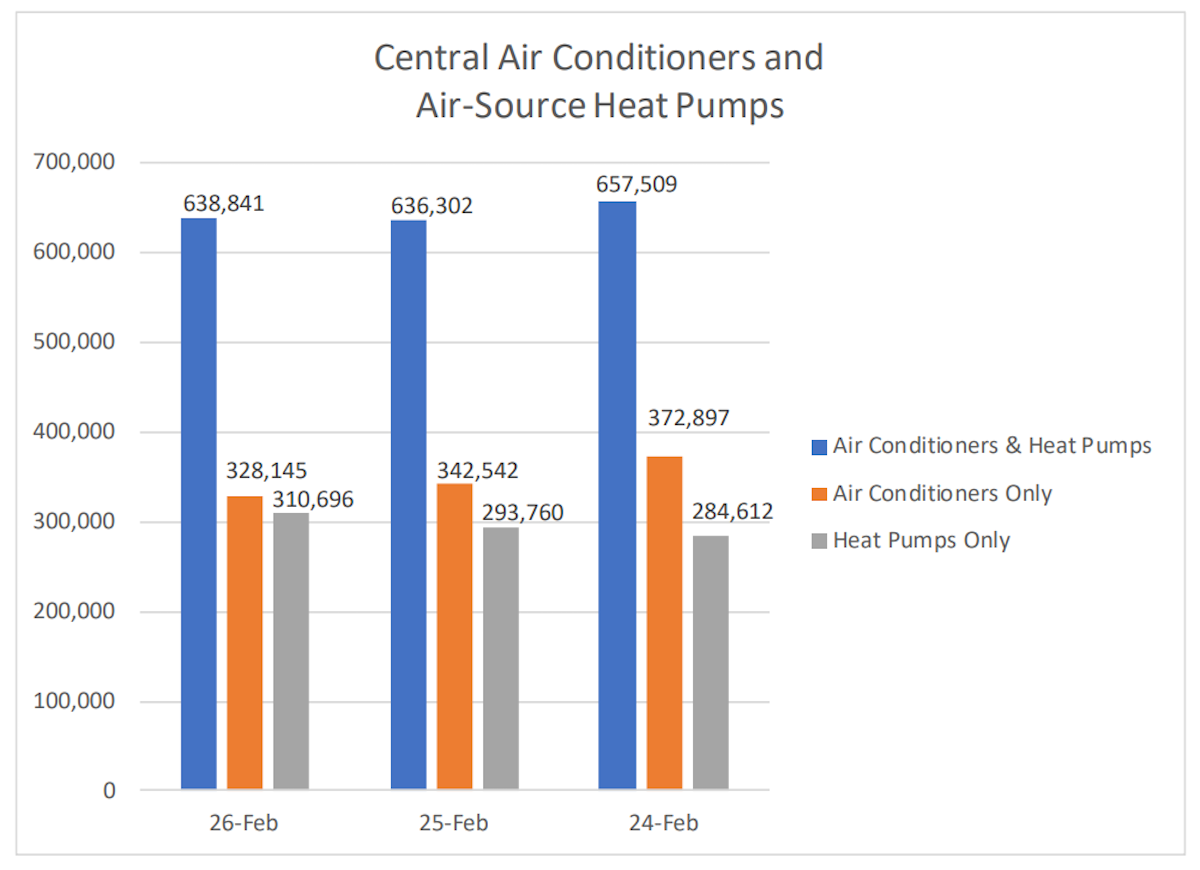
February has broken an eight-month streak of declining shipments of a/c and heat pumps, albeit with near-stagnant growth. It appears heat pumps are the reason behind this, thanks to a 16% increase from February 2025. While not the largest spike in February heat pump shipments since 2010, it’s the largest since 2021 (17.8%).
The following shows how February 2026 compared to the same time last year:
- Air conditioners and heat pumps: 638,841, up 0.4% from 636,302
- Air conditioners only: 328,145, down 4.2% from 342,542
- Heat pumps only: 310,696, up 16.5% from 293,760
Even with shipping numbers bolstered by heat pumps, the year-to-date totals for 2026 have all declined compared to February 2025:
- Air conditioner units and air-source heat pumps: 1.08 million, down 14.3% from 1.26 million
- Air conditioners only: 539,007, down 21.9% from 689,899
- Heat pumps only: 540,653, down 5% from 569,304
Warm-Air Furnaces
Gas furnace shipments improved over January 2026, while oil furnace shipments dipped back down from last month. When compared to February 2025, though, overall shipments have fallen:
- Gas warm-air furnaces: 244,774 units, a 5.6% decrease from 259,405
- Oil warm-air furnaces: 2,565 units, down by 12.5% from 2,931
Despite the Trump administration cracking down on local ordinances and laws that ban natural gas, February 2026 is yet another month where heat pumps have outsold warm-air furnaces.
Looking for quick answers on air conditioning, heating and refrigeration topics?
Try Ask ACHR NEWS, our new smart AI search tool.
Ask ACHR NEWS
Like heat pumps, furnaces also saw declines in year-to-date shipment numbers when compared to February 2025:
- Gas warm-air furnaces: 462,536, down 12.9% from 530,785 units
- Oil warm-air furnaces: 5,579, down 4.5% from 5,842 units
Residential Storage Water Heaters
Gas and electric water heaters were overall down compared to February 2025. They’ve flattened out over the long term, with both categories seeing declines in 2025. February 2026 saw similar trends compared to the same time last year:
- Residential gas storage water heaters: 341,724 units, down 9.2% from 376,403
- Residential electric storage water heaters: 378,818 units, down 10.9% from 425,332
When comparing the year-to-date totals with February 2025, similar decreases are borne out:
- Residential gas storage water heaters: 670,230 units, down 10.4% from 748,027
- Residential electric storage water heaters: 760,245 units, down 7.9% from 825,053
February Trends
The heating market is no longer reliant on furnaces, with heat pumps continuing a steady upward trend since 2020. Furnaces, meanwhile, have been subjected to various types of restrictions nationwide, whether it’s Colorado’s low NOx ruling or calls for electrification over fossil fuels.
The February spike in heat pumps should be a clear message to contractors: heat pumps are not optional or ancillary. Investing in heat pump training and capabilities will keep you competing with other HVAC contractors. Conversely, with major Inflation Reduction Act incentives gone, heat pumps could level out.
There is also a growing trend of dual-fuel heating, which is giving customers more freedom in their energy choices. It’s been touted as an easy way to introduce electrification to customers without having to fully invest in upgrades. It’s especially helpful in a time when energy prices are spiking. Any relief in utility bills that contractors can provide will be welcomed by clients.
On the cooling side, a/cs remain relatively stable in February, but naturally, they aren’t a high-growth area in the winter. The transition to low-GWP refrigerants has played a role as well, perhaps more so than typical seasonality, causing contractors to buy equipment ahead of efficiency regulation changes.
Similar swings toward decarbonization and electrification are seen in water heaters. Looking broadly at February shipments, gas and electric units were roughly on par with each other from 2015 to 2019. During the pandemic, electric units began outselling gas. From 2022 onwards, electric water heaters have been the dominant unit.
It all amounts to demand being driven less by seasonality and more by policy. Whether it’s been tax credits from the IRA, a pandemic wrecking the supply chain in 2022, or tariff discussions impacting the economy, contractors will want to make their decisions based on policy timing, pricing, and distribution behavior.
Whether you require installation, repair, or maintenance, our technicians will assist you with top-quality service at any time of the day or night. Take comfort in knowing your indoor air quality is the best it can be with MOE heating & cooling services Ontario's solution for heating, air conditioning, and ventilation that’s cooler than the rest.
Contact us to schedule a visit. Our qualified team of technicians, are always ready to help you and guide you for heating and cooling issues. Weather you want to replace an old furnace or install a brand new air conditioner, we are here to help you. Our main office is at Kitchener but we can service most of Ontario's cities
Source link