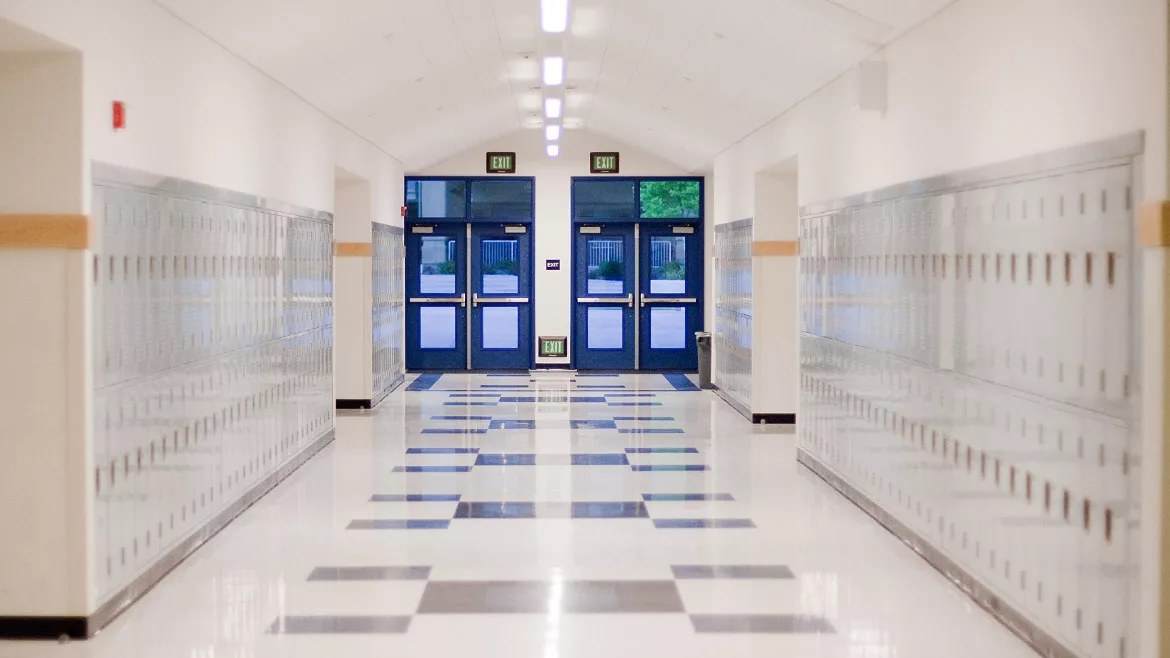
On any weekday morning, the invisible world swirling through our schools determines more than comfort – it can dictate whether students stay in class or are sent home wheezing, feverish, or simply too fatigued to learn. The COVID-19 pandemic puts airborne disease front and center, but as a wave of new research shows, the story of what we breathe indoors is much more complex, dynamic, and consequential – especially for children.
At the nexus of engineering, medicine, and public health, a group of Colorado researchers map this hidden terrain and ask: What are our kids really breathing in? And what can we do about it?
A New Age of Measurement
“It’s much, much more complicated than just a virus floating around,” said Professor Mark Hernandez, whose career straddles bioterrorism, urban health, and the microbial sciences. “If you’re in a built environment, there are four things we all share: the ‘aerobiome’ – that’s the cloud of microbes we shed and share – the volatile organic compounds (VOCs) we release, the carbon dioxide in our breath, and particles, both organic and inorganic, suspended in the air.”
Thanks to newer, cheaper, and more sophisticated sensors, it’s now possible to measure this swirling cocktail of particulates, biology, and chemistry in real time. Hernandez and his team deploy wall-mounted monitors and rolling laboratory carts into classrooms across Denver, gathering hundreds of thousands of data points: not just carbon dioxide and temperature – old metrics – but loads and types of particulate matter and the real-time signature of living biological material.
Their studies reveal a stark reality: every classroom is its own ecosystem, shaped as much by building materials, cleaning practices, and air filtration as by geography and student activity. Some rooms, especially those with water damage or poor cleaning, become biological ‘hot spots’ – invisible hazards that elude everyday inspection.
Filtering Out the Unknown
The pandemic inspires a surge of interest in improving ventilation and installing room HEPA filters. Hernandez’s data shows why this matters. By measuring the particle load in hundreds of classrooms, both with and without HEPA filters, his team visually maps how much debris – biological and otherwise – students are breathing in.
The difference is not trivial. In controlled studies, classrooms equipped with in-room HEPA filters see significant reductions in airborne particles, including the tiny, lung-penetrating ones that matter most for health. But, as Hernandez noted, “If they’re off, or missing a filter, it doesn’t work – not nearly as well.”
The hunt for evidence goes deeper: are these interventions actually making students healthier? Thanks to a $55 million CDC-funded statewide effort, over two hundred school buildings and thousands of classrooms are now wired for continuous air quality and absenteeism tracking. Early results suggest a clear trend: classrooms with functioning air cleaners see fewer absences, even when controlling for the tangled effects of poverty, nutrition, and social factors.
But these studies also acknowledge the messiness of real life. “Free and reduced lunch, socio-economic status, heritage – these factors all influence absenteeism,” Hernandez said. “The one factor we’re trying to fish out is: Is there a portable air cleaner in the classroom, and is it on?”
Beyond Viruses: Asthma, Allergies, and Wildfire Smoke
Colorado’s schools offer a unique prism for these investigations. Here, the air children breathe is shaped not just by viruses, but by urban pollution, pollen, seasonal wildfires, and indoor allergens that trigger asthma. Some neighborhoods see frequent closures not because of infection, but because of heat, poor ventilation, or poor air quality as wildfires rage nearby.
“If we don’t monitor, we can’t manage,” Hernandez said. Portable monitors are now so affordable that, amortized over years, their cost is less than a textbook per student – a tiny price for the chance to prevent invisible illness.
Synergies and Hypotheses: When Particles Combine
It’s not just about what’s in the air, but how various contaminants interact – sometimes with dangerous synergy. “If we expose lungs to both inorganic and biological pollution, the damage might not just add up – it could multiply,” said Stephanie Taylor, a pediatric oncologist and architect who studies how indoor environments impact health. Her research connects air quality not just to infection, but to immune system functioning, allergy, and even cognitive performance.
Hernandez and Taylor are among a cutting-edge cohort using real-time data, machine learning, and cross-disciplinary science to monitor and manage air quality in schools. Their message is simple: air quality isn’t just a comfort issue; it’s a health and equity issue. And thanks to new technology, the days when we fly blind may finally be ending.
Letting Kids Roll in the Dirt – Safely
Still, not all exposure is bad. Taylor, once known as “the relative humidity lady” for her work linking optimal air moisture to reduced illness, points out that “95% of microbes are actually good for us.” Over-sterilizing environments, she cautions, may backfire, as children need normal microbial exposure for a healthy immune system.
Taylor and Hernandez both make clear that the way forward is not a war on microbes – it’s a smarter partnership with our built environment. The real shift, they argue, is toward evidence-driven management: real-time monitoring to flag at-risk rooms, scientifically validated filtration that actually gets used, and an awareness of local triggers, from wildfire smoke to aging infrastructure, that shape students’ daily exposures.
Instead of aiming for sterile conditions, the focus is on understanding what’s in the air, how it changes with weather, cleaning, and facility conditions, and rapidly responding when those measurements tip into dangerous territory. Taylor points out that key factors like relative humidity, when kept in a protective midrange, can block pathogens from spreading and support respiratory immunity. Hernandez emphasizes the power of rapid, inexpensive sensors and mobile field labs to find problems before kids get sick – and to prove which interventions really work.
Both agree on the importance of context: not every risk is equal, and not every intervention delivers the same results in every classroom. “You have to monitor, you have to understand the patterns, you have to make the invisible visible,” said Hernandez. In practical terms, this can mean a targeted cleanup of a water-damaged wing, focusing HEPA filtration on classrooms near highways or wildfires, or tracking absentee spikes to unseen air quality hazards – then intervening in days, not years.
“Every classroom is its own constellation of risks and resiliencies,” Taylor said. “But now, we have the tools to see it. We owe it to the kids to use what we know.”
If this growing database of air quality and absenteeism tells us one thing, it’s that measurement fuels management. Schools can prioritize interventions where the need is greatest – not with blind guesses, but with data-driven insight. “Give up your Starbucks one day a month,” Hernandez quipped, “and you’ll cover the cost.”
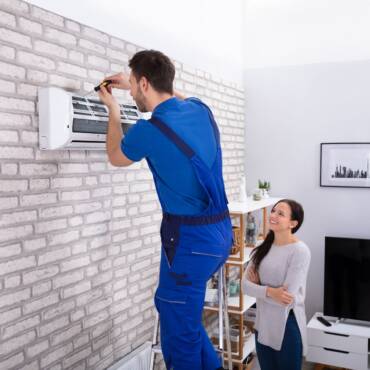
Whether you require installation, repair, or maintenance, our technicians will assist you with top-quality service at any time of the day or night. Take comfort in knowing your indoor air quality is the best it can be with MOE heating & cooling services Ontario's solution for heating, air conditioning, and ventilation that’s cooler than the rest.
Contact us to schedule a visit. Our qualified team of technicians, are always ready to help you and guide you for heating and cooling issues. Weather you want to replace an old furnace or install a brand new air conditioner, we are here to help you. Our main office is at Kitchener but we can service most of Ontario's cities
Source link