Mold caused by a Heating and Air Conditioning system is more common than people realize, and it is usually due to moisture control problems inside the system or the home.
Just a small imbalance in moisture can create the perfect environment for mold growth.
1. Mold begins growing when surfaces stay damp for 24–48 hours
Both the EPA and CDC emphasize that any wet or damp surface can support mold growth if it stays moist for 24–48 hours. This includes:
- Condensation on vents or ducts
- A sweating evaporator coil
- A damp drain pan
- Moist drywall or insulation
- High humidity in a room
2. Mold can grow with humidity above 60%
EPA guidance notes that indoor relative humidity above 60% is enough to support mold growth, even without visible water. Why? Because high humidity allows:
- Condensation on cold surfaces
- Moisture absorption into porous materials (drywall, wood, insulation)
- Persistent dampness inside HVAC components
3. Mold does not need standing water
CDC states that mold grows when spores land on wet or moist surfaces, not necessarily submerged surfaces. Even a thin film of moisture is enough.
Examples:
- A coil that stays wet after the system shuts off
- A drain pan with slow evaporation
- Duct insulation that absorbs moisture
- A return leak pulling humid air into the system
HVAC components occupy the danger zone which becomes the “perfect storm” for mold growth:
- Coils stay wet after each cooling cycle
- Drain pans hold water
- Ducts run through hot/humid spaces
- Airflow issues keep moisture from evaporating
- Oversized systems short-cycle and fail to dehumidify
Even a small moisture imbalance can create the perfect environment.
EPA Link- Mold
1. Excess Moisture Inside the System
Moisture is the fuel mold needs. HVAC systems can create the proper environment for mold through:
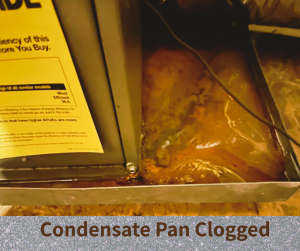
- Clogged or slow-draining condensate lines
- Dirty or rusted drain pans
- Improperly pitched drain pans
- Low refrigerant charge causing coil freeze → thaw → water overflow Learn More- Low Refrigerant
- Oversized AC systems short-cycling and not dehumidifying
2. Dirty or Wet Evaporator Coils
Over time and without routine cleaning, coils become:
- Dusty
- Covered in biofilm
- Not draining properly
This environment, in time, becomes a mold-friendly surface.
3. High Humidity in the Home
If indoor humidity stays above 60%, mold can grow in:
- Supply ducts
- Return ducts
- Air handler cabinets
- Around vents
Humidity issues often come from:
- Undersized return air
- Leaky ducts pulling humid air from crawlspaces/attics
- Poor ventilation
- Oversized equipment
4. Ductwork Problems
Mold can form when:
- Ducts run through unconditioned spaces and sweat
- Duct insulation is damaged
- Ducts leak and pull in humid air
- There’s stagnant air in unused zones
5. Dirty Filters or No Filter
A clogged filter reduces airflow, causing:
- Coil icing
- Moisture buildup
- Mold on the coil, blower wheel, and inside the cabinet
- Musty smell only when the system runs
- Visible mold on:
- Supply vents
- Return grilles
- Inside the air handler
- On the blower wheel
- Condensation on vents or ductwork
- High indoor humidity
- Water around the air handler or in the drain pan
- Allergy-like symptoms that worsen when AC is on
1. Clean and sanitize the evaporator coil
A deep chemical coil cleaning removes:
- Biofilm
- Dust
- Moisture-trapping debris and buildup
2. Clear and treat the condensate drain
- Flush the line
- Add drain tablets
- Ensure proper pitch
- Replace cracked pans
3. Fix airflow issues
- Replace filters
- Clean blower wheel
- Check static pressure
- Seal duct leaks
4. Address humidity
5. Duct cleaning (only when justified)
Useful when:
- Mold is visible
- Ducts are contaminated
- There’s a musty odor from supply vents
Often mold issues become known only after the growth is well under way and creating a noticeable odor or is visible in noticeable areas. The concern that even before mold grows to this stage, it can be causing respiratory health issues that can be quite severe.
Significant mold issues need to be resolved by professional mold remediators. If you have concerns about your HVAC system or excess humidity in your home, Contact Us at Air Doctor Heating and Air, Call or Text Us at 301-799-7200
Whether you require installation, repair, or maintenance, our technicians will assist you with top-quality service at any time of the day or night. Take comfort in knowing your indoor air quality is the best it can be with MOE heating & cooling services Ontario's solution for heating, air conditioning, and ventilation that’s cooler than the rest.
Contact us to schedule a visit. Our qualified team of technicians, are always ready to help you and guide you for heating and cooling issues. Weather you want to replace an old furnace or install a brand new air conditioner, we are here to help you. Our main office is at Kitchener but we can service most of Ontario's cities
Source link