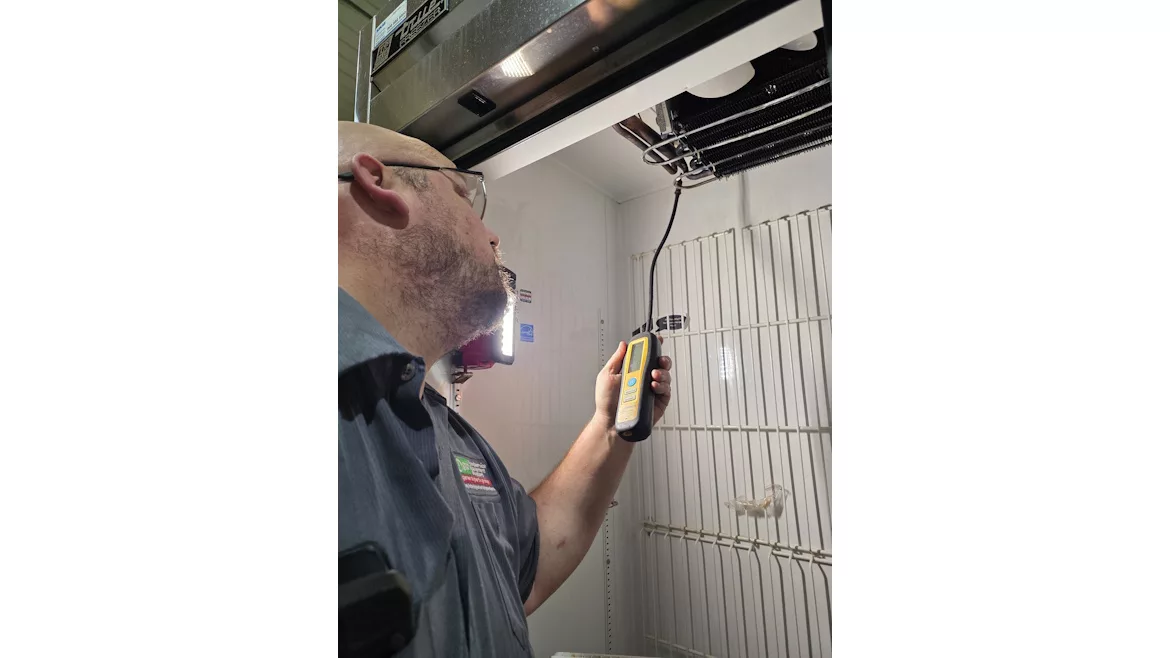
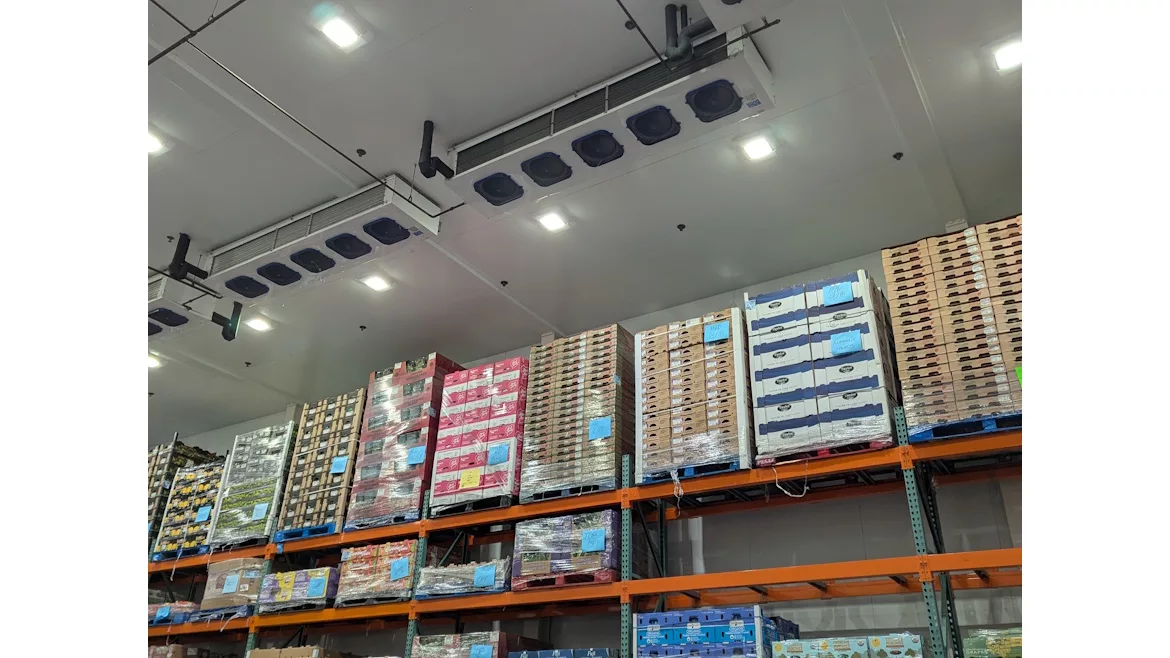
If you still “do compliance” at quarter end, you’re already behind. The AIM Act and new state rules have turned refrigerant management from a back-office chore into a frontline operating discipline. EPA’s Section 608 refrigerant management regulations still sets the baseline, but California, New York, Washington, and others now enforce shorter repair windows, rolling leak-rate math, tighter inspection schedules, and earlier reporting deadlines — backed by fines that can climb to ~$57,000 per day federally, plus state penalties. For multi-state banners, this isn’t an update; it’s a new game.
Preventable Violations
Walk through most store networks, and you’ll still see the same pattern: spreadsheets for logs, a standalone leak tracker, a computerized maintenance management system (CMMS) that doesn’t talk to compliance, and automatic leak detection (ALD) alarms lost in email. That setup turns facility teams into human middleware — re-entering data and chasing paperwork while regulations shift mid-year. Legacy tools allow illogical entries (repairs before detection), miss credential checks (unqualified techs on high-charge racks), and rarely encode state-specific rules. The result is preventable violations and audit risk.
Small misses can also snowball quickly: grocers have paid six-figure penalties for refrigerant violations, including Costco ($335,000), Trader Joe’s ($500,000), and Safeway ($600,000). Two common failure modes drive most surprises: 1) a multi-stage leak repair where the clock resets and no one updates the deadline; and 2) an “unseen leak” fixed and invoiced but never logged, corrupting leak-rate math and triggering missed notifications later. Both are examples of what fragmented systems don’t catch — and what regulators will.
What replaces the patchwork? A connected refrigeration approach that treats compliance as an operating system, not a set of forms. In practice, that means a single, vendor-neutral platform where ALD alarms, BMS telemetry, refrigerant events, technician credentials, and CMMS work orders live in one narrative: detection → repair → verification → documentation. Rules are encoded as software policy, so the platform — not memory — enforces timelines and evidence. The payoff: fewer missed inspections, cleaner records, and store teams focused on fixes, not forms.
This is what “connected” looks like in the aisle:
- Refrigerant tracking with tamper-evident histories by site and asset;
- Complete audit trails that bind multi-visit leaks into one event;
- State-aware rule engine (e.g., New York 14-day repair, California March 1 reporting);
- Optical character recognition (OCR) digitization of job sheets, so handwritten forms become data;
- Leak-rate calculator that applies event, calendar, and rolling methods;
- ALD system management with inspection logic that adapts when ALD system is present;
- Built-in validation and technician checks that flag expired certifications; and
- Centralized reporting that generates EPA and state submissions in clicks.
Correct Compliance
Compliance done right doesn’t slow you down — it speeds you up. When alarms auto-triage into prioritized work, truck rolls drop. When leak events are unified end-to-end, verification isn’t forgotten, and rework shrinks. When inspection schedules adapt to ALD system coverage, you stop paying for checks you don’t need — and stop missing the ones you do. Most importantly, when compliance data, maintenance actions, and vendor performance sit in one system, you finally see where shrink, energy waste, and labor time are hiding.
A large meal-kit provider’s network shows what’s possible: moving from spreadsheets to a connected platform replaced last-minute audit scrambles with continuous readiness, cut admin time, and surfaced risk before it became a violation. It’s what happens when compliance shifts from periodic bookkeeping to daily operations.
This enforcement era isn’t forgiving. A realistic model for grocers must assume:
- Rules will change mid-year. Software must update centrally — stores shouldn’t interpret PDFs.
- Events will be out of order. Systems must backdate entries, recalculate leak rates, and flag missed verifications.
- ALD systems are prevention, not paper. You’ll be asked to prove alarms were investigated within 24 hours.
- Compliance and CMMS are inseparable. If a repair closes in maintenance but never flows into compliance, you are not compliant.
The good news is that you don’t need a rip-and-replace to start – you just need to connect what you already have:
- Inventory the “grey zone.” Catalog all appliances between 15 and 50 lbs. of refrigerant charge; this cohort expands your compliance surface fastest.
- Unify data streams. Pipe ALD alarms and BMS telemetry into one monitoring layer that closes the loop through your CMMS.
- Centralize your rules. Build a master policy library for federal and state timelines, verification tests, and reporting deadlines — enforced in software, not spreadsheets.
- Digitize the paper trail. Use OCR to convert job sheets and block illogical entries.
- Run a monthly “truth audit.” Cross-check refrigerant purchase invoices against logged events; missing events are your fastest path to fines.
The grocers who win this decade will treat refrigeration compliance like food safety: designed into the operation, measured daily, and automated wherever possible. In an environment where patchwork tools create risk and cost, the connected refrigeration model offers something rarer than ever — control. It replaces after-the-fact reporting with live, rules-aware execution across every store, every rack, every event.
That’s not just how you pass an audit — that’s how you protect the brand, the margin, and the shopper experience – at scale.
Looking for quick answers on air conditioning, heating and refrigeration topics?
Try Ask ACHR NEWS, our new smart AI search tool.
Ask ACHR NEWS
Whether you require installation, repair, or maintenance, our technicians will assist you with top-quality service at any time of the day or night. Take comfort in knowing your indoor air quality is the best it can be with MOE heating & cooling services Ontario's solution for heating, air conditioning, and ventilation that’s cooler than the rest.
Contact us to schedule a visit. Our qualified team of technicians, are always ready to help you and guide you for heating and cooling issues. Weather you want to replace an old furnace or install a brand new air conditioner, we are here to help you. Our main office is at Kitchener but we can service most of Ontario's cities
Source link