By Wyatt Roberts
For decades, the fundamental products and workflows of Heating, Ventilation, and Air Conditioning and plumbing have remained remarkably consistent. New challenges, such as rising energy prices, more stringent state and local building codes, and increasing demand for long-term operational savings, are propelling the industry forward.
This is a clear sign that staying competitive requires mastering new technologies. In this regard, geothermal heating and cooling represents a significant advancement for HVAC solutions. It’s a reliable, efficient and longest-lasting HVAC product, particularly for multifamily housing, where it enables individual unit temperature control, reduces operating and maintenance costs for property owners and helps meet stringent building decarbonization goals.
For HVAC contractors, there are three must-know trends about geothermal heating and cooling that will change project approaches and plans for the future of business.
Trend 1: Geothermal is now foundational infrastructure
Geothermal heating and cooling isn’t new. Humans have utilized geothermal principles for centuries. Ground-source heat pump technology has been in existence since the late 1940s. These systems utilize the consistent ground temperature, just 6-8 feet below the surface, and a heat pump to transfer heat between the building and the earth.
For modern commercial developers and institutional clients, this consistency translates into tangible, long-term benefits that attract and retain tenants, such as whisper-quiet operation (no noisy outdoor condensers), reliable comfort and lower, more predictable utility bills.
This trend is especially apparent in multifamily projects where developers capitalize on this technology to differentiate their projects and maximize value.
Trend 2: New financial incentives make geothermal viable and profitable
For years, the technology was considered a high-end upgrade for climate-conscious consumers with disposable income. That paradigm has changed significantly. There are several reasons for this.
First, state and local governments are offering meaningful financial incentives to offset the upfront installation costs. For example, New York developers are eligible for a 30% tax credit for commercial projects until 2033. Many other states offer commercial geothermal incentives, providing grants, tax credits and rebates to bring down the upfront installation costs.
At the same time, H.R. 1 successfully maintained the commercial Investment Tax Credit for geothermal heat pumps, providing a tax credit of up to 50% through 2034. H.R. 1 also introduced new potential incentives for programs like leased geothermal systems, which could enable more third-party ownership models to reduce upfront costs and increase geothermal adoption.
Trend 3: Success requires early collaboration and shift in design workflow

Those who have never had experience with geothermal before, could be concerned that it is more difficult to install. While it is different in some ways, it is not more difficult than conventional systems. For veteran HVAC teams, the core work will look very familiar but it does require a shift in planning for the project. The bottom line is that success hinges on early collaboration between the HVAC team, developers and engineers.
Load calculations will still be performed to determine the building’s energy needs and design ductwork for air distribution. Teams will continue to plan, implement and manage the installation of the indoor equipment to ensure the system meets the calculated load requirements.
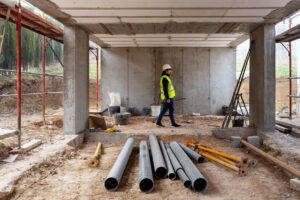
The primary mechanical design shift involves planning for ground loop piping. Instead of running refrigerant line sets to outdoor condensers, design pathways for pipes running from a central, ground-floor manifold to individual heat pumps throughout the building.
For HVAC contractors working on multifamily projects, the complexity of geothermal has been simplified. You no longer have to worry about the ground loops; these are typically handled by specialty contractors and engineers as a separate trade.
This isn’t more work. It’s different work, and thoughtful planning early in the design process will ensure the ground loop installation is seamlessly integrated with other site work, like excavation and utility trenching, preventing costly redesigns and project delays.
Lead the charge
In many ways, HVAC hasn’t changed in a long time. Everything else around these systems certainly has.
Geothermal heating and cooling is a ready-made solution to modernize product offerings. Buoyed by powerful financial incentives, a proven track record of superior performance and clear consumer (and regulatory) demand, geothermal heating and cooling is transitioning from a niche upgrade to an essential component of modern building design.
The contractors and technicians who build geothermal expertise now will be the ones who secure a competitive advantage and lead the industry’s inevitable transition to a more sustainable, electrified future.
Wyatt Roberts is head of new construction for Dandelion Energy.

Whether you require installation, repair, or maintenance, our technicians will assist you with top-quality service at any time of the day or night. Take comfort in knowing your indoor air quality is the best it can be with MOE heating & cooling services Ontario's solution for heating, air conditioning, and ventilation that’s cooler than the rest.
Contact us to schedule a visit. Our qualified team of technicians, are always ready to help you and guide you for heating and cooling issues. Weather you want to replace an old furnace or install a brand new air conditioner, we are here to help you. Our main office is at Kitchener but we can service most of Ontario's cities
Source link