When Disaster Strikes: Getting Help for Your Flooded Basement
If you’re dealing with standing water in your basement, here’s what you need to know about finding a solution.
Key Takeaways for Greenfield Homeowners
- Star Heating, Cooling & Plumbing – Licensed local plumbers serving Greenfield with professional sump pump installation.
- Contact a licensed plumber – Look for professionals with plumbing licenses, insurance, and experience with basement flooding.
- Ensure safety first – Turn off power to the basement before any work begins.
- Professional installation takes 3-6 hours – A qualified installer can typically complete a sump pump installation in a single visit.
- Don’t delay – Water damage worsens over time, and mold can start growing within 24-48 hours.
A flooded basement is one of the most stressful situations a homeowner can face. Whether it’s from heavy rainfall, snowmelt, or a high water table, standing water threatens your foundation, belongings, and air quality throughout your home. Many Greenfield homeowners find they need a sump pump (sometimes called a swamp pump) only after experiencing their first flood. The good news is that professional installation can prevent this from happening again.
Learn more about basement waterproofing solutions or schedule your sump pump installation today.
I’m Jeff Rich II, and I’ve spent years helping Greenfield families recover from plumbing issues and implement lasting solutions like sump pump systems. Whether you’re dealing with your first flood or looking to upgrade an aging system, understanding your options is the first step toward a dry, protected basement.
First Steps: What to Do When Your Basement Floods
When your basement floods, it can feel overwhelming. However, taking decisive action is crucial to minimize damage and ensure safety. We understand the panic that can set in, but a clear head and these steps can make a big difference. Flooded basements are a common problem, with many homeowners experiencing water damage at least once, so you’re not alone in this challenge.
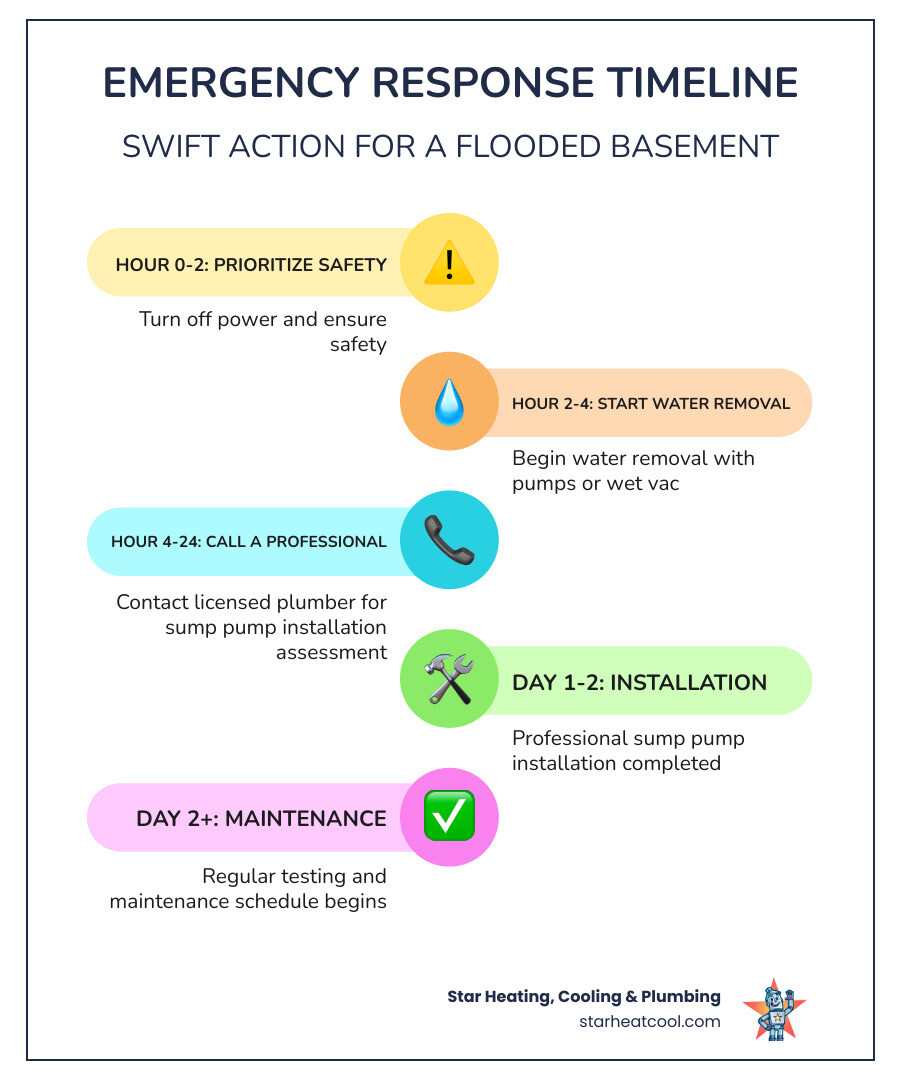
Prioritize Safety Above All Else
Our top priority in any flooding situation is always safety. Water and electricity are a dangerous combination, and standing water can hide unseen hazards.
- Electrical hazards: Never enter a flooded basement if you suspect electrical circuits or outlets are submerged. Live wires can be incredibly dangerous.
- Shutting off power: The very first thing you should do is locate your main electrical panel and turn off the power to the entire house, especially if the water level is rising or if any electrical appliances are in the water. If you can’t safely reach the panel, call your utility company or fire department for assistance.
- Gas appliances: If you smell gas, leave the house right away and call your gas provider. Floodwaters can damage gas lines and appliances, creating a serious risk.
- Contaminated water: Depending on the source of the flood, the water could be contaminated with sewage, chemicals, or other hazardous materials. Always assume the water is unsafe to touch.
- Protective gear: If you must enter the basement, wear waterproof boots, gloves, and protective clothing to shield yourself from potential contaminants and sharp objects hidden beneath the water.
Begin Water Removal
Once safety is secured, the next step is to remove the water. The faster the water is gone, the less structural damage and mold growth you’ll face. Mold can start growing within 24-48 hours, so speed is of the essence.
- Wet/dry vacuum: For smaller amounts of water, a wet/dry vacuum can be effective.
- Water pump rental: For larger volumes, you might consider renting a submersible water pump. However, if you’re already thinking about a sump pump installation in Greenfield, a professional plumber can often bring their own powerful pumps.
- Professional water extraction: For significant flooding, professional water extraction services are often the best route. They have industrial-grade equipment to remove water quickly and efficiently.
- Removing soaked items: As water levels recede, start removing items that have been soaked. Separate salvageable items from those that are too damaged. Be prepared for some items to be unsalvageable.
Assess and Document the Damage
This step is critical for insurance claims and understanding the full scope of the problem. Don’t skip it, even if you’re eager to clean up.
- Taking photos: Use your smartphone or a camera to take numerous photos of the flooded areas, including the water level, damaged belongings, and any visible signs of the water’s entry point.
- Video documentation: A video walkthrough can provide a comprehensive view of the damage. Narrate what you’re seeing, pointing out specific items and areas affected.
- Written inventory: Create a detailed list of all damaged items, including their approximate age and estimated value. This will be invaluable for your insurance claim.
- Insurance claims: Contact your homeowner’s insurance provider as soon as possible to report the damage and understand your coverage. They will guide you through the claims process. Professional installation of sump pumps and related drainage systems ensures optimal performance and protection against water damage, which can help prevent future claims.
Understanding Sump Pumps: Your Best Defense Against Flooding
A sump pump, sometimes called a swamp pump, is a submersible device installed in a specially constructed pit (sump pit) in the lowest part of your basement. It’s your home’s first line of defense against groundwater intrusion and flooding. Sump pump systems are crucial for preventing basement flooding, especially in areas prone to heavy rainfall or high water tables, like many parts of Indiana. We often explain to our Greenfield customers that a properly functioning sump pump is like having a vigilant guardian for your basement, ready to act at a moment’s notice.
How a Sump Pump Works to Keep Your Basement Dry
The operation of a sump pump is quite ingenious in its simplicity and effectiveness.
- Sump pit: First, a sump pit (or basin) is excavated in the lowest part of your basement floor. This pit collects water that seeps through your foundation or drains from a perimeter drainage system (like weeping tile).
- Groundwater collection: As groundwater levels rise around your home’s foundation, the water naturally flows into this pit.
- Float switch activation: Inside the pit, the sump pump is equipped with a float switch. As the water level in the pit rises, it lifts this float. When the float reaches a predetermined height, it activates the pump.
- Water discharge: Once activated, the pump quickly begins to pull the water out of the pit and discharges it away from your home’s foundation through a discharge pipe, typically into a storm drain, dry well, or another approved drainage area.
- Automatic operation: The pump operates automatically, turning on when the water rises and shutting off once the water level drops below the float switch’s trigger point. This continuous monitoring and removal process keeps your basement dry, preventing water from ever reaching a damaging level.
Telltale Signs You Need a Sump Pump Installation
Sometimes, the need for a sump pump is glaringly obvious – like after a flood. But often, your home gives subtle hints that it’s time for an installation before disaster strikes.
- Previous flooding: This is the most obvious sign. If your basement has flooded before, even if it was just a small amount of water, you absolutely need a sump pump.
- Musty smells: A persistent musty odor in your basement or crawl space indicates the presence of moisture and potentially mold, suggesting water intrusion even if you don’t see standing water.
- High water table: Homes in areas with a high water table are inherently more susceptible to basement flooding. If you live in a low-lying area or near a body of water in Greenfield, a sump pump is a wise preventative measure.
- Efflorescence: This is a white, powdery substance on your basement walls, indicating that water has seeped through the concrete and left mineral deposits as it evaporated. It’s a clear sign of moisture problems.
- Water stains: Any stains on your basement walls or floor that suggest water has been present, even if dried, are red flags.
- Living in Greenfield: Many areas in Greenfield, like other parts of Central Indiana, are prone to heavy rainfall and seasonal flooding, making sump pump protection a necessity for peace of mind.
Choosing the Right Type of Sump Pump
Not all sump pumps are created equal. Choosing the right type depends on your specific needs, the amount of water you anticipate, and your basement’s layout. We help our Greenfield customers select the best fit for their homes.
| Feature | Submersible Sump Pump | Pedestal Sump Pump |
|---|---|---|
| Placement | Sits inside the sump pit, submerged in water. | Motor is above the sump pit, with a hose extending in. |
| Lifespan | Generally 5-15 years. | Can be longer, sometimes 10-20 years. |
| Noise | Quieter due to water muffling the motor. | Louder as the motor is exposed. |
| Ideal Use | Basements with higher flood risk, finished basements. | Basements with smaller sump pits, less frequent use. |
| Maintenance | Requires removal from pit for inspection. | Easier access for maintenance and repairs. |
- Submersible pumps: These pumps are designed to sit directly in the sump pit, submerged in water. They are typically quieter because the water dampens the motor’s sound. They also tend to be more aesthetically pleasing if your sump pit is in a visible area.
- Pedestal pumps: With a pedestal pump, the motor is liftd above the sump pit, with an intake hose extending down into the water. They are generally less expensive and easier to maintain or repair since the motor is accessible without removing the entire unit from the pit. However, they can be noisier.
- Pump capacity: This refers to how many gallons per minute (GPM) the pump can move. We assess the typical amount of water your basement receives during heavy rains to recommend the appropriate capacity.
- Horsepower: Sump pumps come in various horsepower (HP) ratings, usually from 1/3 HP to 1 HP or more. The right horsepower depends on the volume of water, the height the water needs to be pumped, and the length of the discharge pipe. A higher HP pump can move more water faster and push it further.
Finding a Greenfield Sump Pump Installer for Your Flooded Basement
Finding a qualified and reliable plumber is crucial. A professional installation ensures your system works correctly from day one, complies with local codes, and provides lasting protection for your home. When you’re facing a flooded basement, you need to know you’re getting expert help. We pride ourselves on being that trusted resource for Greenfield homeowners.
How to Find a Reliable Greenfield Sump Pump Installer
Choosing the right professional for your sump pump installation is as important as choosing the right pump itself. A shoddy installation can lead to future failures and more flooding.
- Licensed plumbers: Always ensure the installer is a licensed plumber. This guarantees they have met state requirements for training and expertise. We are fully licensed and uphold the highest industry standards.
- Insured professionals: Verify that the company carries adequate liability insurance. This protects you in case of any accidents or damage during the installation process.
- Local reputation: Ask around your Greenfield neighborhood, check online reviews, and look for companies with a strong, positive local reputation. A company that values its community will often go the extra mile.
- Online reviews: Websites like Google, Yelp, and others can offer insights into other customers’ experiences. Look for consistent praise regarding professionalism, efficiency, and customer service.
- Asking for referrals: Friends, family, and neighbors who have had sump pump installations in Greenfield can provide excellent personal recommendations.
Key Questions to Ask a Potential Installer
Before committing to an installer, take a moment to ask these crucial questions. They will help you gauge their expertise and ensure you’re making an informed decision.
- What is your experience with sump pump installations in Greenfield homes specifically?
- What warranties do you offer on both the sump pump unit and the installation labor?
- What is your estimated timeline for completing the sump pump installation?
- Can you provide proof of your licensing and insurance?
- Are you familiar with and do you comply with all local Greenfield codes and regulations related to sump pump discharge and installation? (This is important, as local regulations often dictate where and how water can be discharged).
- Do you offer battery backup options?
- What kind of post-installation support or maintenance services do you provide?
The Professional Sump Pump Installation Process
When we undertake a sump pump installation in Greenfield, we follow a meticulous process to ensure everything is done correctly, efficiently, and to the highest standards.
- Site assessment: Our technicians begin with a thorough assessment of your basement to determine the best location for the sump pit, considering the lowest point, proximity to electrical outlets, and suitable discharge routes.
- Pit excavation: We carefully excavate the sump pit, ensuring it’s appropriately sized for the chosen sump pump and deep enough to effectively collect groundwater.
- Pump placement: The sump pump is then carefully placed into the pit, ensuring it’s level and secure, with proper clearance for the float switch to operate freely.
- Plumbing connection: We connect the discharge pipe from the pump, routing it safely and efficiently away from your home’s foundation to an approved discharge location, adhering to all local regulations. Basement drainage installation is a key solution for managing subterranean water and preventing moisture issues.
- Electrical connection: A dedicated electrical outlet is installed or used near the sump pit to power the pump. This connection is done safely and according to electrical codes.
- Testing the system: Before we consider the job complete, we thoroughly test the sump pump by filling the pit with water to ensure the float switch activates the pump correctly and that water is discharged efficiently. We also check for any leaks and ensure the system runs smoothly.
Keeping Your Sump Pump in Top Condition
Once your new sump pump is installed, regular maintenance is key to ensuring it’s ready to work when the next storm hits. A few simple checks can prevent a future catastrophe. Sump pumps are vital for preventing basement flooding, and regular maintenance and timely repairs can prevent costly situations. Think of it as giving your basement’s guardian a regular health check-up!
Essential Sump Pump Maintenance You Can Do
While professional maintenance is recommended annually, there are several things you can do between visits to keep your sump pump in good working order.
- Quarterly testing: Pour a bucket of water into the sump pit to raise the float and activate the pump. Ensure it turns on, removes the water, and then shuts off automatically. This confirms the float switch and pump motor are functional.
- Clearing the pit: Periodically inspect the sump pit for any debris, dirt, or gravel that might have accumulated. Remove anything that could obstruct the pump’s operation or clog the discharge pipe.
- Checking the float switch: Ensure the float switch can move freely without hitting the sides of the pit or getting tangled in wires. Any obstruction can prevent the pump from activating.
- Cleaning the impeller: The impeller is the part of the pump that moves the water. Occasionally, debris can get caught in it, reducing efficiency. If you’re comfortable, you can unplug the pump, remove it from the pit, and inspect the impeller for blockages.
Why a Battery Backup System is a Smart Investment
Imagine this: a massive storm hits Greenfield, the power goes out, and your primary sump pump stops working just when you need it most. That’s where a battery backup system comes in.
- Power outages: The primary benefit of a battery backup is uninterrupted protection during power outages. When the electricity fails, the backup system automatically kicks in, powered by a marine-grade battery.
- Heavy storms: During severe weather, when your main pump is working overtime, a battery backup provides an essential safety net, ensuring continuous water removal even if the primary pump struggles or fails.
- Uninterrupted protection: This continuous operation means your basement remains protected from flooding, safeguarding your belongings and foundation.
- Peace of mind: Knowing your basement is protected even when the power is out offers invaluable peace of mind, especially during long storms or when you’re away from home.
Signs of a Failing Sump Pump
Your sump pump usually operates quietly and efficiently, but sometimes it will give you clues that it’s struggling or about to fail. Heeding these warnings can save you from a flooded basement.
- Strange noises: Grinding, gurgling, or loud thumping sounds can indicate a problem with the motor, impeller, or a blockage.
- Excessive vibration: If your pump is vibrating more than usual, it could be a sign of a bent shaft or an issue with the impeller.
- Running constantly: A sump pump that runs continuously, even when there’s no water in the pit, might have a faulty float switch or a check valve issue. This wastes electricity and wears out the pump prematurely.
- Failure to turn on: If water is accumulating in the pit but the pump isn’t activating, it could be a power issue, a stuck float switch, or a motor failure.
- Visible rust: Rust on the pump or in the pit can indicate water quality issues or corrosion, potentially compromising the pump’s integrity.
Protect Your Home with Professional Plumbing Solutions
A flooded basement is a stressful event, but taking informed action can mitigate the damage and prevent future occurrences. From immediate safety precautions to understanding how a sump pump works and finding a reliable installer, you now have the knowledge to protect your Greenfield home. Proper installation and regular maintenance are the keys to a dry, secure basement for years to come. For trusted, professional plumbing services, contact the experts at Star Heating, Cooling & Plumbing to schedule your sump pump installation. We are dedicated to providing excellent service and ensuring your home remains safe and dry.
Contact our Greenfield plumbers for expert help
Whether you require installation, repair, or maintenance, our technicians will assist you with top-quality service at any time of the day or night. Take comfort in knowing your indoor air quality is the best it can be with MOE heating & cooling services Ontario's solution for heating, air conditioning, and ventilation that’s cooler than the rest.
Contact us to schedule a visit. Our qualified team of technicians, are always ready to help you and guide you for heating and cooling issues. Weather you want to replace an old furnace or install a brand new air conditioner, we are here to help you. Our main office is at Kitchener but we can service most of Ontario's cities
Source link