Subscription service price increases. Sticker shock at the pump. Sky-high electric bills. The cost of everything is going up, and homeowners coast to coast are feeling the heat. The silver lining is that there are ways to protect yourself to a degree. One of those ways involves smart home upgrades. And rather than a full lifestyle overhaul it simply requires a little effort and some upfront costs that will save you big in the long run.
The key is knowing which upgrades deliver the most impact and making sure they’re installed correctly. That’s where Holtzople Heating, Air Conditioning & Electrical Services comes in.
Let’s take a walk through 10 of the most effective smart home upgrades you can make that can save you big over the years ahead.
Why Smart Home Upgrades Improve Energy Efficiency
Before we dive into the details around the actual devices, you need to understand why these upgrades are so effective and how they contribute to smart home energy efficiency. Traditional devices waste energy in easy-to-miss ways, using power around the clock, even when it’s not necessary.
Smart tech seeks to address this wasteful usage three ways:
- Automation: Devices adjust their setting automatically based on occupancy, time of day, or learned behaviors. No manual input needed!
- Real-time monitoring and control: Gain visibility into how much energy your devices are using, as well as the ability to change it from your mobile device.
- Long-term ROI and sustainability: These upgrades do have a higher upfront cost, but it’s more than offset by the long-term savings they provide. Some even offer rebates!
Basically, smart-home electrical efficiency isn’t just good for the environment; it’s a practical and money-saving approach for you, as well!
10 Smart Home Upgrades to Reduce Energy Use
Okay, now let’s talk about the exciting stuff: the devices themselves.
1. Smart Thermostats
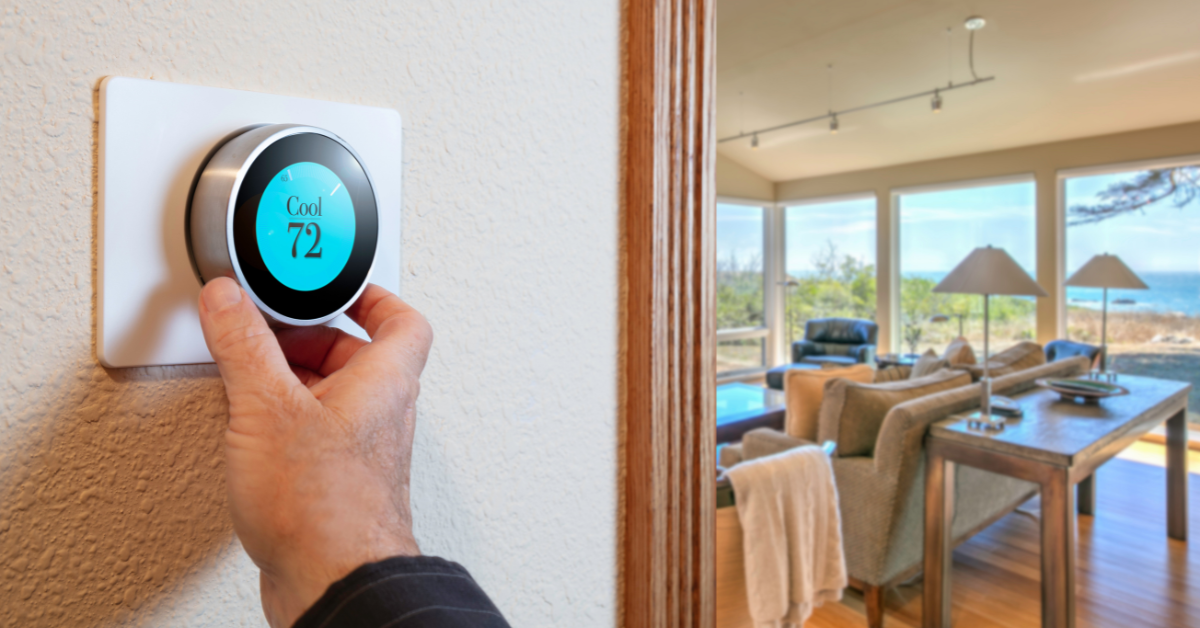
If there’s one upgrade that tops nearly every list of this sort, it’s the smart thermostat. Your thermostat is the brain of your HVAC system, and when that brain gets smarter, your whole home gets more efficient.
Smart thermostats automatically adjust your home’s heating and cooling based on your schedule, your habits, and the weather. They learn your preferences over time and create automatic presets that reduce energy use when you’re asleep or away:
- Schedule-based temperature control that runs in the background
- Remote access via smartphone lets you make adjustments from the office, the car, or the couch
- Energy usage reports to track patterns and savings
- Integration with other smart home devices
Energy fact: According to the U.S. Department of Energy, homeowners can save up to 10% per year on heating and cooling by adjusting their thermostat 7–10°F for 8 hours a day.
2. Smart Lighting Systems
Lighting takes up a significant chunk of household energy use, but it’s one of the easiest areas to optimize. Smart lighting systems combine energy-efficient LED bulbs with app or voice controls, motion sensors, and dimming capabilities.
Imagine lights that automatically switch off when a room is empty, or that dim themselves in the evening to match the natural light coming through your windows. That kind of intelligent management is both convenient and cost-efficient.
- LED bulbs use up to 75% less energy than traditional incandescent lighting
- Smart dimmers extend bulb life and reduce electricity draw
- App and voice control puts lighting management at your fingertips
3. Smart Power Strips
Many devices draw power even when they aren’t in use. The fix? Smart power strips. They detect when a device goes idle and automatically cut power to it, preventing constant low-level drain. They’re particularly effective in entertainment centers and home offices, where multiple devices are plugged in around the clock.
4. Smart Plugs
Smart plugs are one of the most accessible and affordable entries on this list. They plug directly into your existing outlets and give you remote control and scheduling capability over whatever is plugged into them.
The real efficiency perk comes from scheduling; you can program high-energy appliances to run only during off-peak hours when electricity rates are lower, or simply make sure nothing is running when it shouldn’t be:
- Control individual devices from your smartphone
- Schedule appliances around peak electricity rate-hours
- Monitor energy draw per device to identify inefficiencies
5. Energy Monitoring Systems
Energy monitoring systems give you a real-time view of exactly how much electricity your home is consuming. These systems are useful for identifying devices that inflate your monthly bill.
With this kind of visibility, homeowners can make informed decisions about when to run certain appliances, which devices to replace, and where the biggest opportunities for savings are. It’s one of the most data-driven ways to approach how to reduce energy bills.
6. Smart Ceiling Fans
Smart ceiling fans sync with your thermostat and adjust speed automatically based on the room temperature.
Running ceiling fans in the summer allows you to raise your thermostat setting by about 4°F without sacrificing comfort. In the winter, reversing the fan direction pushes warm air down from the ceiling, improving heat distribution. Holtzople offers professional ceiling fan installation as part of our electrical services, so this upgrade is easy to get right:
- Sync with smart thermostats for automated airflow management
- Reverse direction seasonally for year-round efficiency
- Reduce the load on your HVAC system in every season
7. Motion Sensor Switches
Lights left on in empty rooms are one of the most common sources of wasted energy in any home. Motion sensor switches solve the problem entirely by turning lights on when someone enters a room and off when they leave.
These switches are especially effective in high-traffic, in-and-out spaces like bathrooms, garages, basements, and hallways. They’re straightforward to install and deliver immediate, consistent savings from the start.
8. Smart Water Heater Controls
Water heating is responsible for roughly 18% of the average home’s energy use, making it a significant target for efficiency improvements. Smart water heater controls allow you to schedule heating cycles around your actual usage:
- Schedule heating cycles to match your household’s daily routine
- Reduce standby energy loss from a constantly running system
- Some models offer “vacation mode” to minimize waste while you’re away
9. EV Charger Optimization (if Applicable)
If you own an electric vehicle, your charger may be one of the largest contributors to your household electricity bill. EV charger optimization allows you to schedule charging sessions during off-peak hours.
Many utilities offer time-of-use rate plans specifically designed to reward off-peak charging. Combined with a smart-charging schedule, this can result in substantial monthly savings for EV owners without changing your driving habits.
10. Whole-Home Automation Systems
The most powerful approach to smart home energy efficiency is to connect your upgrades into a single, coordinated system. Whole-home automation platforms, like Google Home, Amazon Alexa ecosystems, or dedicated smart home hubs, allow all of your smart devices to communicate with each other and work together toward a common goal: maximum efficiency with minimum effort on your part.
When your smart devices all operate in sync, the results are greater than the sum of their parts. You get a home that intelligently manages itself and minimizes your energy usage:
- Integrate multiple devices into one centralized platform
- Create custom automations
- Maximize overall efficiency through coordinated device management
DIY vs. Professional Installation
Not every upgrade on this list requires a licensed electrician. Some are plug-and-play, but others need that professional touch. So what’s what?
DIY-friendly
- Smart plugs
- Smart power strips
- Basic smart bulb installations
- EV charger scheduling (software-side)
Best left to a professional
- Smart thermostat installation
- Motion-sensor switch installation
- Ceiling fan installation or replacement
- Whole-home energy monitoring
- EV charger installation
How Much Can You Save?
The savings potential of smart home upgrades shouldn’t be understated. Here’s a general snapshot of what to expect from some of the most impactful upgrades:
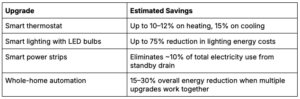
Keep in mind that every home is different. Your savings will depend on your household size, usage habits, and which upgrades you choose. The key is that these numbers compound; each upgrade you add increases the total impact.
Get Smart With Holtzople
You know how to reduce energy bills. Now it’s time to make it happen.
The great news about smart home upgrades is that you don’t have to tackle everything at once. Start with one or two changes and build from there, just as you would go about furnishing a room or customizing a car.
When you’re ready to take the money-saving steps towards a smarter home, Holtzople is ready to make it happen. Our recommendations can truly transform your lifestyle and energy usage. Talk soon!
Whether you require installation, repair, or maintenance, our technicians will assist you with top-quality service at any time of the day or night. Take comfort in knowing your indoor air quality is the best it can be with MOE heating & cooling services Ontario's solution for heating, air conditioning, and ventilation that’s cooler than the rest.
Contact us to schedule a visit. Our qualified team of technicians, are always ready to help you and guide you for heating and cooling issues. Weather you want to replace an old furnace or install a brand new air conditioner, we are here to help you. Our main office is at Kitchener but we can service most of Ontario's cities
Source link