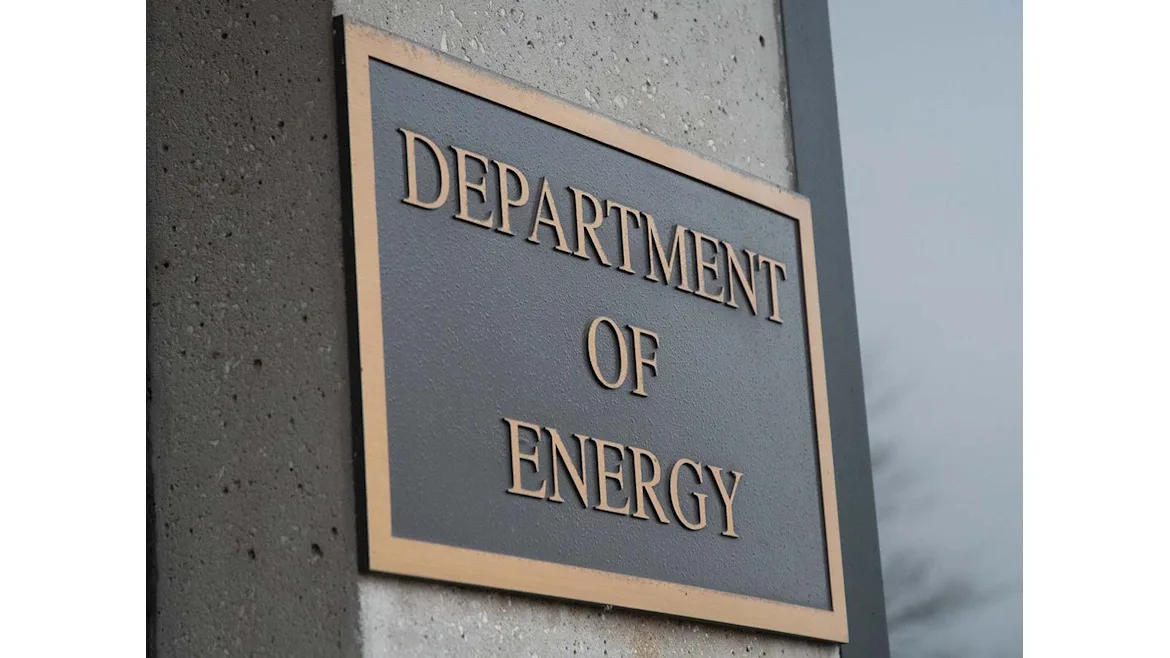
The 2010s marked a significant development that would impact the HVACR industry: the Department of Energy’s establishment of regional minimum efficiency requirements for residential heating and cooling equipment.
The process first began in 2007 when President George W. Bush signed the Energy Independence and Security Act of 2007 into law. In 2009, HVACR manufacturers and energy efficiency advocates agreed to improve regional energy-efficiency and building codes.
In the following year, the Air-Conditioning, Heating, and Refrigeration Institute (AHRI) and efficiency advocates officially submitted their regional standards consensus agreements to DOE.
On Oct. 25, 2011, the DOE confirmed the adoption of residential appliance standards for central a/cs, furnaces, and heat pumps. The new rule divided the country into three regions, each with its own minimum efficiency standards: North, Southeast, and Southwest.
In the North, most furnaces would be required to have an AFUE of 90% or more. In both the Southeast and Southwest, central air conditioners will be required to have a SEER of 14. In all regions, heat pump and oil furnace standards would rise.
The DOE accepted public comments from June 27 to Oct. 17 but determined “the adverse comments received in response to the direct final rule do not provide a reasonable basis for withdrawing the direct final rule.”
Responses and Litigation
The rule received mixed fanfare. The AHRI praised it for setting new standards that it helped create. Meanwhile, the Air-Conditioning Contractors of America (ACCA) expressed displeasure with the process.
Looking for quick answers on air conditioning, heating and refrigeration topics?
Try Ask ACHR NEWS, our new smart AI search tool.
Ask ACHR NEWS
“ACCA is extremely disappointed that DOE chose to use a fast-track process in promulgating new energy conservation standards for residential HVAC equipment,” said Charlie McCrudden, then-vice president of government relations.
On Dec. 23, 2011, the American Public Gas Association (APGA) filed a lawsuit that challenged standards for non-weatherized gas furnaces in the DOE’s rule. APGA argued the direct final rule process was used in error to establish a new standard that would cause fuel switching and asked for a clean round of notice and comment rulemaking.
In a Jan. 11, 2013 joint motion, the APGA and DOE vacated and remanded the rule, saying it was appropriate to undertake new rulemaking proceedings to consider appropriate standards. In that same month, Heating, Air-conditioning, and Refrigeration Distributors International (HARDI) filed a motion to continue the regional standards case, substituting itself in place of the APGA, in the hopes of rescinding the standards.
On Feb. 7, 2013, AHRI filed a motion in opposition to HARDI’s request. To complicate matters, the DOE said it would withdraw support for the pending settlement, which would reestablish the May 1, 2013, implementation date.
On that May 1 implementation date, the U.S. Court of Appeals for the D.C. Circuit ruled in favor of an emergency motion from AHRI to stay the implementation date. APGA filed a motion on May 13, 2013, asking the court to deny HARDI’s request.
“I think this was an unfortunate change for the country as a whole,” said Ken Robinson, then-co-owner of Climate Pro Mechanical Inc., Los Alamitos, Calif. “Reaching energy independence in America needs regulations to give the extra little push that we just otherwise won’t want to make.”
After a slew of legal processes and motions, a joint settlement was filed on March 11, 2014. This agreement would vacate the regional furnace efficiency standards and start a more thorough rulemaking process. It also gave the industry an 18-month sell-through period to comply with the Jan. 1, 2015, efficiency standards for split-system a/cs.
On April 24, 2014, the U.S. Court of Appeals for the D.C. Circuit accepted the settlement.
Regional Standards Take Effect
The regional energy conservation standards took effect on Jan. 1, 2015, maintaining the same regional divides.
The minimum efficiency requirements for split-system central air conditioners remained at 13 SEER in the North. In the Southeast, they must achieve at least 14 SEER. In the Southwest, they must be 14 SEER and 12.2 EER for systems smaller than 45,000 Btu and 14 SEER and 11.7 EER for systems larger than 45,000 Btu.
Being the DOE’s first regionalized energy-efficiency standards for HVACR equipment, enforcement was a concern. The DOE was required to work with industry stakeholders to develop a plan for regional standards enforcement through negotiated rulemaking.
“If a contractor finds a unit he or she believes is illegally installed, there will be ways to report that violation to the DOE so that the contractor or the individual who installed that product can be found in violation and face the penalties that apply,” said McCrudden.
Manufacturers responded with new programs and had to comply with a new labeling rule for outdoor condensing units. Manufacturers, including Trane and Rheem, were providing training for their distribution channels and continued to do so after the standards took effect.
“We’ve never had a federal minimum-efficiency change be effective based on the date of installation [instead of the date of manufacture], so that was the big twist in all of this,” said Karen Meyers, then-vice president of government affairs, Rheem Mfg. Co. “When it was a national standard, you didn’t need a sell-through period because it’s all based on the date of manufacture. You could sell anything in your inventory.
“Now, if you have a unit in your inventory, it may have been legal when it was built, but it may no longer be legal to install.”
Whether you require installation, repair, or maintenance, our technicians will assist you with top-quality service at any time of the day or night. Take comfort in knowing your indoor air quality is the best it can be with MOE heating & cooling services Ontario's solution for heating, air conditioning, and ventilation that’s cooler than the rest.
Contact us to schedule a visit. Our qualified team of technicians, are always ready to help you and guide you for heating and cooling issues. Weather you want to replace an old furnace or install a brand new air conditioner, we are here to help you. Our main office is at Kitchener but we can service most of Ontario's cities
Source link