Today’s HVACR systems are more advanced than ever, but that doesn’t matter if they aren’t installed correctly.
Across the industry, gaps in system design, commissioning, airflow, and more are still rearing their ugly head, impacting contractor credibility, homeowner satisfaction, and the carefully manufactured HVAC system itself.
Here are some of the most common installation mistakes killing HVAC system performance today.
1) Skipping Load Calculations (Box Swapping)
One of the most common foundational installation mistakes is improper HVAC system — often referred to as “box swapping.”
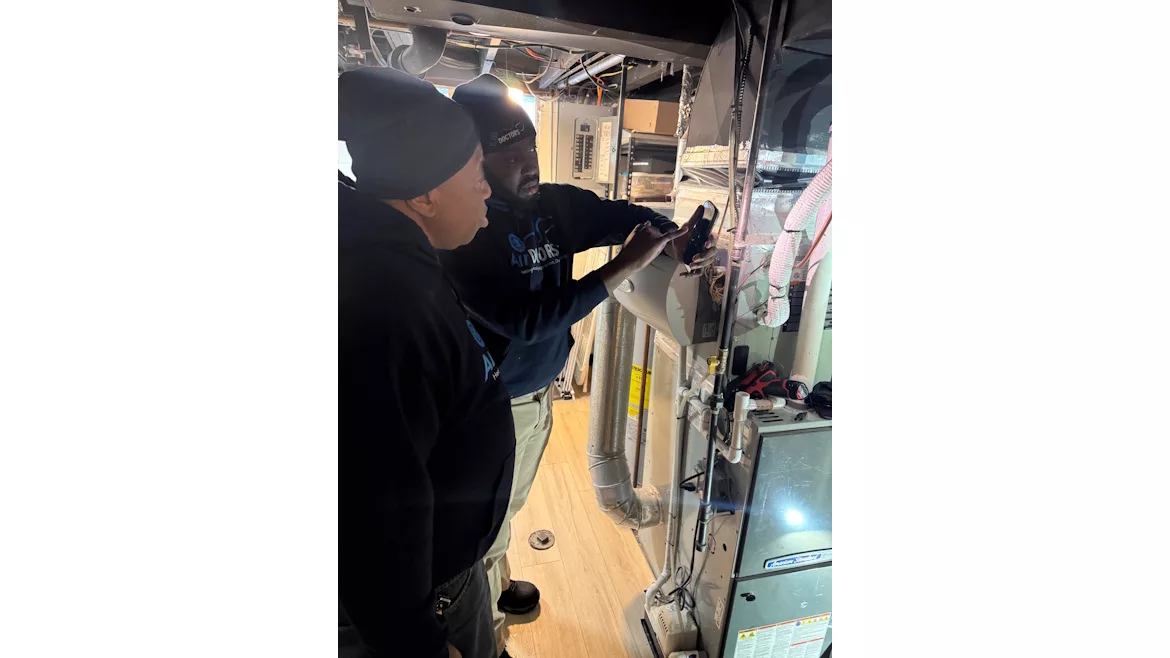
“This happens when contractors skip proper heat loss and heat gain calculations,” said Brynn Cooksey Sr., CEM, CMS, owner and general manager of Air Doctors Heating and Cooling in Belleville, Michigan, and founder of HVAC U. “As a result, systems are often undersized, which leads to higher energy bills and long-term comfort issues for the customer.”
Cassie Pound, co-owner of Quality Heating, Cooling, and Plumbing, servicing all of Northeast Oklahoma, said relying on “rules of thumb” instead of actual load calculations leads to short cycling, humidity issues, and unhappy homeowners.
Without proper load calculations, the system is at a disadvantage to perform as intended.
Looking for quick answers on air conditioning, heating and refrigeration topics?
Try Ask ACHR NEWS, our new smart AI search tool.
Ask ACHR NEWS
2) Ignoring Duct Design And Thus, Airflow
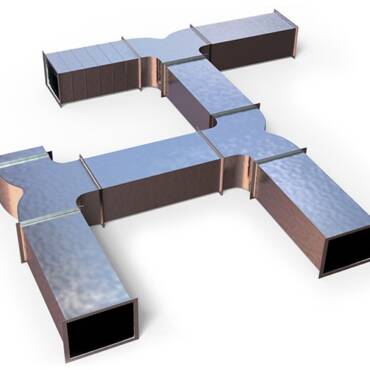
Duct design is seemingly the backbone of proper system design and installation, yet it’s often overlooked.
“The most common problem I see is plenum boxes with either a bullhead tee or a series of flex duct branches coming off of them,” said Joey ‘Joe Joe the HVAC Man’ Henderson, HVAC trainer, consultant, and president of HVAC Consulting Services LLC. “This creates extremely high static pressure on the system, which reduces efficiency, reduces capacity, and shortens equipment life. It also leads to improper airflow — and improper airflow leads directly to improper refrigerant charging.”
Cooksey said duct-related issues are often the biggest hidden problem. They may not show up immediately after installation, but when a system operates long enough under extensive static pressure, its key components, like blower motors and heat exchangers, slowly degrade all the while.
“Contractors end up losing hard-earned profits because the equipment fails prematurely due to high static pressure … These failures may take years to surface, but they are almost always tied back to poor system design at the time of installation,” Cooksey said.
According to Pound, static pressure issues are a silent killer. Also, often going unnoticed at first but creating major problems over time.
“Everything may ‘feel’ fine at install, but over time you start seeing higher energy bills, premature equipment failure, and comfort complaints,” Pound said. “The homeowner doesn’t always connect it back to installation.”
Which is why ensuring proper airflow becomes that much more important. Pound said this is hands-down where the biggest installation mistakes are made.
“We see systems with undersized returns, poorly designed ductwork, or existing duct systems that were never evaluated when the new equipment was installed,” Pound said. “You can put in the best equipment on the market, but if airflow is wrong, it will never perform the way it’s designed to.”
3) Lack Of Proper Commissioning
Even the best-designed systems can fail if they aren’t properly commissioned.
“During commissioning, technicians verify airflow, refrigerant charge, and system performance,” Cooksey said. “If something is off, adjustments can be made before the customer takes ownership. Skipping this step leaves performance to chance.”
Too often, skipping commissioning happens because a lot of installs stop at “it turns on and cools,” Pound said. Without verifying issues, things like improper airflow or incorrect refrigeration charge go unchecked.
4) Installing To Code And Stopping There
What many installers still don’t realize is that meeting code doesn’t guarantee performance.
“Code is a floor, not a ceiling — it tells you the minimum to be legal, not the minimum to be good,” Pound said. “Installation should be system-based, not just equipment-based.”
Yet too often, code is still treated as the benchmark for good design.
“Code officials are checking for safety, not airflow and refrigerant charge,” Henderson said. “Those are OEM specifications, not code requirements. So, a system can pass inspection and still be undercharged or airflow-deficient, which directly impacts both efficiency and capacity.”
Cooksey pointed to a common root cause: oversized equipment combined with undersized ductwork.
“Even though the system is ‘to code,’ it will never deliver its rated capacity or efficiency under those conditions,” Cooksey said.
5) Knowledge Gaps In System Thinking
Many installation issues trace back to training gaps — particularly around system-level thinking.
“A lot of new installers are trained on how to install equipment, but not how the entire system works together,” Pound said. “They don’t always understand airflow, static pressure, or how duct design impacts performance.”
Ask Henderson, and he’ll say duct-design principles, not just installation practices, are the biggest knowledge gaps he sees in new installers.
“Most new installers are taught how to strap, support, and seal duct … but if the design is wrong from the start, none of that matters,” Henderson said. “Good installation practices on a poorly designed duct system still gets you a poorly performing system. The foundation has to be right first.”
Cooksey noted gaps in proper fitting and knowing the best practices for commissioning.
“Many new installers are not fully trained on how installation decisions impact airflow, system performance, and long-term reliability,” said Cooksey.
6) Small Mistakes With Big Consequences
Some of the most damaging mistakes start small, until they are so big they can no longer be ignored.
Like poor drain setups, which don’t always make themselves known until there’s water damage or mold concerns, Pound said. Or improper refrigerant charge. While this may not prevent a system from running, it will stop it from running efficiently and, over time, lead to wear and tear and performance loss.
Henderson mentioned the depth of a condensate trap — traditional traps don’t run deep enough. These days, any negative-pressure drain system, whether it’s for an air handler or a package unit, needs a deep J-trap.
“When the trap is too shallow, moisture collects inside the unit, mold grows on the blower housing and wheel, insulation breaks loose and gets pulled into the blower, humidity re-enters the airstream, and eventually water gets on the motor — leading to premature motor failure,” Henderson. “It’s a chain reaction that starts with something most installers never even think about.”
This kind of shortcut happens so often, in fact, that code officials have noted it to Henderson as one of the top problems they find in the field.
“When older, less efficient equipment is replaced with newer high-efficiency systems, the new equipment typically has lower amperage requirements — but the fuses and breakers from the old unit are left in place,” Henderson said. “Now the new equipment isn’t properly protected electrically.”
All In All
All of these issues point to one commonality: Installing high-performing HVAC equipment requires more than proper equipment and code — it requires proper design, knowledge, installation, and verification.
“Installation should be system-based, not just equipment-based,” Pound said. “The opportunity right now is in training installers to think like problem solvers, not just installers,” said Pound.
By focusing on the fundamentals — load calculations, duct design, airflow, and commissioning — not only are fewer mistakes made and performance improved, but callbacks are reduced, and contractors are better positioned to deliver results for customers.
Choose One Installation Mistake To Eradicate Overnight
Take a second to think about an installation mistake that, if eradicated, could alter HVAC system performance across the board.
If Brynn Cooksey had the choice, it’d be load calculations and duct design, no question.
“This is a systemic issue in our industry. If we committed to doing the fundamentals correctly every time, we would solve a significant portion of performance, comfort, and efficiency problems overnight,” Cooksey said.
Henderson said it’d be to get rid of the plenum box and replace it with a square-to-round fitting, and use Y-fittings where a split is needed into left and right trunk lines.
“If you don’t need to split, go as straight as possible with your trunk line and use flex branches off of it,” Henderson said. “Run your flex tight and straight — no excess, no sags. And use hard elbows any time you need to make a turn. That single change would transform system performance across the industry.”
Pound’s answer was simple: airflow.
“If every system had proper airflow design and verification, you would see an immediate improvement in efficiency, comfort, and equipment longevity across the board,” Pound said. “Airflow impacts everything. You can’t fix comfort, humidity, or performance without it.”
Whether you require installation, repair, or maintenance, our technicians will assist you with top-quality service at any time of the day or night. Take comfort in knowing your indoor air quality is the best it can be with MOE heating & cooling services Ontario's solution for heating, air conditioning, and ventilation that’s cooler than the rest.
Contact us to schedule a visit. Our qualified team of technicians, are always ready to help you and guide you for heating and cooling issues. Weather you want to replace an old furnace or install a brand new air conditioner, we are here to help you. Our main office is at Kitchener but we can service most of Ontario's cities
Source link