
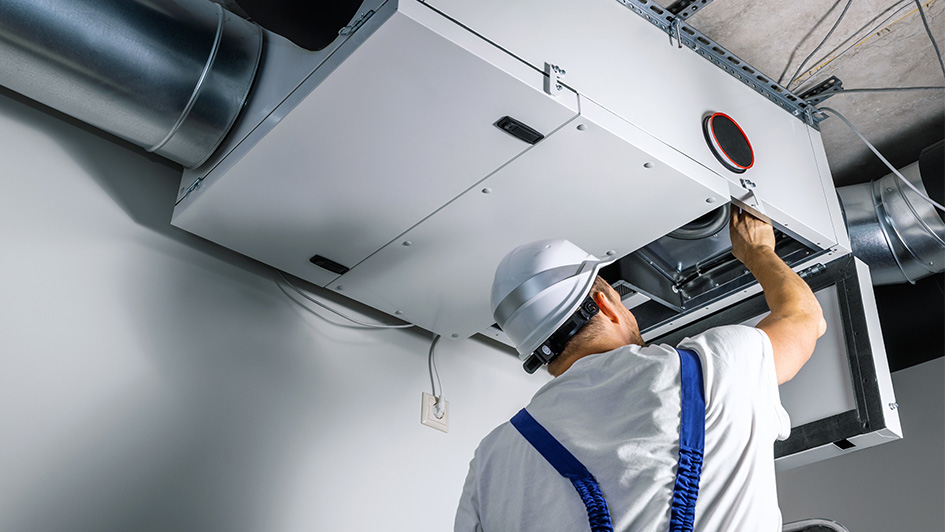
Rooms that feel stale and stuffy. Foggy windows. Rooms that feel damp in summer or bone-dry in winter. These are frequent complaints about today’s homes, especially newer ones built for extreme energy efficiency. Modern construction methods do a great job of preventing drafts and reducing energy waste, but they can also trap stale air, humidity and indoor pollutants inside your home.
That’s where a professionally designed home ventilation system can help. Systems like a Heat Recovery Ventilator (HRV) and an Energy Recovery Ventilator (ERV) are designed to improve air quality in today’s airtight homes. They pull out stale indoor air while introducing fresh outdoor air. Even better, they do this while helping support your home’s energy efficiency.
If you’re thinking about installing an HRV or ERV for your home, you’re not alone. Many homeowners want fresher indoor air and better comfort, but they also want to know which system is the ideal fit. Understanding the difference between these systems can help you make the smartest decision for you.
Why Tight Homes Need Better Ventilation
Today’s homes are built tighter than ever before. Builders use thick insulation, sealed windows and improved construction techniques to minimize air from seeping into your home. This extreme energy efficiency is a big help in cutting your monthly energy bills, because it keeps warm and cool air inside where it belongs.
However, this also causes reduced natural airflow. Older homes often “breathed” through very small gaps and cracks around doors, windows and walls. Today’s homes usually don’t. Without additional ventilation to boost airflow, moisture, odors, allergens and other airborne contaminants can become sealed indoors in modern homes.
Cooking, cleaning and even breathing all add humidity and particles into your home’s air. Without enough fresh air exchange, your indoor air can start to feel stale. This high humidity can also cause condensation on windows, musty odors and even mold.
Because of this, airtight home ventilation is so important. A balanced ventilation solution brings fresh air into your home while pushing out stale indoor air. A mechanical ventilation system such as an ERV or HVR controls airflow throughout your home. Instead of relying on natural air leaks or occasional window opening, it creates more comfortable, fresh indoor air.
What’s an HRV System?
An HRV, or Heat Recovery Ventilator, is a system that boosts indoor air by replacing stuffy indoor air with fresh air. It’s designed to capture heat from the outgoing air before it pushes that air out of your home.
In basic terms, the warm stale air passes through the HRV on the way out of your home. At the same time, fresh outdoor air moves into the HRV. The heat from the outgoing air moves to the incoming air without the two air streams mixing together. Because of this, the HRV provides fresh air without running up your winter heating bills.
However, this only applies to heat. It does not move moisture. Because of that, one of the biggest HRV system benefits is its ability to reduce moisture levels in homes with high humidity. On the flip side, a drawback is it does not add moisture to dry air.
What’s an ERV System?
An ERV, or Energy Recovery Ventilator, works similarly to an HRV, but with one major difference. An ERV transfers both heat and moisture between the air streams.
This helps with home humidity control throughout the seasons. During winter, an ERV keeps indoor air from becoming very dry. On hot summer days, it can reduce some of the moisture entering your home from outside air. This additional humidity control is one of the most valuable ERV system benefits.
ERV vs. HRV: What is the Difference?
| HRV (Heat Recovery Ventilator) | ERV (Energy Recovery Ventilator) | |
|---|---|---|
| Heat Transfer | Yes | Yes |
| Moisture Transfer | No | Yes |
| Humidity Control | Reduces indoor humidity | Controls indoor humidity year-round |
| Energy Efficiency | Increases airflow while reducing heating energy loss | Increases airflow while lowering heating and cooling energy loss |
| Best Climate Application | Colder, drier areas with humid indoor air | Humid climates or homes with dry winter air |
| Comfort Considerations | Helps prevent indoor humidity and stale air | Provides comfortable indoor humidity levels |
Which System Is Best for Tight Homes?
Today’s tightly sealed homes often need mechanical ventilation to maintain healthy indoor air quality and comfort. Both HRV and ERV systems are reliable solutions for airtight homes. The best system for you depends on your home’s humidity levels, climate and your overall ventilation needs. A an evaluation from a qualified specialist can help you decide whether an ERV or HRV is best for you. Almost just as important, a professional will ensure proper sizing and installation for the best long-term performance and efficiency.
ERV vs. HRV: Questions Homeowners Should Ask
When comparing an an ERV vs. HRV, homeowners should consider how their home feels during different times of the year.
- Is my home uncomfortably dry?If your skin feels dry, you often experience static electricity or if the indoor air feels uncomfortable in winter, an ERV may help maintain needed moisture.
- Does my home have excess humidity?If your windows develop condensation in winter or the air in your home feels damp, an HRV may help reduce excess indoor moisture.
- How airtight is my home?Modern homes with advanced insulation and sealed construction often work well with balanced ventilation systems.
- Do I need to focus on humidity control or ventilation?An ERV and HRV systems support increased airflow, but humidity control is where the main difference exists.
- What is the weather like where I live?Climate plays a big role in choosing between an energy recovery ventilator and a heat recovery ventilator. The temperature outside and moisture levels throughout the year are important.
How to Choose the Right Ventilation System for Your Home
When it comes to ERV vs. HRV, there’s no universal answer that works for everyone. Every house is different. Construction style, insulation levels, humidity levels and local climate all impact which system will perform best.
That’s why an evaluation by an expert really matters. A ventilation specialist will evaluate your home’s airflow, moisture levels and other indoor air quality concerns before recommending the right solution.
In some homes, an HRV may provide better moisture removal and fresher winter air. In others, an ERV may create consistent humidity levels and comfort. The goal is choosing a balanced ventilation system.
A professional installation also ensures whichever system you choose is accurately sized and integrated into your existing HVAC setup for the highest long-term performance.
Improve Indoor Air Quality with Whole-Home Ventilation
Additional ventilation can make a big difference in how your home feels. Cleaner air, better humidity control and more reliable comfort work together for a healthier indoor environment.
The team at Donald P. Dick Air Conditioning helps homeowners choose the ideal whole-home ventilation systems for their homes and comfort goals. Whether you’re experiencing polluted indoor air, excess moisture or dry indoor air, a professional air quality evaluation can help choose between an ERV and HRV system.
In addition to ventilation, Donald P. Dick Air Conditioning can also help enhance your indoor air quality and comfort with advanced HVAC solutions, filtration systems, dehumidifiers, humidifiers and high-efficiency heat pumps designed for today’s homes.
If you’re looking to enjoy fresher, cleaner air, contact us online today or call 559-255-1644 to schedule a no-cost in-home consultation. Donald P. Dick Air Conditioning can help you compare your options and choose a ventilation solution that is right for your home.
Whether you require installation, repair, or maintenance, our technicians will assist you with top-quality service at any time of the day or night. Take comfort in knowing your indoor air quality is the best it can be with MOE heating & cooling services Ontario's solution for heating, air conditioning, and ventilation that’s cooler than the rest.
Contact us to schedule a visit. Our qualified team of technicians, are always ready to help you and guide you for heating and cooling issues. Weather you want to replace an old furnace or install a brand new air conditioner, we are here to help you. Our main office is at Kitchener but we can service most of Ontario's cities
Source link
![8 Methods to Enhance HVAC Power Effectivity [to save the most money]](https://moeheatingcooling.ca/wp-content/uploads/2024/01/HVACEnergyEfficient.v1-370x370.jpg)