The Subscription Model, Explained
Here is the business math on gassing and going. It takes twenty minutes. There is no diagnostic work, no repair, no vacuum, no parts. The system cools, the customer is happy, and the exact same call comes back next season at a higher price because refrigerant costs more every year as R-410A gets phased down.
Federal law requires EPA 608 certification to purchase refrigerant, which means the person filling your system is also the gatekeeper on the thing that keeps running out. If that does not raise an eyebrow, it should.
Meanwhile the whole charge you paid for is now in the atmosphere over Cupertino, and your system spent months running undercharged. That part is not free either. A low charge means low suction pressure and less refrigerant mass moving through the loop, and returning suction vapor is what cools the compressor motor windings. Run it low and the compressor runs hot, oil return degrades, superheat climbs, and the expensive part of your system ages in dog years.
Refilling a leaking system is refilling a bathtub with the drain open and calling it plumbing.
What A Real Leak Search Looks Like
Cheap to expensive, in that order, because that is how you keep the bill sane.
- Confirm the charge is actually low. Superheat and subcooling together, after ten to fifteen minutes of runtime, with airflow measured and verified first, because a low reading on a strangled duct system looks exactly like a leak. High superheat with low or zero subcooling means refrigerant is not reaching the metering device. That is undercharge. High superheat with high subcooling is a restriction and adding refrigerant to it makes things worse.
- Look and listen. Refrigerant carries oil with it, so an older leak leaves an oily halo that collects dirt. A large leak is audible if you shut everything else off and stand still.
- Electronic detector, moved slowly, roughly an inch per second, under the tubing and around every joint. Refrigerant is heavier than air, so it pools low. Fast sweeping finds nothing and proves nothing.
- Bubble solution on joints, cores, and valve stems. Small leaks do not blow soap bubbles like a cartoon. They foam, glisten, or produce one bubble every few seconds, and you have to actually watch.
- Nitrogen pressure test. Recover the remaining charge, pressurize with dry nitrogen to a level below the rating plate maximum design pressure, and hold. The indoor coil usually carries the lower rating and that lower number governs. Ten minutes minimum, twenty four hours when the leak is small enough to hide. Nitrogen is dry, inert, cheap, and it does not vent your refrigerant into the sky while you hunt.
- Ultrasonic detection when gas is escaping into a wall cavity or a spot the sniffer cannot reach.
- Fluorescent dye and a UV lamp last, because dye has to circulate before it shows anything, which means a return visit, and dye belongs in a system only when everything cheaper has failed.
Then You Fix It, And You Replace The Filter Drier
The repair is the point. Braze the joint, replace the core, replace the coil, whatever the leak turned out to be. Then retest.
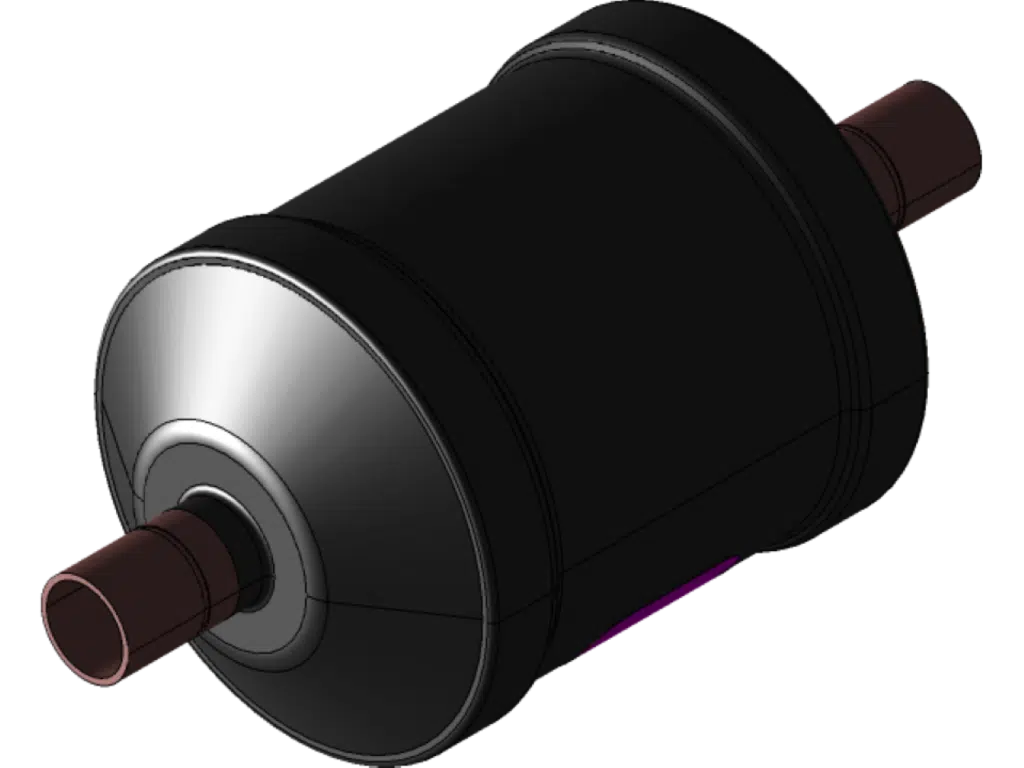
Then the filter drier gets replaced. Every time, no exceptions, and here is why that is not an upsell.
The drier holds a fixed, small amount of water and acid. Once a system has been open to the air, that desiccant has already spent part of its capacity on Cupertino humidity. Modern R-410A systems use POE oil, which is aggressively hygroscopic, meaning it grabs water out of the air and holds onto it. Water plus POE oil makes acid. Acid dissolves the resin insulation on the compressor motor windings until adjacent wraps touch each other. Then the compressor burns out and nobody connects it to the leak repair from two years earlier.
Reusing a drier is putting the old oil filter back in after an oil change.
After the drier, the system gets pressure tested, evacuated below 500 microns with a working target of 200 to 300, and it has to pass a standing vacuum test flat for ten minutes with the pump valved off. Then virgin refrigerant gets weighed in, not guessed in. That whole sequence is the same one that separates a real install from a fast one, and skipping any step of it is how a repair turns into a callback.
The Honest Version Of This Conversation
I am not going to pretend every leak is worth repairing. Sometimes it is an evaporator coil on a fourteen year old R-22 system and the repair costs more than the equipment is worth. Sometimes a homeowner is selling in eight months and wants a stopgap. Those are legitimate decisions.
The difference is who is making the decision, and with what information. A stopgap you chose with the leak location and the repair options in front of you is a decision. Being told these units just need a charge every year is not a decision. It is a story told to a customer who was never given the facts.
The Cupertino Wrinkle
Cupertino runs older housing stock with newer equipment bolted to it. Rancho Rinconada and Monta Vista homes with attic air handlers cooking at 140 degrees in August, condensers wedged into narrow side yards, line sets snaked through remodels by three different contractors over thirty years. That is a lot of joints, and joints are where leaks live.
There are also plenty of R-22 systems still limping along here. If your data plate says R-22, understand that a top off is a financial event rather than a repair, and the money is better spent on a leak search that tells you whether this system has a future.
Whether you require installation, repair, or maintenance, our technicians will assist you with top-quality service at any time of the day or night. Take comfort in knowing your indoor air quality is the best it can be with MOE heating & cooling services Ontario's solution for heating, air conditioning, and ventilation that’s cooler than the rest.
Contact us to schedule a visit. Our qualified team of technicians, are always ready to help you and guide you for heating and cooling issues. Weather you want to replace an old furnace or install a brand new air conditioner, we are here to help you. Our main office is at Kitchener but we can service most of Ontario's cities
Source link