Why AC Repair in Columbus’s Older Homes Requires a Different Approach
AC repair in Columbus older homes is one of the most misunderstood service calls an HVAC technician can make. Many homeowners assume a broken AC is a broken AC. But in a pre-1960s craftsman bungalow in Clintonville or a brick colonial in Bexley, the same repair can be two or three times more complex.
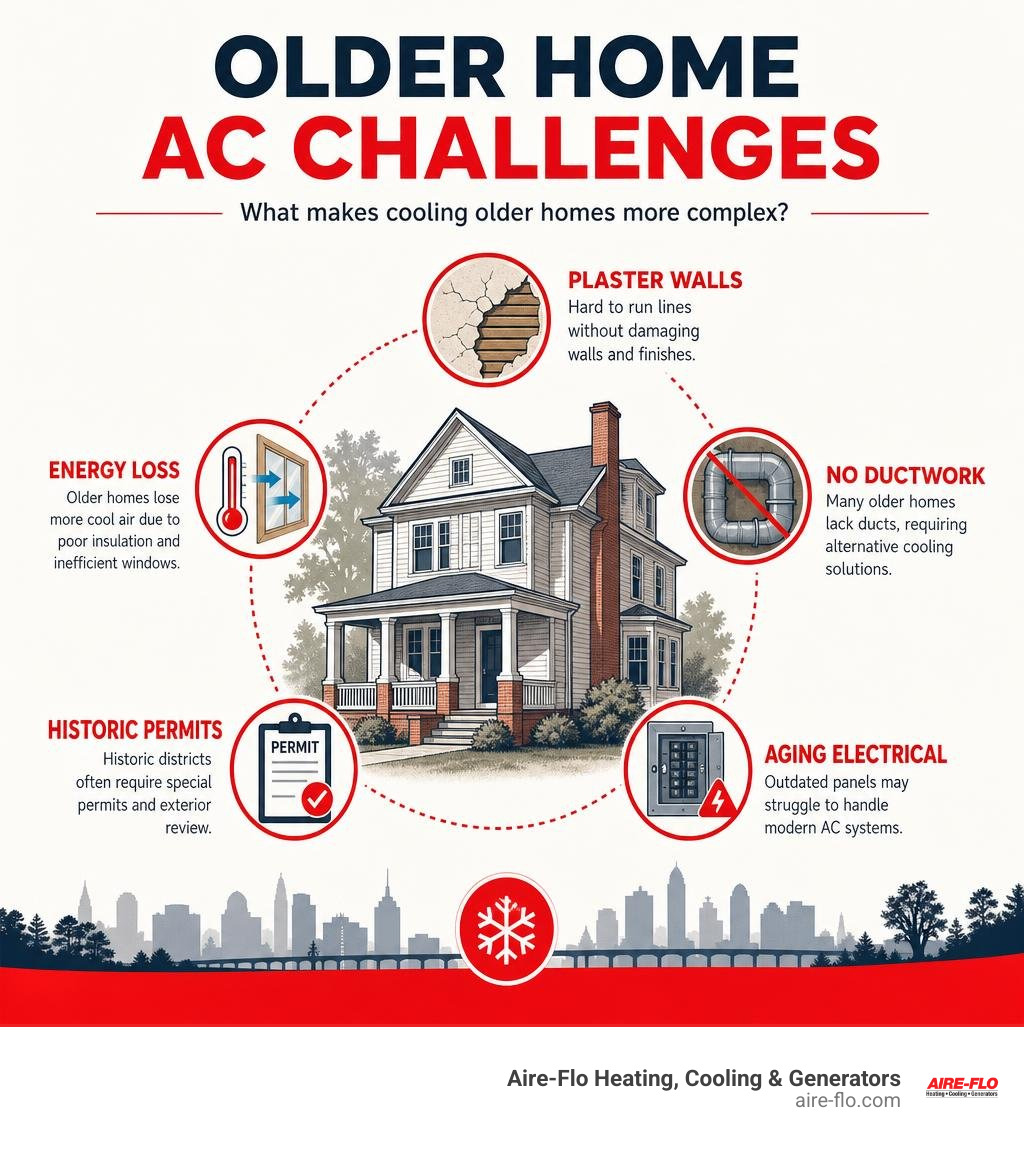
Here is a quick summary of what makes older Columbus homes different for AC repairs:
- Plaster walls and wood lath framing make routing new ductwork or refrigerant lines much harder without causing damage
- Balloon-frame construction creates unusual airflow paths that affect how cooling systems perform
- Aging or absent ductwork means many older homes need alternative systems like ductless mini-splits or high-velocity setups
- Outdated electrical panels often cannot support modern AC equipment without an upgrade
- Historic district rules in German Village, Woodland Park, and other Columbus neighborhoods can add permit and review requirements before exterior equipment is installed
- Single-pane windows and little wall insulation cause homes built before 1980 to use more energy for cooling than newer homes
If your home was built before 1980 and your AC is struggling, you are not alone. Older Columbus homes often face repair complications tied to aging infrastructure, tight wall cavities, and decades of retrofits.
The good news: the right HVAC contractor with experience in older properties can solve these problems without tearing up your home.
At Aire-Flo Heating, Cooling & Generators, our team has spent decades helping Columbus homeowners navigate AC repair in Columbus older homes across neighborhoods that demand careful, preservation-minded work. In the sections below, we will walk you through everything you need to know to keep your historic home cool, efficient, and intact.
Unique Challenges of AC Repair Columbus Older Homes
Older homes possess undeniable character, but their architectural bones present distinct obstacles for modern climate control. When our team performs diagnostic work or repairs on older cooling systems, we frequently run into structural designs that require specialized HVAC knowledge.
Unlike modern suburban homes built with standardized drywall and open joist bays, historic properties rely on materials and framing techniques that demand extreme care. One wrong cut can compromise structural integrity or ruin irreplaceable historic features. Standard troubleshooting methods often fall short when dealing with these unique building profiles, making it essential to understand how your home’s structure impacts its cooling performance.
Our experienced technicians adapt repair methods to these structural differences, especially when they are solving common AC issues in Columbus in homes with older framing, limited return air, or aging ductwork.
For homeowners dealing with weak airflow, warm rooms, or a system that will not keep up, Aire-Flo Heating, Cooling & Generators provides air conditioning repair tailored to the unique needs of historic properties.
Plaster Walls and Historic Framing
Plaster walls, backed by tightly spaced wood lath strips, are a hallmark of early 20th-century construction in Columbus. While plaster offers excellent soundproofing and a solid feel, it is incredibly fragile compared to modern drywall. Vibrations from standard drilling or cutting can cause large sections of historic plaster to crack, crumble, or detach from the wood lath entirely.
Furthermore, many homes built before the 1940s utilize balloon-frame construction. In these structures, the wall studs run continuously from the foundation to the roofline without horizontal fire-stops. While this design makes routing vertical lines easier in some scenarios, it also means that uninsulated wall cavities act as chimneys, pulling hot, humid air from the basement or crawlspace straight up into the living areas.
When we repair or install cooling systems in these homes, our team maps out routing paths with flexible inspection cameras before making any physical penetrations. We often coordinate our mechanical work alongside Columbus historic home restoration considerations to ensure that every wall penetration preserves the home’s original craftsmanship.
Common Issues Requiring AC Repair Columbus Older Homes
When our team is called out for AC repair in Columbus older homes, we typically find a recurring set of system failures. These are not always caused by the air conditioner itself; instead, they often stem from how the system interacts with the older building envelope.
- Leaky or undersized ductwork: If your older home was retrofitted with central air decades after it was built, the installers might have used narrow, uninsulated ducts hidden in closets or floor cavities. Over time, these ducts pull apart and lose conditioned air to unconditioned spaces like attics or crawlspaces.
- Airflow restrictions: High ceilings and unusual room layouts can cause severe temperature imbalances. Without proper return air vents in every room, your AC will struggle to pull warm air out, leaving bedrooms hot and humid.
- Outdated electrical panels: Modern high-efficiency air conditioners require dedicated, grounded electrical circuits. Older homes with active knob-and-tube wiring or outdated fuse boxes cannot safely handle the electrical load of a new compressor, leading to tripped breakers and potential fire hazards.
- System short cycling: When an AC is forced to run with restricted airflow or leaking ducts, it often overheats and shuts down prematurely. This constant starting and stopping wears out the compressor, increases your energy bills, and fails to remove humidity from the air.
Understanding these underlying issues helps our team provide long-term solutions rather than temporary fixes. For cost planning, Columbus homeowners can compare common repair scenarios with our article on average AC repair costs in Columbus.
Modern Cooling Options for Historic Properties
If your older home lacks existing ductwork, or if your current central air system requires frequent, expensive repairs, you do not have to settle for noisy window units. Modern HVAC technology offers highly efficient, low-profile alternatives designed specifically to preserve the architectural integrity of historic properties.
The two most successful modern options for historic homes are ductless mini-split systems and high-velocity central air. Both systems eliminate the need for massive, destructive ductwork installations, allowing you to maintain your original plaster walls, high ceilings, and beautiful woodwork.

Ductless Mini-Split Systems
Ductless mini-split systems are often the ideal choice for historic properties. These systems consist of an outdoor condenser connected to one or more indoor air handlers via small copper refrigerant lines. Because these lines require only a three-inch penetration through an exterior wall, our team can install them with virtually zero disruption to your interior plaster.
Mini-splits offer exceptional zoned comfort. Each indoor unit operates independently, allowing you to cool only the rooms you are currently using. Additionally, modern mini-splits utilize inverter-driven compressors that run continuously at varying speeds. This design provides superior dehumidification, which is critical during humid Columbus summers.
For older homes that need more than a single repair, our broader air conditioning services can help connect AC repair, maintenance, and replacement options into one practical comfort plan.
High-Velocity HVAC Retrofits
For homeowners who want the benefits of central air conditioning without the visual presence of wall-mounted mini-split units, high-velocity systems are an excellent alternative. These systems use a specialized indoor air handler, typically installed in an attic or basement, to distribute cooled air through flexible, small-diameter tubes.
These mini-ducts are only two inches in diameter, allowing our technicians to snake them through existing wall cavities, closets, and floor joists without disturbing your plaster walls. The air is delivered into your living spaces through small, circular vents that blend seamlessly into your ceilings or walls.
High-velocity systems work exceptionally well in homes that retain their original radiator heating systems, providing modern summer cooling without interfering with your winter heat source. If your current cooling setup is failing to keep up, early symptoms may overlap with the signs you need an HVAC replacement before the peak of summer.
Navigating Preservation Rules and Improving Efficiency
Maintaining a historic home in Central Ohio requires balancing modern comfort with local preservation standards. Many of the most historic neighborhoods in our service area follow architectural guidelines that affect exterior changes.
Whether you need a quick repair or a full system upgrade, our team serves homeowners across the region, including Delaware and Dublin. We understand how to deliver high-efficiency cooling while following local building codes across all the cities served in the Columbus area. For broader preservation guidance, the National Trust for Historic Preservation offers helpful resources for protecting older homes while planning needed updates.
Working with the Columbus Historic Resources Commission
If you live in a designated historic district, such as German Village, Woodland Park, or historic pockets of Worthington, the Columbus Historic Resources Commission must approve visible exterior changes. This includes where you place your outdoor AC condenser and how you route exterior refrigerant lines.
To secure a Certificate of Appropriateness, our team follows several key preservation practices:
- Concealed equipment placement: We position outdoor condensers in rear yards or side yards where they stay hidden from street view.
- Aesthetic integration: We run exterior refrigerant line sets through paintable conduit that matches your home’s historic brick or siding.
- Reversible modifications: We design installations so future technicians can remove them without leaving permanent damage to the historic structure.
- Sound mitigation: We select quiet outdoor units to help your system meet local neighborhood noise rules.
Choosing the Right Team for AC Repair Columbus Older Homes
Working on historic properties is not a job for general HVAC contractors who only work on modern tract homes. You need a team that respects older craftsmanship and uses the right tools to work safely around fragile materials.
When selecting an HVAC partner for your older home, look for technicians who know how to perform non-destructive diagnostics. For example, our team uses thermal imaging cameras to locate hidden wall studs and electrical wiring before we ever recommend making a cut.
Aire-Flo Heating, Cooling & Generators provides specialized support throughout the Columbus metro area, including Blacklick, Canal Winchester, Galena, Galloway, and Grove City. Our deep familiarity with local housing stock helps your repair get completed safely and correctly the first time.
Frequently Asked Questions About Older Home Cooling
How do I know if my older home’s AC needs repair or replacement?
If your air conditioner is over ten years old, requires frequent repairs, or struggles to maintain comfortable temperatures on hot summer days, it may be nearing the end of its lifespan. Rising energy bills are another common indicator that your system is working too hard to overcome aging ductwork or poor insulation. If you are also noticing heating issues, it may be time to evaluate your full home comfort system and plan repairs or replacement before the next peak season.
Will installing a new AC system damage my historic plaster walls?
No, not when you work with a specialized contractor. By utilizing modern ductless mini-split systems or high-velocity heating and cooling, our team can route flexible refrigerant lines or mini-ducts through existing wall cavities. This approach requires only minor, easily patchable penetrations, keeping your historic plaster walls and original woodwork completely intact.
Do I need special permits for HVAC work in Columbus historic districts?
Yes. Standard mechanical and electrical permits are required through Franklin County or your local municipality for any major AC repair or installation. If you live in a historic district, you will also need to secure approval from your local historic commission before placing any equipment outside your home. Our team handles the entire permitting and approval process for you.
Conclusion
Preserving the classic charm of an older Columbus home does not mean you have to sacrifice modern comfort. By understanding the unique structural challenges of historic properties and choosing the right cooling technology, you can protect your home’s architectural value while enjoying whisper-quiet, energy-efficient air conditioning.
At Aire-Flo Heating, Cooling & Generators, we bring 75 years of trusted, top-rated service to every job, backed by our 100% satisfaction guarantee. Whether you need a precise repair on an aging system or a custom ductless retrofit, our experienced team is here to help. To keep your historic home cool and comfortable all summer long, please contact our AC repair specialists today to schedule a consultation.
Whether you require installation, repair, or maintenance, our technicians will assist you with top-quality service at any time of the day or night. Take comfort in knowing your indoor air quality is the best it can be with MOE heating & cooling services Ontario's solution for heating, air conditioning, and ventilation that’s cooler than the rest.
Contact us to schedule a visit. Our qualified team of technicians, are always ready to help you and guide you for heating and cooling issues. Weather you want to replace an old furnace or install a brand new air conditioner, we are here to help you. Our main office is at Kitchener but we can service most of Ontario's cities
Source link