
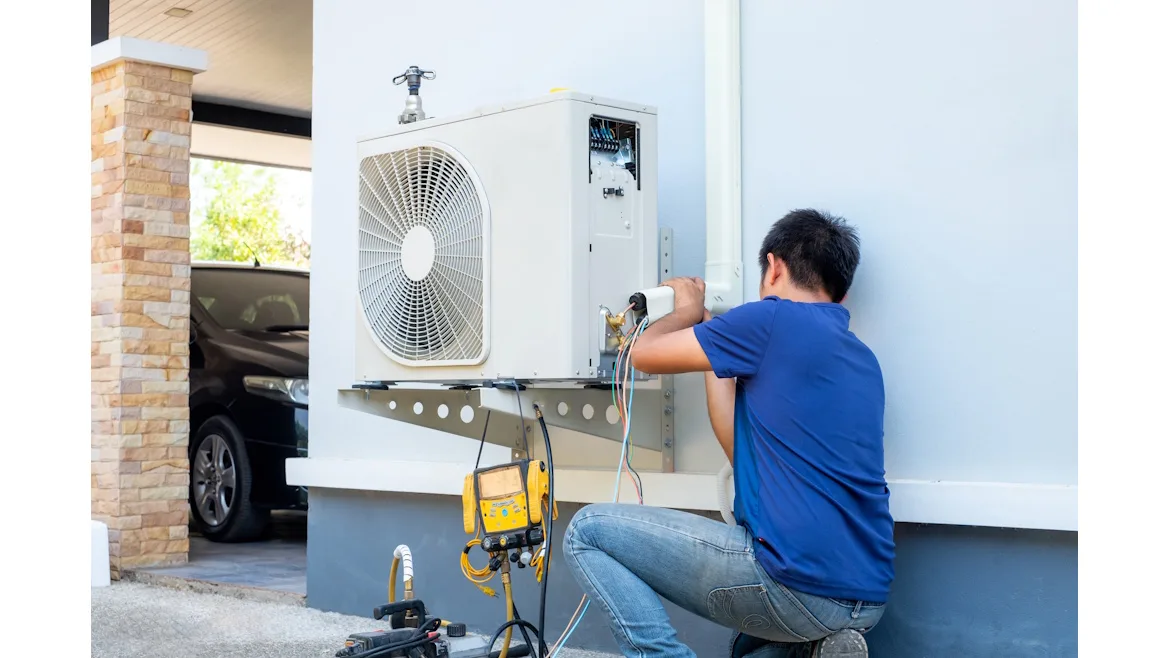
With a looming Sept. 1 deadline, the HVAC industry is making a push to delay a National Electrical Code requirement that could bring GFCI protection for affected outdoor residential HVAC equipment.
Previously, Air Conditioning Contractors of America (ACCA) had filed an appeal with the NFPA Standards Council, but that was denied.
Central to the issue is the ongoing incompatibility between some HVAC equipment and GFCI devices, which can cause nuisance trips and callbacks, even when the equipment was properly installed and operating normally.
The Air-Conditioning, Heating, and Refrigeration Institute has submitted Tentative Interim Amendment (TIA) 1924 to NFPA, asking that the current exemption in NEC 210.8(F) be extended from Sept. 1, 2026, to Sept. 1, 2028. NFPA is accepting public comments on the proposal through Sept. 9.
Tom Deary, AHRI senior director of codes and submitter of the TIA, says the industry has consistently warned that 2026 would not provide enough time to resolve those issues.
Asking For the Extension
“AHRI has consistently advised the technical committee that revises the National Electrical Code that a deadline of September 1, 2026, would not allow sufficient time to resolve the ongoing compatibility issues that continue to exist between GFCI products and HVAC products,” Deary said.
“Now, with the deadline upon us, this Tentative Interim Amendment (TIA) is the last opportunity for us to correct this issue at the model code level.”
Looking for quick answers on air conditioning, heating and refrigeration topics?
Try Ask ACHR NEWS, our new smart AI search tool.
Ask ACHR NEWS
In July, AHRI published its AHRI 8029 Phase II Report, which documents continued testing between GFCI and HVAC products.
Deary said the 112-page report demonstrates that nuisance tripping events remain a significant problem when these products are combined.
Problem Goes Beyond Variable-Speed Systems
ACCA has thrown its support behind AHRI’s request, and argues the interoperability problem goes beyond just inverter-driven equipment.
According to a statement from ACCA, the NFPA Standards Council established a task group in 2022 to examine the GFCI/HVAC compatibility issue.
“The 2022 Task Group supporting statement acknowledged that the potential incompatibility between GFCI protection and listed HVAC equipment was known when the underlying requirement was approved by NEC CMP-2,” the report states. “Three of the four negative ballots specifically raised concerns regarding that incompatibility.”
The data showed that HVAC equipment could exhibit leakage current above the level that would trip Class A GFCI, while measured touch current remained below levels expected to injure an individual.
“The Task Group therefore confronted an important distinction between GFCI trip current, equipment leakage current, and actual personnel exposure that required HVAC-specific technical evaluation,” the report states.
The Task Group also documented nuisance-tripping involving equipment other than inverter-driven systems — contractor survey data provided by the Texas Air Conditioning Contractors Association (TACCA) reported widespread nuisance trips involving single-stage equipment as well as variable-speed equipment.
The group expressly stated that causes of nuisance tripping remained unknown and that further study was required.
“That history is highly relevant to the proposed TIA because the evidence to substantiate the requirement is nonexistent,” ACCA said. “In short, the technical record does not yet demonstrate that GFCI protection can be applied reliably across the full range of listed HVAC equipment covered by NEC 210.8(F).”
ACCA said more recent AHRI testing reinforces the concern over issues with conventional 60 Hz single-stage HVAC equipment.
“Its test chart shows that five of the twelve GFCIs tested tripped below the applicable must-hold current above 60 Hz. That result is significant because it indicates that HVAC equipment leakage current below the must-hold curve can still produce trips that the high-frequency (HF) product was intended to eliminate. The record therefore should not assume that an HF GFCI listing, without submitted HVAC-specific test data demonstrating compatibility across the affected equipment population, resolves the unwanted-tripping issue.”
This is an important distinction, ACCA noted, because the current exception applies to listed HVAC equipment, not merely inverter-driven HVAC equipment.
Consumer Safety
Aside from headaches and reputational damage for both installing contractors and manufacturers, consumers could also find themselves at risk.
The 2022 Task Group concluded that nuisance tripping during periods of extreme temperature could itself create significant risk when they explicitly weighed the potential electrical safety benefit against the consequences of unintended loss of HVAC operation.
“That risk is not limited to occupants who can readily diagnose a loss of cooling, locate a GFCI device, reset it, or arrange for immediate repair,” ACCA said. “Many occupants are aging in place, convalescing, or physically or cognitively impaired and may be unable to recognize or respond effectively to a loss of air conditioning before dangerous indoor temperatures develop.”
As evidence, ACCA noted that in 2024, Maricopa County recorded 138 indoor heat-related deaths. A/c units were present in 88% of those cases. Among the deaths in dwellings with a/c units, the equipment was not functioning in 70% of the cases, and not in use for another 18%.
“These data demonstrate that the loss or absence of functioning cooling is not merely a comfort or equipment-reliability concern; during extreme heat it can be a significant life-safety hazard, particularly for occupants who may be unable to recognize, diagnose, reset, or arrange repair of a disabled cooling system,” ACCA said.
ACCA says additional validation is needed, and that the Task Group had deliberately selected a finite expiration date rather than an indefinite exemption, while expressly acknowledging that the date might have to be reevaluated if the incompatibility issues had not been resolved.
“Extending Exception No. 2 until September 1, 2028 does not abandon GFCI protection, nor does it prejudge the ultimate technical solution,” ACCA said. “It provides a limited additional period for manufacturers, testing laboratories, standards developers, contractors, AHRI, GFCI manufacturers, and other affected stakeholders to complete the laboratory evaluation and field validation necessary to demonstrate reliable compatibility across the range of listed HVAC equipment subject to NEC 210.8(F).”
Market Readiness
With all of the concerns raised, there’s also the issue of whether or not there is sufficient equipment stock available through normal channels should these rules come into place.
ACCA pointed to a filing from the Leading Builders of America, which reported an uneven transition among GFCI manufacturers, with some products still moving through manufacturing and distribution and other high-frequency products not expected to reach sale or volume availability until after Sept. 1. Availability also varies by panel family, amperage, and quantity.
In essence, ACCA argues that contractors may not always be able to obtain an appropriate GFCI device through normal distribution channels — and that availability alone does not establish that a particular GFCI will operate reliably with a particular HVAC system.
ACCA said the requested two-year extension would provide time for additional laboratory and field testing, evaluation of both inverter-driven and single-stage equipment, development of clearer compatibility information, and broader product availability through distribution channels.
What Happens Next
If the exemption expires Sept. 1 as it’s currently scheduled to, Deary said he believes that this will negatively impact homeowners and tenants, who may be subject to continued, and even increased, nuisance tripping events.
AHRI’s TIA can be viewed here and is currently open for public comment.
“We strongly encourage all parties who may be affected by this issue to submit public comments to NFPA,” Deary said. “If the TIA passes, AHRI will be working with state and local jurisdictions to ensure that they are aware of this action and that they are able to implement it as quickly as possible.”
Whether you require installation, repair, or maintenance, our technicians will assist you with top-quality service at any time of the day or night. Take comfort in knowing your indoor air quality is the best it can be with MOE heating & cooling services Ontario's solution for heating, air conditioning, and ventilation that’s cooler than the rest.
Contact us to schedule a visit. Our qualified team of technicians, are always ready to help you and guide you for heating and cooling issues. Weather you want to replace an old furnace or install a brand new air conditioner, we are here to help you. Our main office is at Kitchener but we can service most of Ontario's cities
Source link