9 Most Common Causes of Air Conditioning Not Cooling Tampa FL
1. Low or Leaking Refrigerant (AC Freon Leak)
A refrigerant leak is one of the most frequent causes of AC not cooling and should be addressed by a licensed HVAC technician immediately. Refrigerant is the substance your system uses to absorb heat from inside your home and release it outside. When levels drop due to a leak, cooling capacity drops with it.
Signs you may have an AC freon leak:
- AC running but not cooling Tampa temperatures effectively
- Hissing or bubbling sounds near the indoor or outdoor unit
- Higher-than-normal electric bills
- Ice or frost on the copper refrigerant lines
- AC short cycling (turning on and off frequently)
If you suspect a refrigerant issue, stop running the system and call for AC freon recharge Tampa service. Running an AC with a refrigerant leak can damage the compressor one of the most expensive components to replace. Learn more about our air conditioning repair services in Tampa.
2. Dirty or Clogged Air Filter
This is the single most overlooked cause of AC not cooling in Tampa homes. Your air filter traps dust, pollen, and debris before they enter the system. Over time, it becomes clogged. When airflow is restricted, the evaporator coil can’t cool the air properly and you get warm or barely cool air instead.
In Tampa’s humid, dusty conditions, air filters should be checked every 30 days and replaced every 1–2 months. A clean filter is the simplest and most effective form of AC maintenance Tampa homeowners can do themselves.
3. Dirty or Frozen Evaporator Coil
When the evaporator coil inside your home is covered in dust or frozen over, it can’t absorb heat from the air. This is a common result of neglected AC maintenance in Tampa and often shows up after a system has been running hard for weeks without a tune-up. If you see ice on your indoor unit’s refrigerant lines, turn the system OFF immediately and call a Tampa AC service not cooling technician running a frozen coil destroys compressors.
4. Thermostat Issues
Your thermostat is the control center of your entire AC cooling system. If it’s misconfigured, malfunctioning, or poorly placed, your system may run without actually cooling.
- Is the thermostat set to COOL, not just FAN or AUTO?
- Is the temperature set below the current room temperature?
- Is the display working normally?
- Is the thermostat in direct sunlight or near a heat source?
If your thermostat is outdated or acting erratically, an upgrade to a programmable or smart thermostat can make a real difference in comfort and energy bills. We offer thermostat installation in Tampa.
5. Dirty or Blocked Condenser Unit
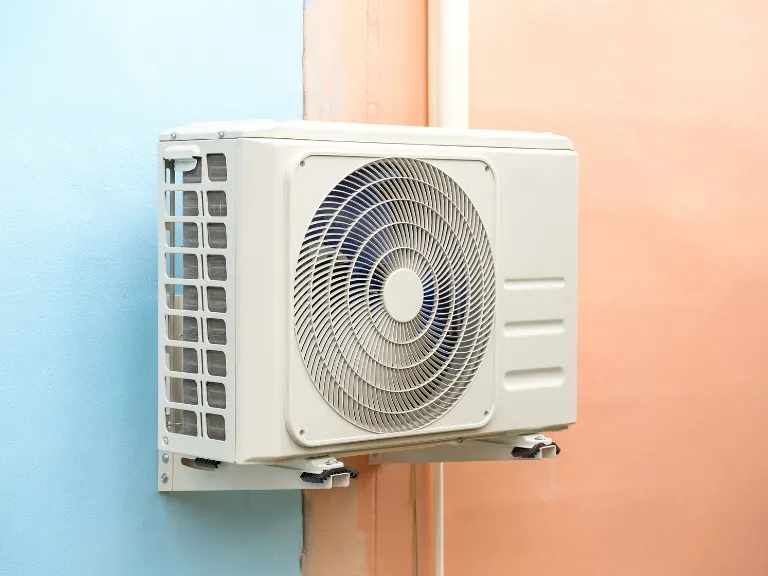
The outdoor condenser unit disperses heat from inside your home to the outside air. If it’s clogged with leaves, grass clippings, pollen, or overgrown vegetation, it can’t release that heat efficiently. The result: your system works harder, cools poorly, and wears out faster.
Keep at least 2 feet of clearance around your outdoor unit at all times. In Tampa, where seasonal debris and pollen are constant, rinse the condenser fins with a garden hose every few weeks during summer.
6. AC Compressor Failure
The compressor is the heart of your central air repair system it circulates refrigerant through the entire cooling cycle. When it fails, cooling stops completely. Signs of a failing compressor include:
- Loud grinding, rattling, or clicking noises from the outdoor unit
- The outdoor unit running but the air from vents is warm
- The circuit breaker tripping repeatedly when the AC runs
- Visible damage or oil leaks on the outdoor unit
AC compressor repair is one of the more expensive repairs in HVAC. Depending on the age of your system, your technician may recommend repair versus replacement. I Care Air Care provides honest, no-pressure recommendations on every AC repair estimate. Explore our HVAC installation services in Tampa.
7. Leaking or Disconnected Ductwork
If certain rooms stay cool while others warm up or if you feel weak airflow from the vents your ductwork may have leaks, disconnections, or sections that have collapsed. Damaged ductwork can lose 20–30% of your cooled air before it reaches your living spaces.
This is especially common in Tampa homes with older duct systems or homes that have had renovations. We provide professional air duct cleaning and repair in Tampa.
8. Refrigerant Overcharge
It might seem counterintuitive, but too much refrigerant not just too little can also prevent your system from cooling properly. An overcharge usually results from improper service by an unqualified technician. This is one more reason to always hire a licensed Tampa HVAC technician for any refrigerant-related work.
9. Oversized or Undersized System
If your AC is constantly running but never reaches the set temperature, your system may be improperly sized for your home. An undersized unit can’t meet cooling demand on the hottest Tampa days. An oversized unit short-cycles turning on and off too quickly which prevents proper humidity removal and leaves your home feeling damp and uncomfortable.
Sizing is determined during new HVAC installation, but it’s worth discussing with your technician if you’ve had ongoing cooling problems despite otherwise well-maintained equipment.
Whether you require installation, repair, or maintenance, our technicians will assist you with top-quality service at any time of the day or night. Take comfort in knowing your indoor air quality is the best it can be with MOE heating & cooling services Ontario's solution for heating, air conditioning, and ventilation that’s cooler than the rest.
Contact us to schedule a visit. Our qualified team of technicians, are always ready to help you and guide you for heating and cooling issues. Weather you want to replace an old furnace or install a brand new air conditioner, we are here to help you. Our main office is at Kitchener but we can service most of Ontario's cities
Source link