
The Right Basement Humidity Level for Winter
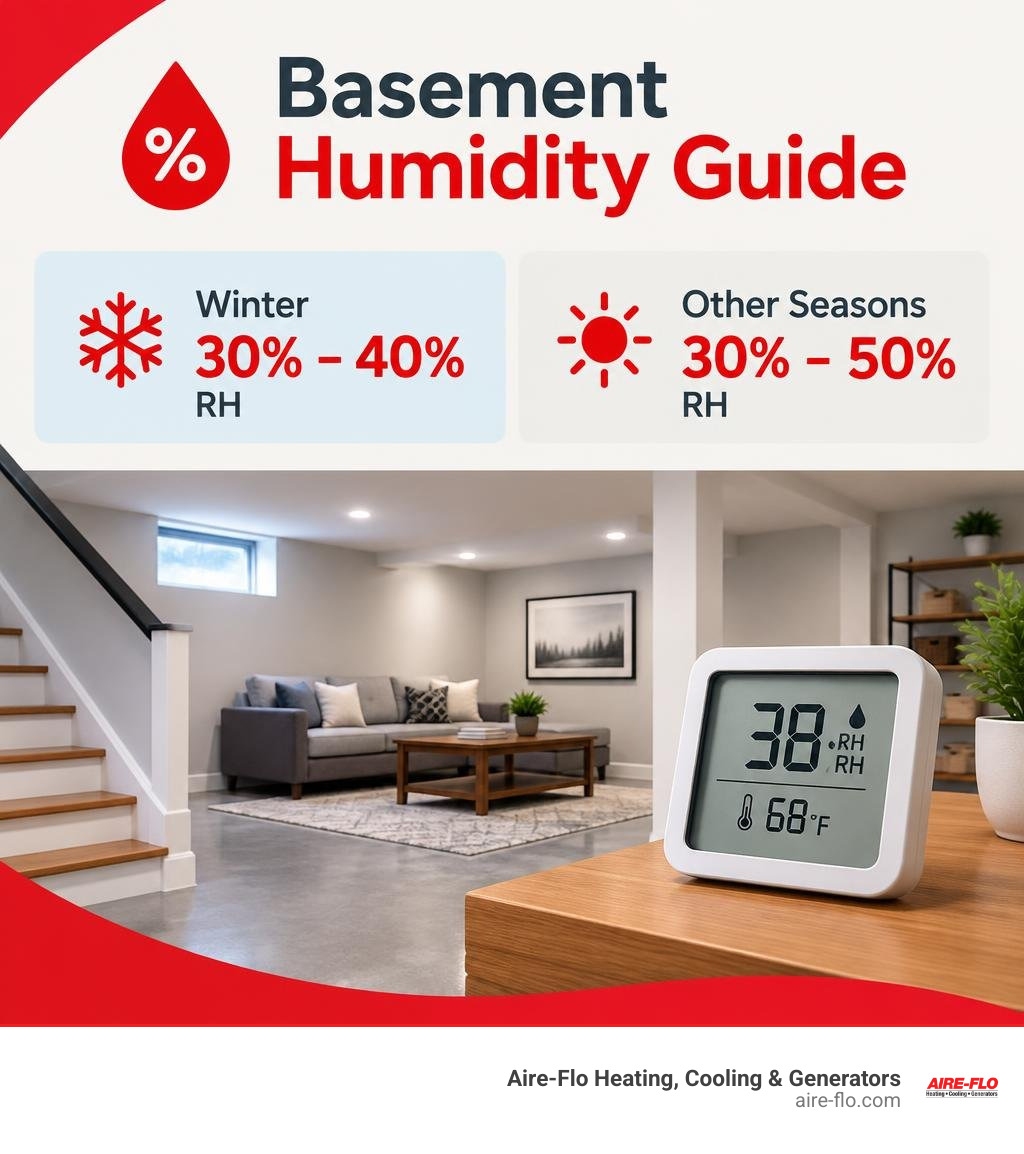
The appropriate humidity level for basement spaces in winter is usually 30% to 40% relative humidity (RH). Check it with a digital hygrometer. If you see condensation on windows or other cold surfaces, aim for the lower end of that range. In any season, try to keep basement humidity below 50% and address readings that stay at 60% or higher.
A dehumidifier can help, but a leak or water seeping through the foundation needs its own fix. If your basement stays damp, contact our team for help assessing your home’s indoor comfort.
The team at Aire-Flo Heating, Cooling & Generators has decades of HVAC and indoor air quality experience in the Columbus area. That experience helps explain the appropriate humidity level for basement spaces and what to check when moisture persists.
What Is the Appropriate Humidity Level for Basement Spaces in Winter?
Maintaining balanced air in lower levels protects your structural timbers and helps stabilize your living space upstairs. Due to the natural stack effect, warm air rises through your home and escapes out the roof or attic, pulling cool air up from the basement. In fact, up to 50% of the air you breathe on the first floor originated in your lower level. When moisture builds up below, it quickly spreads to the rest of the house.
During winter, managing moisture requires extra precision. Outdoor temperatures drop, cold concrete chills indoor air, and condensation forms easily on exterior walls. Reviewing ideal winter indoor humidity levels helps homeowners prevent structural damage while keeping living areas healthy. ASHRAE offers mold and moisture control resources for managing indoor moisture in homes.
| Season | Ideal Relative Humidity (RH) | Risk Above Threshold | Risk Below Threshold |
|---|---|---|---|
| Winter | 30% to 40% (25% to 35% during extreme freezes) | Window condensation, mold growth, frost | Static electricity, shrinking wood framing |
| Spring | 35% to 50% | Elevated dust mites, damp concrete | Dry nasal passages |
| Summer | 45% to 50% (Max 55%) | Active mold growth, musty odors, rot | Increased cooling energy load |
| Fall | 35% to 45% | Lingering moisture, musty odors | Wood gaps, creaky floors |
Target Ranges: Determining the Appropriate Humidity Level for Basement Environments
Most basements perform best between 30% and 50% relative humidity on a standard day. Winter requires a tighter target of 30% to 40%. Keeping indoor humidity below 60% overall helps halt mold growth throughout the home.
Dropping below 30% can cause wood studs, subflooring, and finished trim to dry out, shrink, and crack. Letting levels rise past 50% in cold weather leads to condensation against cold masonry. Keeping your basement within the 30% to 40% range during freezing months prevents condensation while preserving wood fixtures and stored items.
Seasonal Shifts: Why the Appropriate Humidity Level for Basement Areas Drops in Winter
Cold winter air holds significantly less water vapor than warm summer air. When that cold outdoor air leaks into your home and gets warmed by your furnace, its relative humidity plunges.
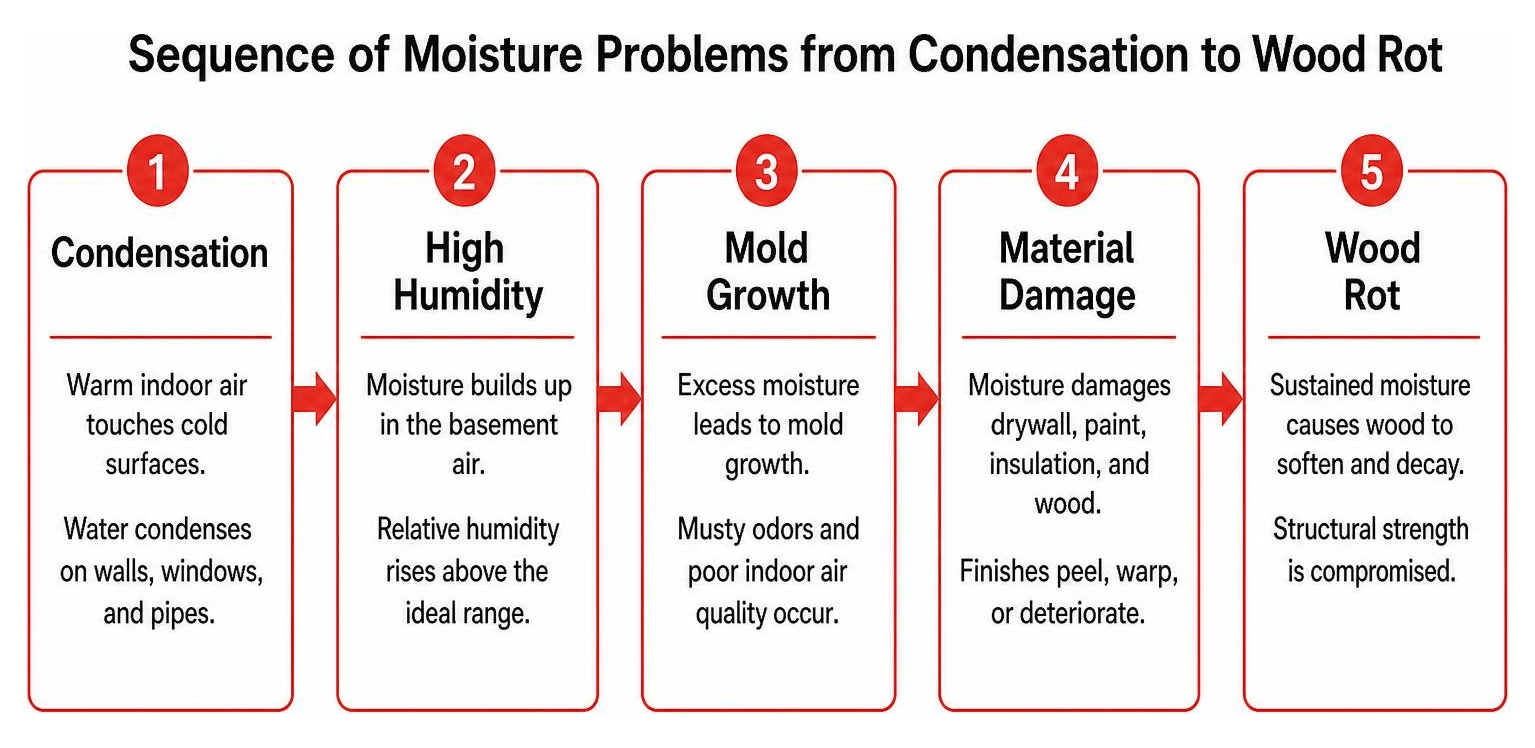
At the same time, basement foundation walls remain in direct contact with freezing soil. When warmer indoor air touches these chilled surfaces, the air cools instantly, its relative humidity spikes at the wall surface, and water condenses. Lowering total indoor moisture in winter prevents these damp cold spots from forming. Controlling this moisture also prevents common indoor air pollutants from multiplying, and our indoor air quality services can help assess your home’s air.
Warning Signs Your Basement Moisture Is Out of Balance
High humidity in a lower level rarely stays hidden. Keep an eye out for these clear indicators:
- Musty odors: A stale, earthy smell usually signals hidden mold colonies or dust mites.
- Window and pipe sweating: Visible water beads on window panes or cold water supply lines mean ambient moisture has reached its dew point.
- Efflorescence: A powdery white mineral residue left behind on concrete or brick walls as water evaporates through the foundation.
- Peeling finishes: Blistering paint, peeling drywall tape, or warped baseboards along perimeter walls.
- Rust on metal fixtures: Corrosion forming on mechanical equipment, toolboxes, or structural joist hangers.
How to Accurately Measure and Monitor Basement Moisture
Guessing moisture levels by feel is unreliable because cool air naturally feels clammy even when relative humidity is moderate. Digital monitoring gives you clear numbers so you know when to make adjustments. If persistent moisture is affecting your home, our heating services can help identify the source.
Choosing and Placing a Digital Hygrometer
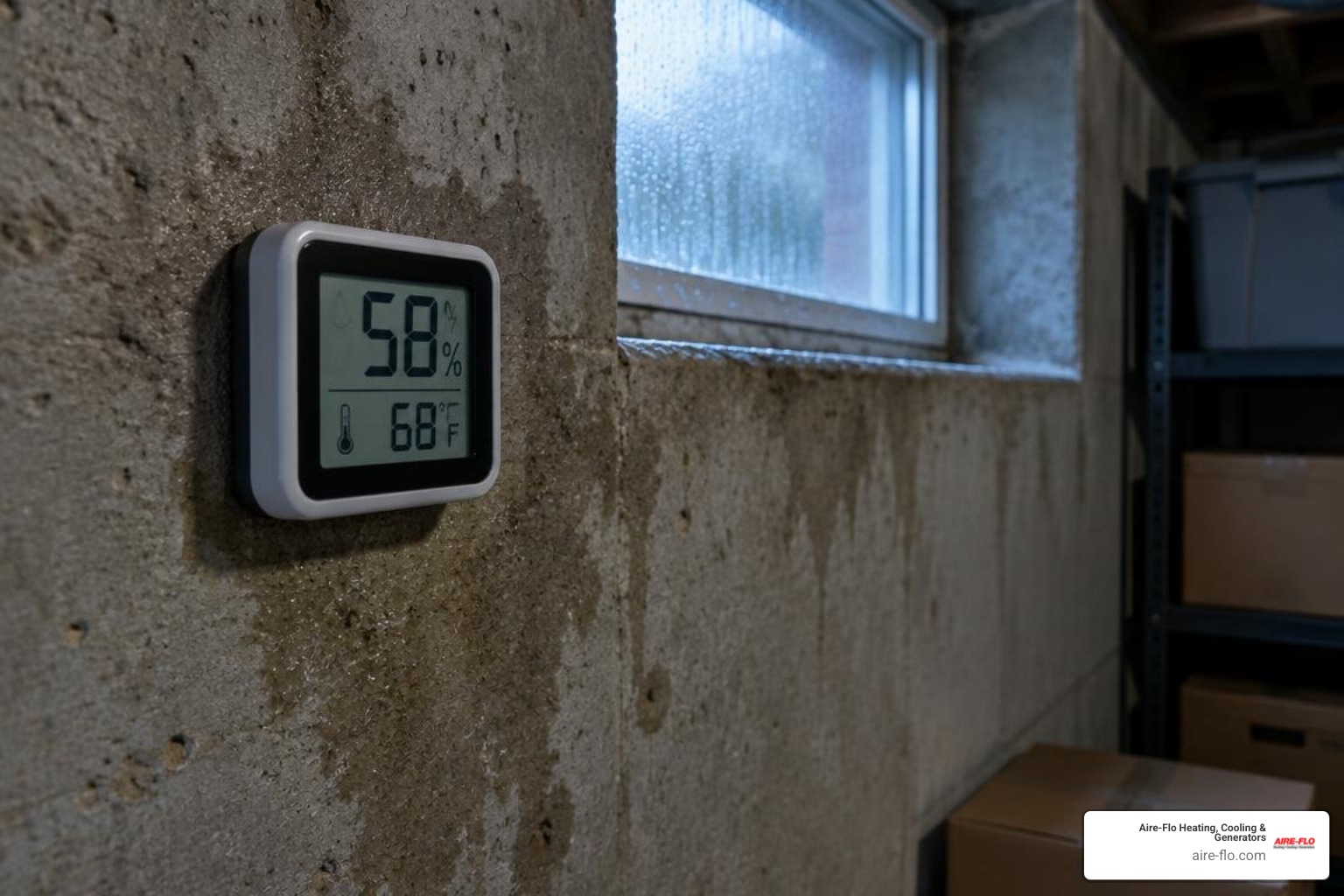
A standalone digital hygrometer offers dependable, inexpensive readings for any basement. Built-in dehumidifier sensors can be off by 5% or more because they measure air right next to the damp coils.
To take accurate measurements:
- Place the hygrometer at chest height (around 4 to 5 feet off the ground) near the center of the room.
- Keep the monitor at least 6 to 12 inches away from exterior concrete walls.
- Avoid placing sensors near heating vents, supply registers, return grilles, or portable heaters.
- Take readings in the morning and evening for a week to establish a clear baseline.
Understanding Dew Point and Temperature Differences
Relative humidity is directly tied to air temperature. Warmer air holds more moisture; cooler air holds less. If your main basement air is 68 degrees Fahrenheit at 45% relative humidity, its dew point is roughly 46 degrees. If an uninsulated foundation wall drops to 44 degrees during a cold snap, water drops will form directly on the concrete.
Before freezing temperatures arrive, checking your heating setup and learning about testing indoor air quality before winter helps identify cold spots prone to condensation.
How to Achieve Ideal Winter Basement Humidity: Step-by-Step Fixes
Achieving balanced winter air requires managing moisture sources, sealing air leaks, and using properly maintained mechanical equipment. Following a guide to ideal home humidity makes it easy to balance comfort across every level of your house. For whole-home solutions, dehumidification can address persistent moisture problems.
Setting and Operating Your Dehumidifier in Cold Weather
If your basement humidity stays above 45% in winter, a portable or central dehumidifier can pull out excess moisture. Winter operation requires specific settings:
- Set your target between 40% and 45%: This prevents condensation on cold foundation corners without running up your electric bill.
- Use a low-temperature unit: Standard residential units often frost over when room temperatures drop below 65 degrees. Choose a model with auto-defrost to protect the coils.
- Set up continuous drainage: Run a dedicated drain hose to your floor drain or sump pit to avoid manual emptying.
- Clean the air filter monthly: Restricted airflow reduces moisture removal and can cause internal coils to freeze into a solid block of ice.
Controlling Condensation and Sealing Foundation Drafts
Stopping moist outdoor drafts and insulating cold metal pipes prevents moisture problems quickly:
- Insulate water pipes: Wrap cold water supply pipes with foam insulation sleeves to stop warm basement air from condensing on the metal.
- Seal rim joists and sill plates: Apply expanding spray foam or caulk along the wood-to-foundation connection to block cold drafts.
- Patch wall cracks: Fill non-structural concrete hairline fractures with hydraulic cement or polyurethane sealant.
- Weatherstrip basement windows: Replace degraded seals around hopper windows and install exterior well covers to stop cold air leaks.
Managing Exterior Drainage and Indoor Air Circulation
Basement moisture often starts outside. Directing surface water away from your foundation stops hydrostatic pressure from driving groundwater through concrete pores:
- Extend gutter downspouts: Direct downspout extensions at least 6 to 10 feet away from foundation walls.
- Inspect your sump pump: Test the pump float every three to four months and confirm the discharge line drains away from the house.
- Regrade foundation soil: Ensure the surrounding ground slopes downward at least 6 inches over the first 10 feet away from your home.
- Support indoor air exchange: Run small oscillating fans or schedule periodic furnace fan cycles to keep air moving across cold exterior corners.
Taking these steps helps improve indoor air quality in Columbus homes throughout the cold season.
Frequently Asked Questions About Basement Humidity
Is 60% humidity too high for a basement in winter?
Yes. Relative humidity of 60% or higher creates an environment where mold spores and dust mites flourish. During winter, high humidity also causes heavy condensation on cold perimeter walls and window glass. If you suspect hidden mold growth behind baseboards or drywall, using home air mold test kits can help verify spore levels.
Is a dehumidifier enough to fix high basement moisture?
A dehumidifier removes moisture from the air, but it cannot stop active water intrusion. If dampness is caused by foundation cracks, high water tables, or poor exterior drainage, you must repair those structural issues first. A dehumidifier works best as part of a complete strategy alongside pipe insulation, proper grading, and regular heating maintenance.
When should you call an HVAC professional for basement humidity issues?
If your dehumidifier runs constantly without lowering moisture levels below 50%, or if you notice uneven heating and persistent condensation, call a technician. Our team at Aire-Flo Heating, Cooling & Generators can inspect your ductwork, evaluate equipment sizing, and install dedicated whole-home dehumidification or ventilation systems to protect your home.
Conclusion
Managing winter basement moisture protects your framing, preserves indoor air quality, and keeps your entire house comfortable. Maintaining relative humidity between 30% and 40% during winter prevents condensation on cold masonry while protecting wood elements from drying out.
If your basement shows signs of excess moisture or your heating system struggles to maintain balanced winter indoor humidity levels, our experienced team can help. Backed by 75 years of trusted service in the Columbus area and a 100% satisfaction guarantee, Aire-Flo Heating, Cooling & Generators provides complete HVAC solutions to keep your home healthy. Contact our indoor air quality specialists today to schedule a moisture and indoor comfort evaluation.
Whether you require installation, repair, or maintenance, our technicians will assist you with top-quality service at any time of the day or night. Take comfort in knowing your indoor air quality is the best it can be with MOE heating & cooling services Ontario's solution for heating, air conditioning, and ventilation that’s cooler than the rest.
Contact us to schedule a visit. Our qualified team of technicians, are always ready to help you and guide you for heating and cooling issues. Weather you want to replace an old furnace or install a brand new air conditioner, we are here to help you. Our main office is at Kitchener but we can service most of Ontario's cities
Source link