When it comes to improving indoor air quality (IAQ) in educational buildings, much of the conversation centers on K-12 schools. But what about the facilities serving children before they ever reach kindergarten?
According to the Children’s Environmental Health Network (CEHN), nearly 11 million young children attend childcare programs across the country. Yet environmental health concerns in these facilities are not always addressed through existing licensing requirements or professional training.
For HVAC contractors, these environments represent an opportunity to improve ventilation, filtration, and overall building performance for some of the youngest occupants.
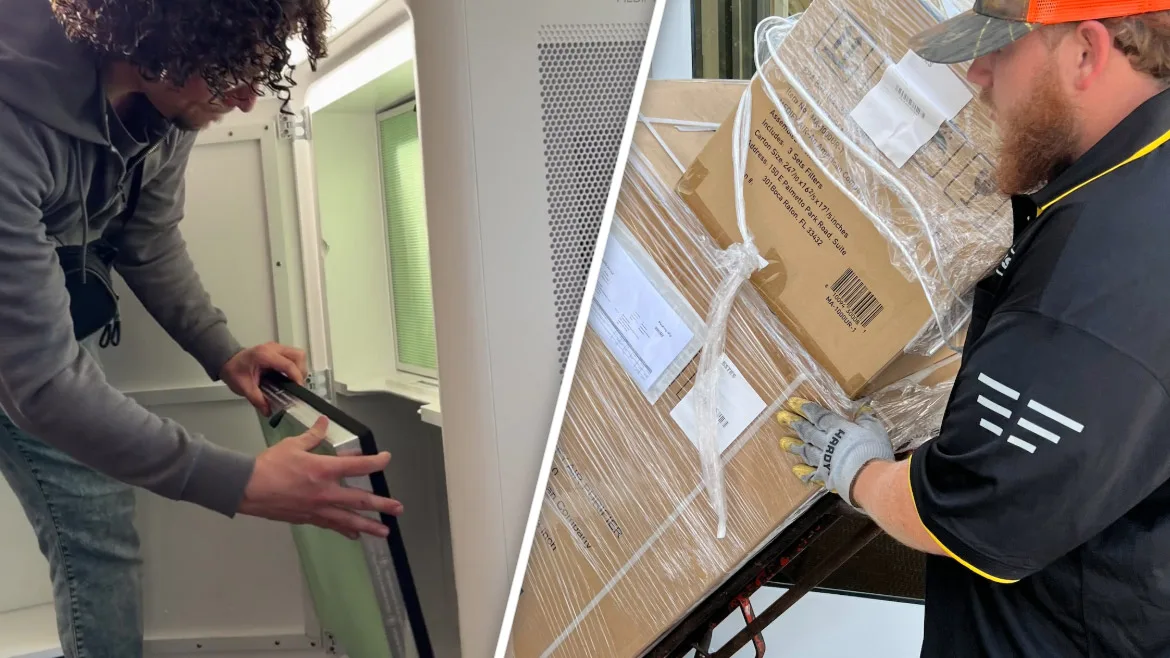
A recent donation of 175 commercial air purifiers from Medify Air to childcare-related facilities nationwide is bringing attention to those needs. The donation, valued at more than $1 million in equipment and replacement filters, was coordinated through CEHN, with shipping support from the UPS Foundation and College Hunks Hauling Junk & Moving.
“Generally speaking, I’ve been in my position 17 years. There’s not a lot of work happening to really focus on how to identify and reduce environmental health toxicants,” said Hester Paul, MS, national director for Eco-Healthy Child Care® at CEHN.
Paul said children are particularly vulnerable to environmental exposures during their early years because of rapid development. However, much of the environmental health education CEHN provides is not yet routinely included in childcare licensing or professional development requirements.
Beyond Minimum Ventilation
For HVAC contractors, one challenge is determining whether existing building systems are providing adequate clean air for occupants.
Tony Colaneri, vice president of corporate social responsibility and R&D at Medify Air, said minimum ventilation requirements do not necessarily address every indoor air quality concern.
He pointed to ASHRAE Standard 62.1, which addresses ventilation and acceptable indoor air quality, and Standard 241, which establishes requirements for controlling infectious aerosols.
The donated Medify MA-1000 units use HEPA filtration to provide supplemental clean air without modifications to existing ductwork. The commercial units are roughly the size of small refrigerators, mounted on wheels, and contain four HEPA filters each.
“These machines are big enough to supply enough equivalent clean air into these spaces to supplement HVAC units,” Colaneri said.
That supplemental filtration can be particularly useful when existing HVAC systems have limited air cleaning capabilities or when outdoor conditions make increasing ventilation more complicated.
However, portable filtration does not replace the need for adequate outdoor air ventilation, and contractors must consider both when evaluating a facility’s IAQ.
“Every room is different. Every building’s different. All the HVAC systems are different. The indoor pollutants that people are dealing with are different,” Colaneri said.
Operating and Maintaining Supplemental Filtration
The equipment also presents practical considerations familiar to HVAC professionals, including filter maintenance, operating schedules, and noise.
Colaneri said the donated units are ENERGY STAR certified and can be operated using timers. He suggested running them at higher speeds for approximately 30 to 45 minutes before children arrive, then reducing the speed during occupancy to minimize noise.
Higher fan speeds can provide greater air cleaning, but they may not be appropriate throughout the day, particularly in childcare rooms where young children nap.
Paul said noise was an important consideration when determining how the purifiers would be used.
“We know that they’re most effective when they’re turned on high and when they’re kept on 24/7. But for young children who are napping within a childcare environment, we actually have to think about whether or not it becomes kind of obtrusive to sound,” she said.
Filter replacement is another consideration. Colaneri estimated that the HEPA filters could last at least a year under the recommended operating conditions, depending on runtime and fan speed.
Each donated unit also included nine sets of replacement filters, helping reduce the financial burden of ongoing maintenance for childcare operators.
For contractors, these operating considerations illustrate the importance of matching air cleaning strategies to actual building use rather than simply adding equipment.
Outdoor Pollution Complicates the Equation
Childcare facilities also face pollutant sources that may not be addressed through HVAC equipment alone.
Nsedu Obot Witherspoon, MPH, executive director of CEHN, said the organization’s environmental health work includes educating childcare providers about cleaning chemicals, pesticides, vehicle emissions, and other sources of indoor pollution.
Paul described one childcare provider whose air monitoring data showed elevated PM2.5 concentrations during morning hours, potentially associated with vehicle drop-offs or nearby highway traffic.
That presents another consideration for contractors evaluating outdoor air ventilation. Increasing outdoor airflow can help dilute indoor-generated contaminants, but outdoor air quality and filtration also matter when nearby pollution sources are present.
CEHN’s broader air quality initiative has also incorporated monitoring to help childcare providers understand the impact of filtration and other environmental health improvements.
Witherspoon reported reductions approaching 90% in indoor pollutants through that work, although the interviews did not establish the measurement methodology or whether the results apply to the latest donation.
The organization is also planning additional air quality testing in Detroit, where 20 of the donated purifiers were distributed.
An Opportunity Beyond Schools
Although portable air cleaners can provide supplemental filtration, CEHN emphasizes that they are not a substitute for properly operating and maintained HVAC systems.
“We want effective HVACs, right? So maintaining it to the minimum standard is not what we’re looking for,” Witherspoon said.
Paul agreed that portable filtration and existing HVAC systems should work together, supported by education and regular maintenance.
For contractors, the opportunity may begin with assessing existing ventilation performance, evaluating filtration options, reviewing maintenance practices, and helping childcare operators understand the relationship between their buildings and occupant health.
While K-12 schools remain a major focus of IAQ improvements, childcare facilities present many of the same technical challenges, often with younger occupants and different operating conditions.
They also represent a building segment that HVAC professionals may want to give greater attention.
Whether you require installation, repair, or maintenance, our technicians will assist you with top-quality service at any time of the day or night. Take comfort in knowing your indoor air quality is the best it can be with MOE heating & cooling services Ontario's solution for heating, air conditioning, and ventilation that’s cooler than the rest.
Contact us to schedule a visit. Our qualified team of technicians, are always ready to help you and guide you for heating and cooling issues. Weather you want to replace an old furnace or install a brand new air conditioner, we are here to help you. Our main office is at Kitchener but we can service most of Ontario's cities
Source link