Energy production and consumption have long been concerns for countries around the world. The recent growth of data centers has brought new urgency to the conversation about power capacity. Many countries have been more aggressive than the United States in addressing their long-term energy needs. At least 60 nuclear power plants are reportedly under construction or in development worldwide, while the issue has received relatively little attention in the United States until recently.
Even if the United States joins other countries in expanding nuclear power, it faces another difficult issue: how to dispose of nuclear waste. In countries such as China, India and Japan, national governments play a central role in deciding where nuclear power plants are built and waste is stored. In the United States, the federal government does not have sole authority over waste-storage decisions. As a result, thousands of tons of nuclear waste remain distributed across the country.
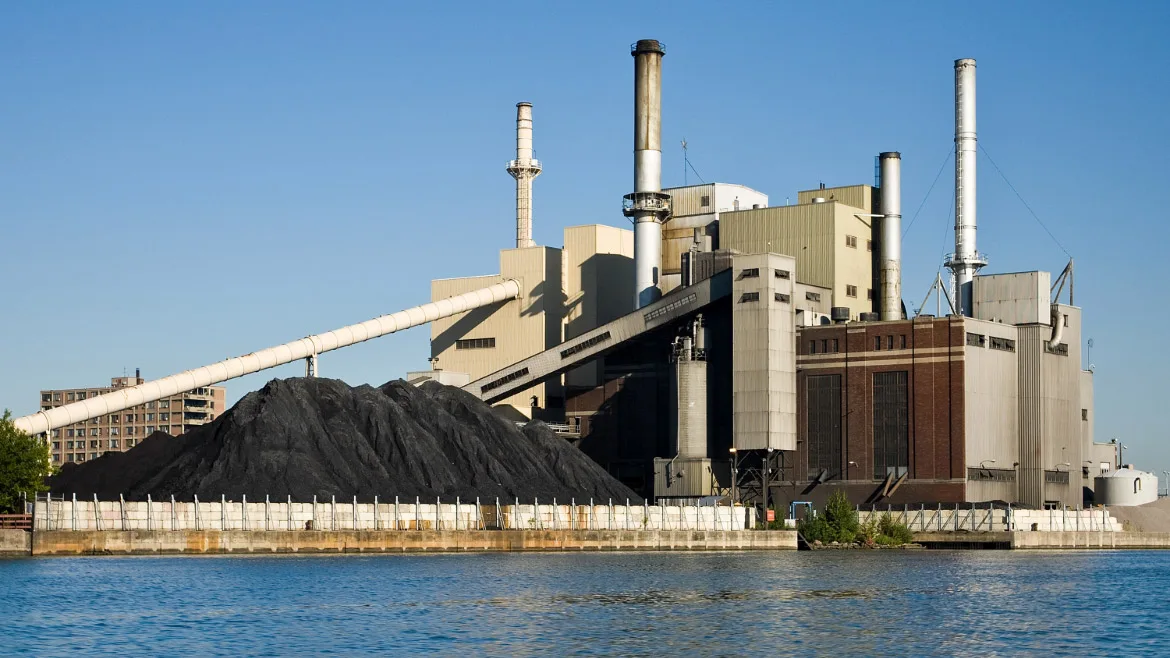
Nuclear power provides a substantial share of the electricity used by many developed countries, but much of the world still depends heavily on coal-fired power plants. Over the past several decades, environmental groups have raised concerns about the damage caused by emissions and discharges from these plants. There is broad agreement that coal plants release pollutants into the atmosphere and waterways, though debate continues over their full long-term environmental effects.
For decades, the United States generated more electricity from coal than any other country. That is no longer the case. According to Global Energy Monitor, China and India now lead the world in coal-fired power capacity, followed by countries including the United States, Japan, South Korea, Russia, Germany and Poland.
As of 2025, China had approximately 1,200 coal-fired power plants with nearly 1,200 gigawatts of capacity. By comparison, India had about 250 gigawatts of coal capacity, with the United States slightly below that level after a steep decline from its 2007 peak. According to GEM, China accounts for roughly one-third of global electricity demand.
Estimates of national coal reserves vary significantly by source. Those reserves, and the rate at which countries consume them, will remain important factors in national energy policy.
Earlier this year, President Trump and the U.S. Department of Energy directed six coal-fired power plants scheduled for retirement to continue operating beyond their planned closure dates. The U.S. Court of Appeals for the District of Columbia Circuit ruled against the federal intervention, finding that the plants could not be required to remain open under the asserted emergency authority.
One of the affected facilities was the J.H. Campbell Generating Plant in Michigan. After the ruling, Michael Lenoff, an attorney representing environmental groups challenging the directive, called the decision a rebuke of the administration’s “abuse of emergency powers.” He argued that the Department of Energy should use such powers only during genuine emergencies, rather than to prevent coal-plant retirements in support of a broader policy agenda.
The dispute also took on a partisan dimension, with Michigan Democrats describing the effort to keep the Campbell plant open as a gift to state Republicans. Yet decisions about power generation, nuclear-waste storage and environmental protection should not be reduced to partisan advantage. Policymakers should focus on the country’s long-term energy needs, the reliability and affordability of its power supply, and the environmental consequences of each available option.
The United States has an opportunity to develop an energy policy that other countries might learn from. But doing so will require looking beyond the next election, and perhaps learning from decisions already being made elsewhere.
Whether you require installation, repair, or maintenance, our technicians will assist you with top-quality service at any time of the day or night. Take comfort in knowing your indoor air quality is the best it can be with MOE heating & cooling services Ontario's solution for heating, air conditioning, and ventilation that’s cooler than the rest.
Contact us to schedule a visit. Our qualified team of technicians, are always ready to help you and guide you for heating and cooling issues. Weather you want to replace an old furnace or install a brand new air conditioner, we are here to help you. Our main office is at Kitchener but we can service most of Ontario's cities
Source link