Do You Really Need a Whole House Generator? Here’s How to Decide
If you’re asking do I need a whole house generator, here’s the short answer:
You likely need one if you check two or more of these boxes:
- You live in a storm-prone area with frequent or long outages
- Someone in your home depends on powered medical equipment
- Your home runs on well water, meaning no power means no water
- You work from home and can’t afford downtime
- You have a sump pump protecting a finished basement
- You’re often away and need your home protected automatically
You can probably get by with a portable generator + interlock kit if:
- Your outages are short and infrequent (under 10 hours per year)
- You’re physically able to set up and start a generator manually
- You only need to power a few essential circuits
Power outages in 2024 were the worst in a decade. The average American customer lost 11 hours of power that year, and some states saw far worse. Here in central Ohio, summer thunderstorms, winter ice storms, and the occasional derecho can leave neighborhoods dark for hours or longer. For many Columbus-area homeowners, that’s not just an inconvenience. It can mean spoiled food, a flooded basement, or a home that’s dangerously hot or cold.
The question isn’t really whether backup power matters. It’s whether a whole-house standby generator is the right tool for your situation, or whether a less expensive portable setup does the job just as well.
At Aire-Flo Heating, Cooling & Generators, our team has helped Columbus homeowners answer this question for decades. We have seen every situation. This guide walks you through the honest trade-offs so you can make the right call for your home and budget.
Standby vs. Portable: Do I Need a Whole House Generator?
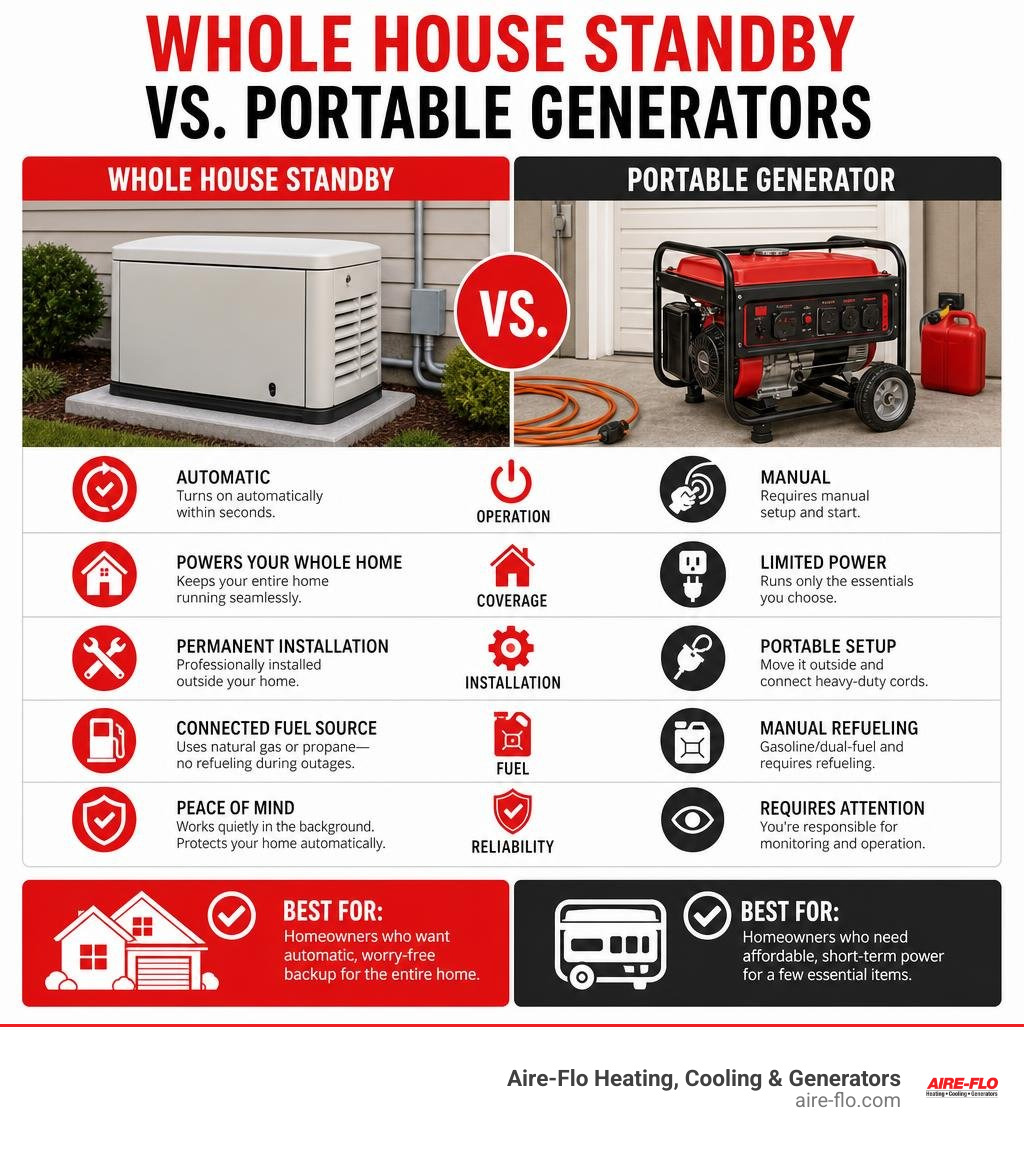
To answer the question, you must first understand how these two systems operate. Both systems provide emergency electricity, but they do so in completely different ways.
A portable generator is a mobile, gasoline-powered or dual-fuel engine that you store in your garage or shed. When the grid fails, you must wheel the unit outside, pull-start the engine, and connect heavy-duty cords. To run your home appliances safely, you must connect the portable unit to a manual transfer switch or an interlock kit.
A standby generator is a permanent appliance that we install on a concrete pad outside your home. It connects directly to your home’s electrical panel and runs on your existing natural gas or liquid propane line. The magic lies in the automatic transfer switch. This switch monitors utility power around the clock. Within seconds of a grid failure, the switch disconnects your home from the utility line, starts the standby unit, and transfers your electrical load to the generator. You do not have to lift a finger.
The choice between these two systems depends on your physical capability, your budget, and how much downtime you can tolerate. For homeowners who want seamless, hands-free protection, Aire-Flo Heating, Cooling & Generators offers professional whole-house standby generators that keep your home running without interruption.
Sizing Your Power Needs: Do I Need a Whole House Generator or a Portable Unit?
When deciding on backup power, you must calculate your electrical load. Sizing is not about the physical size of your home, but about the appliances you must run simultaneously.
Every appliance has running watts and starting watts. Starting watts represent the brief surge of power required to start an electric motor, which can be two to three times higher than the running watts.
If you only need to power essential circuits, a high-quality portable generator or a small standby unit is often sufficient. Essential circuits typically include:
- Your refrigerator and freezer to prevent food spoilage
- A few critical light circuits
- Your home security system and internet router
- A sump pump or well pump
However, if you want to run your central AC system, a standard portable generator will struggle. Central AC units are among the largest electrical draws in a home. They require a massive amount of starting wattage to turn on the compressor.
To determine the correct size for your home, our team provides comprehensive generator installation services that include a professional electrical load calculation. We analyze your electrical panel and calculate the exact wattage your home requires. For many homeowners, the answer depends on whether they need to power only essential circuits or larger systems like central AC, well pumps, and refrigeration at the same time.
Assessing Your Lifestyle: Do I Need a Whole House Generator with Automatic Startup?
For some households, the automatic startup of a standby generator is a luxury. For others, it is an absolute necessity.
Consider your physical mobility. A portable generator requires you to lift a heavy machine, wheel it through snow or rain, fuel it, and pull-start a cold engine. If you have physical limitations, or if you are uncomfortable handling raw fuel in a storm, a portable system is not a practical solution.
Frequent travelers also benefit from automatic backup power. If a winter ice storm hits Columbus while you are vacationing, a portable generator in your garage cannot save your home. Without power, your furnace shuts down, your pipes freeze and burst, and your basement can flood. A standby generator starts automatically, keeping your heating system running and your home safe while you are away.
Critical household dependencies also demand continuous power. If a family member relies on life-support equipment or home medical devices, even a brief outage is dangerous. Similarly, if your home relies on a well pump for fresh water or a sump pump to prevent basement flooding, a standby unit provides immediate protection. Homeowners comparing automatic protection with a manual setup can use our article on automatic standby generator operation to understand how transfer switches, startup timing, and connected loads work together.
The Real Cost of Backup Power: Standby vs. Portable Systems
Financial investment often decides the choice for many homeowners. A portable generator is a highly budget-friendly option, while a whole-house standby generator is a major home improvement project that requires professional trade work.
Both systems require proper electrical connections to prevent dangerous backfeeding into the utility grid. This means that even a portable setup requires some professional electrical work to install a manual transfer switch or an interlock kit.
To help you compare the two options, we have outlined the general differences below:
| Feature | Portable Generator + Interlock Kit | Whole-House Standby Generator |
|---|---|---|
| Upfront Cost | Low to Moderate | High Investment |
| Installation | Quick electrical setup | Complex electrical and gas line work |
| Activation | Manual (5 to 10 minutes) | Automatic (10 to 30 seconds) |
| Fuel Source | Gasoline or Propane tanks | Natural Gas or Large Propane tank |
| Power Output | Limited to essential circuits | Can power entire home and AC |
| Lifespan | 10 to 15 years | 20 to 30 years |
| Maintenance | Low (DIY friendly) | Moderate (Professional service recommended) |
Upfront Installation Costs and Long-Term Maintenance
While a portable generator has a low initial purchase price, a standby generator requires a much larger upfront investment. The installation of a standby system is not a simple weekend project. It requires a poured concrete pad or a pre-formed polymer base, professional electrical wiring to integrate the automatic transfer switch, and dedicated plumbing work to connect the unit to your natural gas or liquid propane line.
Long-term maintenance is another factor to consider. Standby generators are complex machines that must remain ready to run at a moment’s notice. The systems run automatic weekly self-tests to keep their internal components lubricated and to charge their starter batteries.
You must budget for annual professional maintenance, which includes oil changes, spark plug replacements, and filter updates. Additionally, you must replace the starter battery every three to four years. Portable generators require lighter maintenance, but you must still change the oil regularly and ensure you do not leave stale gasoline in the carburetor. If you are still weighing installation costs, maintenance, and fuel type, our breakdown of home generator cost factors explains how size, transfer switch setup, and fuel connection affect the final investment.
Fuel Options: Natural Gas, Propane, and Gasoline Trade-offs
Your choice of fuel impacts the convenience, runtime, and reliability of your backup power system.
Natural gas is the ultimate fuel for convenience. Because it connects directly to your local utility line, a natural gas standby generator has an unlimited fuel supply. You do not have to worry about refueling during a prolonged outage. However, in rare regional disasters, natural gas utility pressure can drop, which is a potential risk.
Liquid propane is an excellent alternative. It burns cleanly and does not degrade over time, making it perfect for long-term storage. If you choose a propane standby generator, you will need a large dedicated tank on your property. A standard tank can provide several days of continuous runtime.
Gasoline is the primary fuel for most portable generators. While gasoline is easy to source under normal conditions, it has major drawbacks during an emergency. Gasoline stations cannot pump fuel without electricity, leading to long lines and shortages during widespread outages. Furthermore, gasoline degrades in storage within a few months unless you treat it with a stabilizer.
Portable generators burn through a significant amount of fuel, requiring you to store and handle multiple gallons of highly flammable liquid. For homes where comfort, safety, and uninterrupted HVAC operation matter, a permanently installed standby system often provides a more practical long-term solution than storing gasoline for repeated outages.
Evaluating the Investment: Outage Data and Resale Value
Is a standby generator a smart financial investment for your specific home? To answer this, you must look at real-world data and local market trends rather than national marketing campaigns.
Prolonged power outages are becoming more common due to aging infrastructure and extreme weather events, which makes local risk an important part of the decision.
What EIA Power Outage Data Reveals About Your Risk
Data from the US Energy Information Administration shows that power outages are highly regional. While coastal states face extreme multi-day outages from hurricanes, our risks in the Columbus, Ohio area are different.
Severe summer thunderstorms, high winds, and heavy winter ice storms typically drive our local outages. In places like Dublin, Delaware, and Upper Arlington, mature trees can snap power lines during a storm, leaving local neighborhoods without power for hours or even days.
If your neighborhood has buried power lines, your risk of a prolonged outage is much lower. However, if you live in an older neighborhood with overhead lines, or in a more rural area like Plain City or Galena, you are much more vulnerable to extended downtime. Columbus-area homeowners who experience repeated outages may benefit from backup power solutions for the home that explain how standby systems support heating, cooling, sump pumps, and essential appliances during storms.
Does a Standby Generator Add Real Resale Value to Your Home?
Sellers often overstate the claim that a standby generator will fully pay for itself in home resale value.
In highly storm-prone coastal markets, home buyers actively look for standby generators, and homes with these systems sell at a premium. In the Columbus market, a standby generator is a highly attractive feature that can set your home apart from others, but it rarely returns 100% of its installation cost in resale value. Instead, think of it as an investment in your family’s safety, comfort, and peace of mind.
There are other financial benefits to consider. Some insurance companies offer a discount on your homeowners insurance policy if you install an automatic standby generator. This discount exists because a standby unit keeps your sump pump running, preventing costly water and mold damage.
Safety Requirements and Professional Installation Standards
Safety should always be your top priority when dealing with high-voltage electricity and internal combustion engines.
Portable Generator Safety: Carbon Monoxide and Interlock Kits
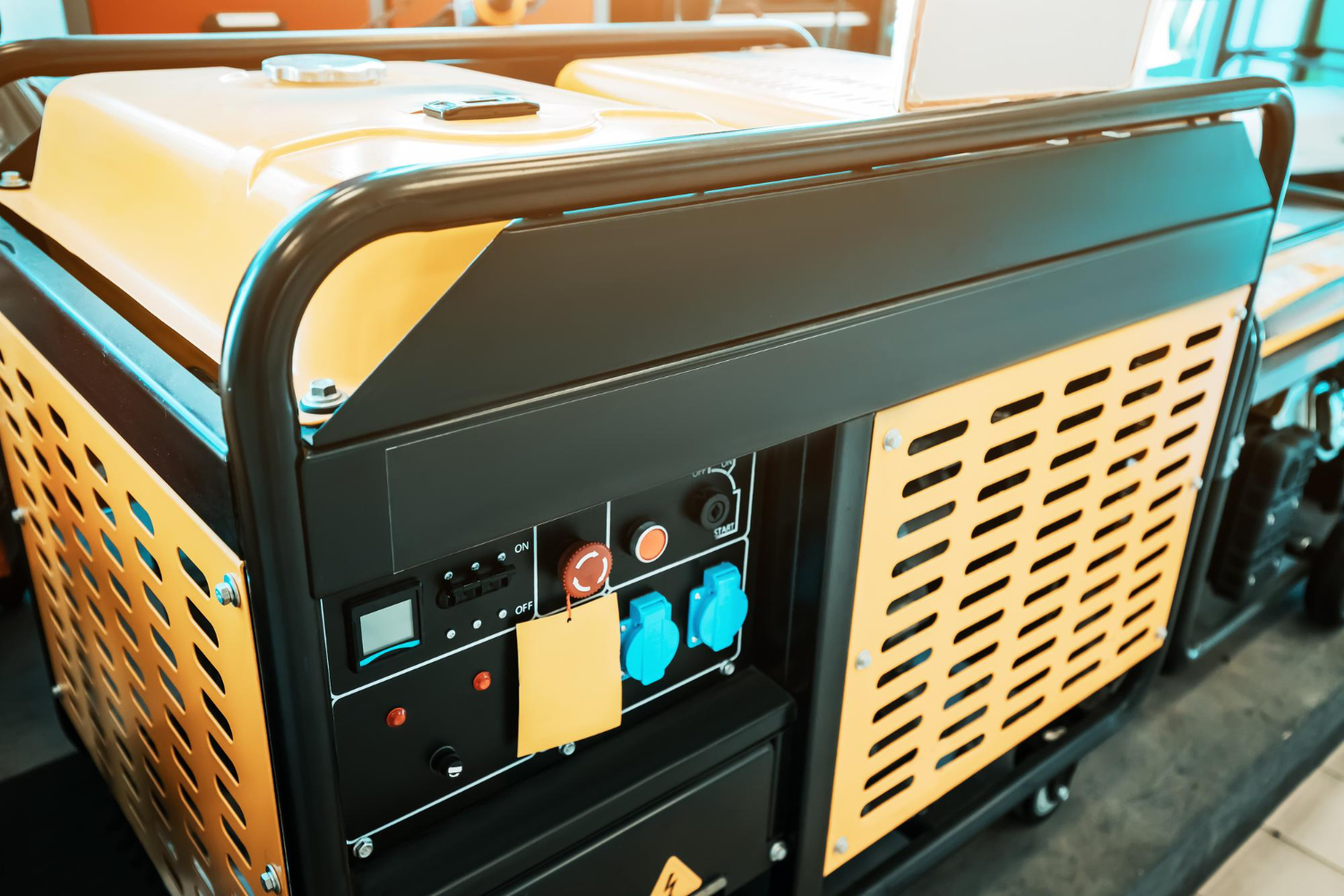
Portable generators present serious safety risks if you do not operate them correctly. The most severe danger is carbon monoxide poisoning. You must never run a portable generator indoors, in a garage, in a shed, or near open windows. Even with the garage door open, deadly carbon monoxide gas can accumulate quickly. You must always position a portable generator at least 20 feet away from your home, with the exhaust pointed away from all doors and windows.
Additionally, you must never connect a portable generator directly to your home’s outlets without a proper transfer switch or interlock kit. Doing so can cause backfeeding, which sends high-voltage electricity back into the utility lines. This poses a fatal hazard to utility workers who are trying to restore power.
An interlock kit is a mechanical safety device that physically prevents you from turning on your main breaker and your generator breaker at the same time. This simple, code-compliant device makes portable generator operation safe.
Why Professional Installation Matters for Standby Systems
While some homeowners attempt to install a generator themselves, a standby system requires professional installation. This is because the process involves working with high-voltage electricity and live gas lines.
A professional installation ensures:
- Proper sizing and placement according to local zoning laws and HOA rules
- Safe electrical connections that comply with local building codes
- Correct gas line sizing to ensure the generator receives adequate fuel pressure
- Secure mounting on a level concrete pad to prevent shifting over time
- Proper coordination with your local utility company for a seamless transition
Our team handles every step of this process, from securing the necessary permits to performing the final startup testing.
Frequently Asked Questions About Whole-House Generators
Do whole house generators qualify for any federal tax credits in 2026?
No. Section 25D of the Internal Revenue Code restricts federal tax credits to clean energy systems, such as solar panels and battery storage systems. Traditional standby generators that run on fossil fuels like natural gas or propane do not qualify for these federal tax credits.
How long can a whole house generator run continuously?
A natural gas standby generator can run continuously for days or even weeks because it has an unlimited fuel supply. However, you should shut the unit down once every 24 hours for a brief period to check the oil level and add oil if necessary. Propane models are limited only by the size of your propane tank.
How long do whole house generators last compared to portables?
A professionally maintained standby generator is highly durable and can last between 20 and 30 years. This is because manufacturers build them with heavy-duty, automotive-grade engines for long-term outdoor use. Portable generators have a shorter lifespan, typically lasting between 10 and 15 years, depending on how often you use them and how well you store them.
Conclusion
Deciding on backup power is about balancing your budget with your need for convenience, safety, and reliability. If you want a budget-friendly way to power a few essential circuits and you are physically comfortable managing a portable unit, a portable generator with an interlock kit is an excellent choice. But if you want seamless, hands-free protection that keeps your entire home comfortable during a storm, a standby generator is a smart investment.
At Aire-Flo Heating, Cooling & Generators, we have spent 75 years providing trusted, top-rated service to homeowners throughout Columbus, Ohio, and the surrounding areas. We stand behind our work with a 100% satisfaction guarantee, ensuring our team installs your system safely and correctly.
If you are ready to explore your backup power options, contact our professional generator installation technicians today to schedule a comprehensive in-home consultation.
Whether you require installation, repair, or maintenance, our technicians will assist you with top-quality service at any time of the day or night. Take comfort in knowing your indoor air quality is the best it can be with MOE heating & cooling services Ontario's solution for heating, air conditioning, and ventilation that’s cooler than the rest.
Contact us to schedule a visit. Our qualified team of technicians, are always ready to help you and guide you for heating and cooling issues. Weather you want to replace an old furnace or install a brand new air conditioner, we are here to help you. Our main office is at Kitchener but we can service most of Ontario's cities
Source link