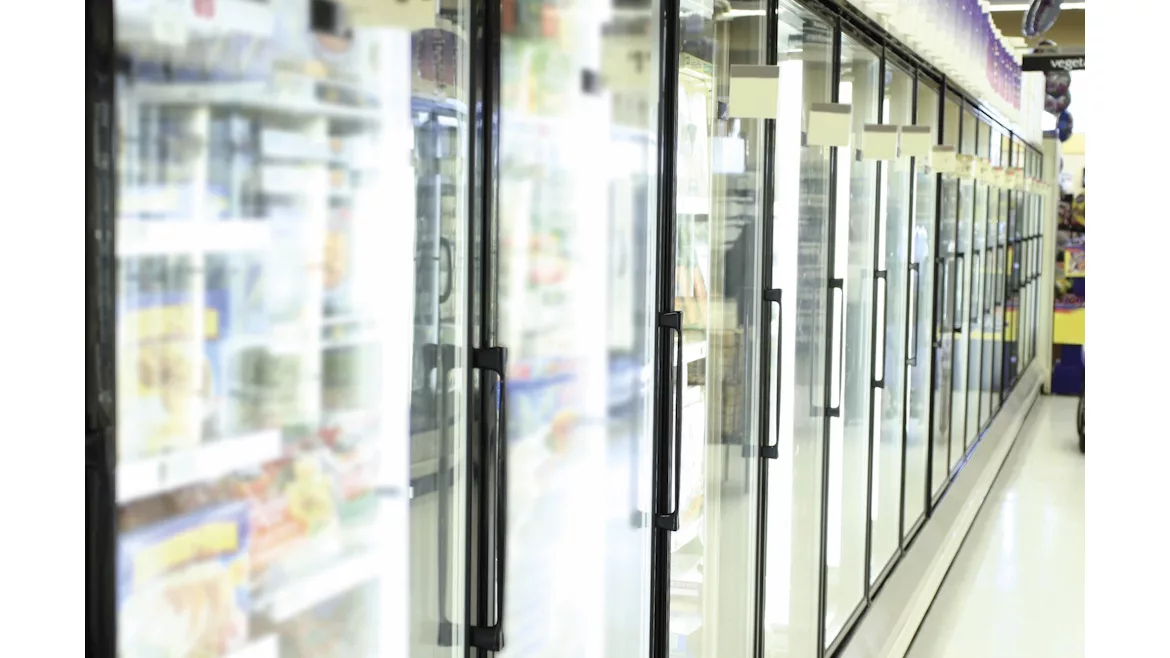
The transition to lower-GWP refrigerants in commercial refrigeration equipment is well underway. Large food retailers, small grocers, convenience stores, dollar stores, and pharmacies have an ever-expanding range of equipment options from which to choose.
From self-contained R-290 (propane) and A2L cases to A2L condensing units, distributed A2L and CO2 systems, and centralized CO2 booster systems, lower-GWP equipment is evolving to meet a variety of end-user preferences and store formats. Large retailers have been among the earliest adopters in the transition, driven by numerous operational objectives, including:
- Complying with refrigerant regulations;
- Reducing Scope 1 (i.e., direct) and Scope 2 (i.e., indirect) GHG emissions; and
- Meeting corporate sustainability goals.
Some food retailers already have more than a decade of experience with low-GWP systems, and through numerous trials and successful installations, they’ve refined and perfected their lower-GWP refrigerant strategies. As of 2024, CO2 booster systems accounted for 5.8% of total system installations in North America, comprising 4,100 stores. CO2 is forecast to account for 22% of supermarket refrigeration by 2028.
In the self-contained sector, 4.6 million R-290 cabinets are installed in North America, reflecting the widespread acceptance of this reliable, efficient, and sustainable refrigeration strategy. CO2 and R-290 are also being joined by A2L refrigerant technologies, as recent Environmental Protection Agency (EPA) approval, safety standards, and codes have paved the way for their emergence in commercial refrigeration.
The commercial refrigeration equipment supply chain continues to make significant progress in supporting these lower-GWP refrigerants, developing a wide range of next-gen technologies designed for new installations (from small to large) while solving retrofit challenges. For retailers who have yet to begin their refrigerant transitions, these technological advancements and experiential learnings provide invaluable opportunities to benefit from the cumulative experience of early adopters.
Selection Criteria
Selecting a next-gen refrigerant and/or equipment strategy is a long-term investment that requires careful consideration. For example, typical supermarket rack systems can be expected to remain in operation for 15 to 20 years. However, many retailers are evaluating multiple options in their refrigerant portfolios, often including a mix of equipment types (e.g., centralized and self-contained systems).
Total cost of ownership (TCO) is one factor that influences a food retailer’s selection of low-GWP refrigerants. Key elements that impact the TCO include a system’s energy efficiency, reliability, and projected maintenance and operational costs. System installation and maintenance require properly trained service technicians. One notable exception: Self-contained units are critically charged at the factory and generally considered plug-and-play. Retailers need to make sure their local or corporate technician team is prepared to support their lower-GWP refrigerant strategies.
Looking for quick answers on air conditioning, heating and refrigeration topics?
Try Ask ACHR NEWS, our new smart AI search tool.
Ask ACHR NEWS
A store’s size and its relative refrigeration load also influence refrigerant selection and equipment decisions. System architectures have evolved to meet a variety of needs, from self-contained coolers and freezers to remote condensing units, distributed mini-rack systems, and large centralized solutions.
Retailers should also align equipment decisions with installation goals, as the criteria for building a new store versus remodeling or retrofitting an existing system may differ:
- New stores provide opportunities to start with the most optimal system design.
- Remodels may come with some infrastructural constraints, such as store footprint limitations (i.e., insufficient space for a machine room) or neighboring building considerations.
- Retrofits may offer ways to phase out aging sections of a system while phasing in lower-GWP equipment incrementally.
Understanding all these considerations enables retailers to make the best decisions among an ever-expanding range of refrigeration equipment and system architectures.
Lower-GWP Refrigerant Migration
From small to large applications, the migration to lower-GWP refrigerant alternatives continues, typically driven by equipment and/or system compatibility in specific applications. However, in addition to staying within established application lanes, recent refrigerant and technological trends are expanding some of these options into new territories.
Whether you’re evaluating CO2 (R-744), R-290, or an A2L for future refrigeration systems, each has unique characteristics, stipulations, and regulatory mandates that, to some degree, dictate their probable end uses and applications.
R-290 has already established a niche in commercial refrigeration, offering retailers distributed flexibility in self-contained units, commonly found in reach-in cases (with or without doors), typically adhering to a 150g charge limit. R-290 is also used in commercial ice machines, water coolers, and other low-temperature refrigeration applications.
Following appropriate product and system safety standards, the EPA’s Significant New Alternatives Policy (SNAP) Rule 26 has increased R-290 charge limits up to 300 and 500g, in turn raising system capacity ranges up to 4 horsepower. This charge increase could extend its role to larger cases and potentially include smaller walk-in units using a single compressor and/or condensing unit.
Stand-alone, self-contained R-290 units are typically air-cooled, discharging condenser heat into the retail space. When multiple units are installed, they’re often connected to a shared, chilled water loop to remove excess case heat from the retail space.
A2L refrigerants have the potential to play key roles as alternatives to HFCs across a broader range of equipment and systems, including:
- Outdoor condensing units for walk-in coolers; and
- Mini-rack systems for distributed architectures.
Approved for use in commercial refrigeration in SNAP Rule 26, lower-flammability A2Ls can be applied at much higher charges than R-290, unlocking higher capacities and potentially supporting larger distributed strategies.
Copeland selected R-454A (239 GWP), R-454C (148 GWP), and R-455A (146 GWP) to support a spectrum of commercial refrigeration applications. Each offers unique capacities, performance characteristics, and lower-GWP ratings to meet a range of end-user preferences and system design scenarios. For example, R-454C has glide and performance characteristics similar to R-448A, helping OEMs meet the 150 GWP threshold, maintain adequate capacity levels, and minimize impacts on system redesigns.
It’s important to note that A2Ls cannot be used as drop-in replacements in existing HFC systems. All new refrigeration equipment and systems must be designed and qualified to use A2Ls per applicable safety standards.
CO2 refrigeration has been on the global stage for more than two decades, and adoption is increasing rapidly in North America. With zero ODP and a GWP of 1, CO2 is considered ‘future-proof,’ in that it’s insulated from future regulatory mandates.
In North America, R-744 has primarily been applied in large, centralized CO2 booster systems. Recently, distributed CO2 booster architectures have emerged to enable a more flexible, small-footprint CO2 solution. These smaller-capacity systems are ideal for small-format stores making the transition to CO2 or larger stores that prefer the scalability and sustainability advantages of a distributed CO2 approach.
Copeland has been supporting OEMs in the design of centralized CO2 booster systems for more than a decade, focusing on a full-system approach and the seamless integration of compressors, controls, drives, valves, sensors, and key components. We recently added a transcritical CO2 scroll compressor to our comprehensive CO2 portfolio, which is designed to support the development of distributed CO2 systems.
Copeland is dedicated to supporting the commercial refrigeration equipment supply chain by advancing lower-GWP refrigerant technologies — whether that’s R-290, A2Ls, or CO2. From integrated compression, controls, drives, and components to supermarket innovation labs, research collaborations, and industry stewardship, we’re innovating to support the ongoing refrigerant transition.
Whether you require installation, repair, or maintenance, our technicians will assist you with top-quality service at any time of the day or night. Take comfort in knowing your indoor air quality is the best it can be with MOE heating & cooling services Ontario's solution for heating, air conditioning, and ventilation that’s cooler than the rest.
Contact us to schedule a visit. Our qualified team of technicians, are always ready to help you and guide you for heating and cooling issues. Weather you want to replace an old furnace or install a brand new air conditioner, we are here to help you. Our main office is at Kitchener but we can service most of Ontario's cities
Source link