Why a Generator Running Out of Fuel Can Be a Problem
When a generator runs out of fuel, it usually sputters and stops, cutting power to everything connected to it. One fuel-out event is not likely to ruin a well-maintained generator, but it can interrupt appliances, risk data loss, and make restarting harder, especially with diesel units or generators that already have fuel-system problems.
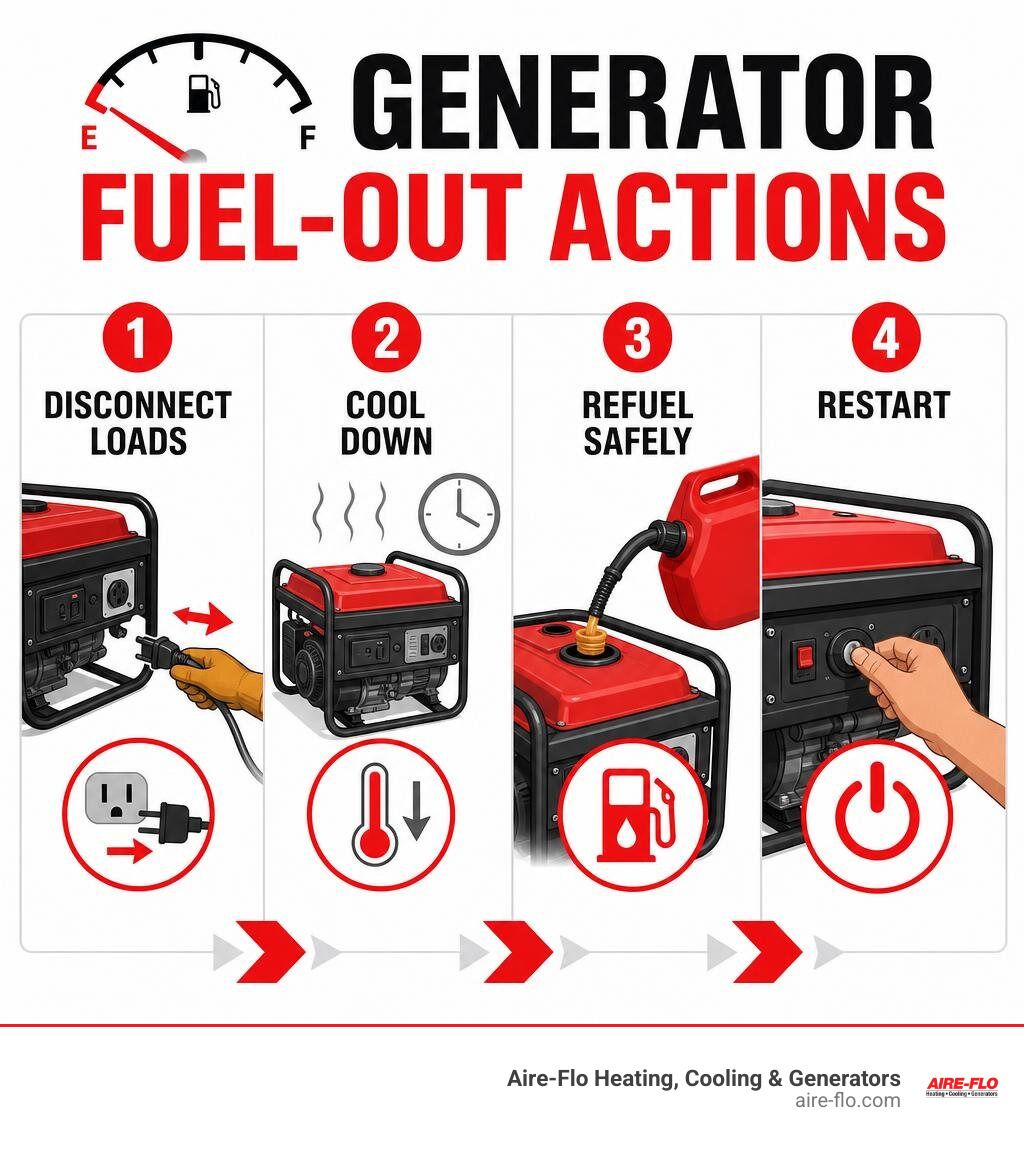
To reduce risk, disconnect major loads when fuel is low. Let the generator run without a load for a minute or two, turn it off, and refuel only after it has cooled. Inverter generators often protect connected electronics better than conventional models, but no generator should be relied on to provide stable power as the engine loses fuel.
A sudden shutdown also matters during an outage. Refrigerated and frozen food, medical devices, sump pumps, heating equipment, and home internet can all lose power without warning. Keep the generator outdoors, well away from doors and windows, and never refuel a hot or running unit.
At Aire-Flo Heating, Cooling & Generators, our team helps Central Ohio homeowners prepare for outages and maintain dependable backup power. Practical fuel planning, safe operation, and regular maintenance can help protect both the equipment and the home it supports.

When fuel starvation strikes, the engine does not switch off cleanly. Combustion becomes uneven as the carburetor or fuel injection system runs short of gasoline or diesel. Engine speed can drop before the generator shuts down, which can affect output quality.
For homeowners relying on backup power solutions for your home, an unexpected shutdown can interrupt appliances and electronics at the worst possible time. The safest approach is to watch fuel levels and disconnect sensitive loads before the tank is empty.
Voltage and Frequency Changes Under Load
In a standard portable generator, electrical output frequency is tied to engine speed. Under normal conditions, many portable units run near 3,600 RPM to deliver 60 Hz electricity. When fuel runs out under a heavy load, engine speed may fall quickly before the engine stops.
As output becomes unstable, connected devices may see voltage or frequency changes. Sensitive electronics, variable-speed AC equipment, and appliances with circuit boards can be more vulnerable to poor-quality power. Total harmonic distortion is one measure used to describe distortion in AC power.
IEEE publishes technical standards for electrical systems, but generator owners should always follow the operating and shutdown instructions for their specific model.
Inverter vs. Conventional Generators During Fuel Starvation
Inverter generators and conventional open-frame generators manage changing engine speed differently. Inverter models convert generated power before delivering it as regulated AC output, while conventional models more directly reflect changes in engine speed at the outlets.
| Feature | Conventional Generator | Inverter Generator |
|---|---|---|
| Shutdown behavior | Engine slowdown can affect output before the engine stops | Electronic controls may disconnect output when power quality falls |
| Frequency stability | Frequency can change as engine speed drops | Controls are designed to maintain regulated output within operating limits |
| Voltage regulation | Output can become less stable during a stall | Electronics can shut off output to help protect connected loads |
| Appliance risk | Sensitive devices may be more exposed to unstable power | Protected shutdown features can reduce exposure for sensitive devices |
Even with an inverter generator, do not wait for the tank to run empty. Disconnect important loads and shut the unit down in a controlled way when fuel is low.
Long-Term Engine and Component Risks of Running Dry
Letting a generator run out of fuel is usually more disruptive than destructive, but repeated fuel starvation can reveal or worsen maintenance issues. As the tank gets low, debris or water that has settled near the bottom of the tank may move into the fuel system.
That contamination can foul fuel filters, carburetor passages, or injectors. If your unit begins surging, stalling, or failing to restart after an outage, the warning signs described in our guide to generator problems during outages can help you identify when it is time for service.
Mechanical and Electrical Concerns When a Generator Runs Out of Fuel
A sudden stall under a heavy load can create a hard stop for the engine and connected appliances. It does not automatically mean the alternator or voltage regulator has failed, but ongoing unstable operation can place extra stress on electrical components.
If a generator starts after refueling but produces no usable power, do not attempt electrical repairs unless you are qualified to do so. A professional can test the alternator, voltage regulator, wiring, and control components safely.
Air in Fuel Lines and Fuel Pump Complications
When a generator runs out of fuel, air can enter the supply lines. Gasoline generators may restart after fresh fuel reaches the carburetor or injector system. Diesel generators often need a more careful priming or bleeding process because air in the fuel system can prevent proper operation.
For a no-start condition that continues after refueling, Aire-Flo Heating, Cooling & Generators provides generator repair for homeowners in the Columbus area. Our technicians can inspect fuel delivery, controls, and electrical output without relying on trial-and-error repairs.
Safe Restart and Recovery After Fuel Depletion
If your generator has run out of fuel during an active power outage, do not immediately refill and restart it. Take a methodical approach to reduce fire and electrical risks.
- Disconnect all loads: Turn off the generator’s main breaker and unplug extension cords or disconnect transfer-switch loads.
- Allow the engine to cool: Never pour fuel into a hot generator. Spilled fuel can ignite on hot engine or exhaust components.
- Refuel and inspect: Add fresh fuel, check the engine oil level on a flat surface, and look for fuel leaks or loose clamps.
Our explanation of how backup generators work shows why restarting without electrical loads matters. The engine should reach a stable operating speed before it accepts demand from appliances.
Troubleshooting After Your Generator Runs Out of Fuel and Won’t Start
If the generator cranks but does not start after refueling, begin with basic checks. Review the steps in our generator won’t start diagnostic checklist before trying more involved repairs.
- Low-oil sensor lockout: Many modern engines will not start if the oil level is low. Keep the generator level when checking oil, because an uneven surface can trigger a low-oil cutoff.
- Fuel flow issue: Confirm that the fuel valve is open and that fresh fuel can reach the carburetor or injector system.
- Sediment or contamination: Low fuel levels can move debris into the fuel valve, filter, or carburetor. Clean or service these components according to the manufacturer’s instructions.
When to Call for Electrical or Fuel-System Service
If the engine runs after refueling but the outlets have no power, or if the generator repeatedly stalls, stop using it and arrange a professional inspection. Attempting to flash fields, bypass safety switches, or open electrical components can create shock and equipment-damage risks.
For dependable help after a fuel-related shutdown, our generator installation team can also help Columbus homeowners evaluate a properly sized standby system for their home’s backup-power needs.
Best Practices for Fuel Management and Controlled Shutdowns
To protect home appliances and the generator, do not use fuel exhaustion as a normal shutdown method during an outage. Keep continuous demand within the operating limits in your owner’s manual, and avoid adding large loads when the fuel level is low.
Cold weather can also affect fuel planning and generator reliability. Our guidance on how to prevent generator failures during winter outages explains practical steps homeowners can take before severe weather arrives.
Proper Shutdown Procedures vs. Running Dry for Storage
Whenever you take a generator offline, use a controlled shutdown routine:
- Turn off appliance loads and transfer-switch breakers.
- Unplug cords from the generator panel when applicable.
- Let the engine run with no electrical load for two to three minutes.
- Turn the engine switch off, then close the fuel shutoff valve if the model has one.
Running the carburetor dry can be appropriate for seasonal storage when the owner’s manual recommends it. Closing the fuel shutoff valve and letting the engine use the fuel remaining in the carburetor can help reduce fuel-related deposits. For longer storage, follow the manufacturer’s fuel-stabilization and storage instructions.
Modern Monitoring and Automatic Standby Alternatives
Managing fuel cans, extension cords, and manual shutdown routines during severe weather can be stressful. Portable generators need regular refueling, so fuel planning should be part of every outage plan.
When comparing a portable unit with a standby system, our article on standby vs. portable generators explains the differences in convenience, capacity, and automatic operation.
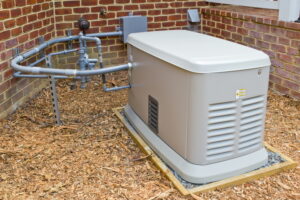
For homeowners who want a fuel supply that does not depend on gasoline cans, Aire-Flo Heating, Cooling & Generators offers whole-home backup generators. A professionally installed standby generator can start automatically during an outage and shut down safely when utility power returns.
Frequently Asked Questions About Generator Fuel Depletion
Is it safe to let a generator run out of gas while powering appliances?
It is not recommended. As the engine loses speed, voltage and frequency can become unstable, which may affect motors, compressors, and sensitive electronics. Disconnect loads and use a controlled shutdown instead.
Can running out of fuel damage a generator’s inverter board or AVR?
A single fuel-out event does not automatically damage an inverter board or automatic voltage regulator. However, repeated stalls, unstable output, and existing maintenance issues can place added stress on electrical components. Have persistent power or starting problems inspected by a qualified technician.
Should you intentionally run a generator dry before putting it into storage?
You may run the carburetor dry when the owner’s manual recommends that storage method. Close the fuel shutoff valve and let the engine use the fuel remaining in the carburetor, with all electrical loads disconnected. Follow the manufacturer’s instructions for fuel in the tank and long-term storage.
Conclusion
A generator running out of fuel can cause an abrupt power interruption, but careful fuel management helps reduce the risk. Disconnect electrical loads before shutdown, let the engine cool before refueling, and address recurring starting or output problems promptly.
Aire-Flo Heating, Cooling & Generators has provided trusted HVAC and generator service across Columbus and surrounding Central Ohio communities for 75 years. Our team can help with maintenance, repairs, and dependable backup-power options for your home.
To schedule service or discuss your backup-power needs, contact our generator specialists today.
Whether you require installation, repair, or maintenance, our technicians will assist you with top-quality service at any time of the day or night. Take comfort in knowing your indoor air quality is the best it can be with MOE heating & cooling services Ontario's solution for heating, air conditioning, and ventilation that’s cooler than the rest.
Contact us to schedule a visit. Our qualified team of technicians, are always ready to help you and guide you for heating and cooling issues. Weather you want to replace an old furnace or install a brand new air conditioner, we are here to help you. Our main office is at Kitchener but we can service most of Ontario's cities
Source link