
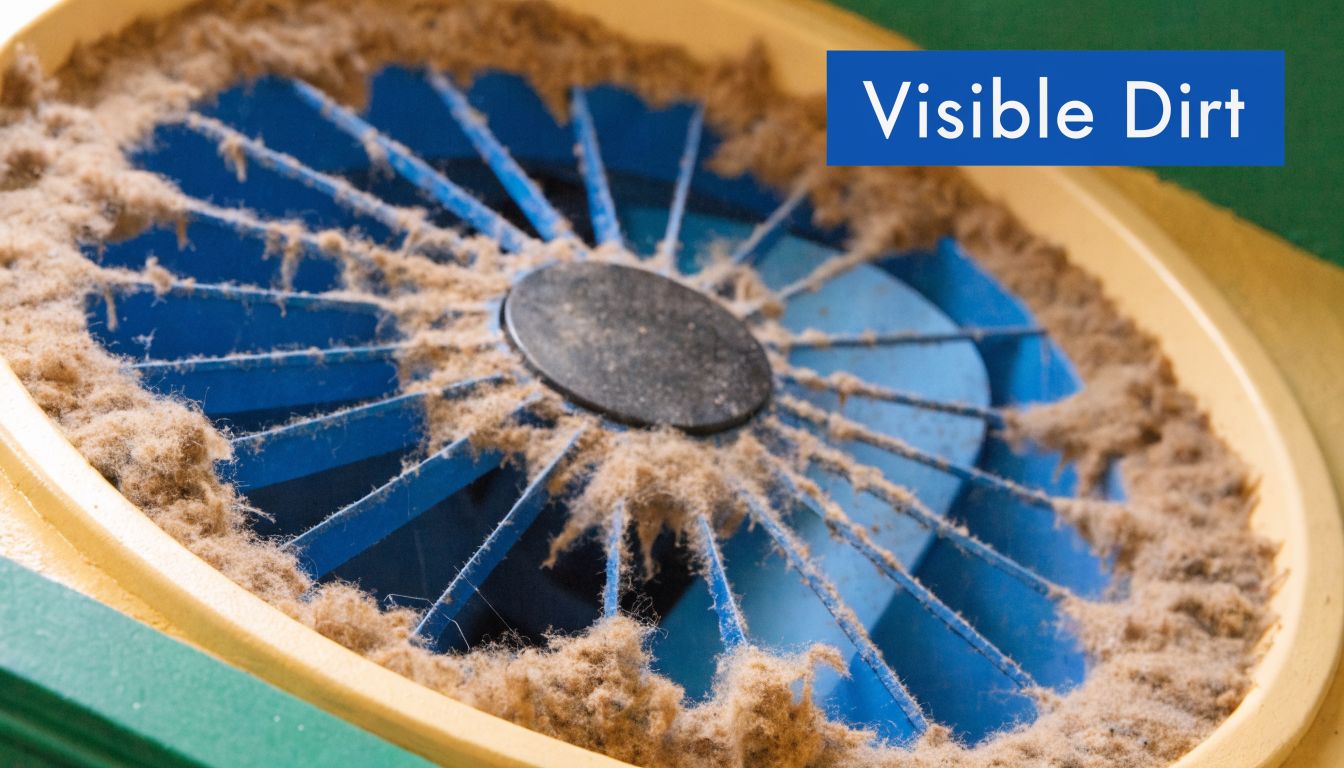
If you live in Mesa or anywhere around Phoenix, you’ve probably had that moment where the AC kicks on and something feels off. How to tell if your air ducts need cleaning usually starts with what you can already see, smell, and feel inside your home, especially after dust storms, long cooling seasons, and monsoon humidity put your system through more than most national advice accounts for.
The Obvious Signs You Can See and Smell
Start at the vents. Not the thermostat, not the outdoor unit. The quickest first check is right inside the room you’re standing in.
What to check with a flashlight
The National Air Duct Cleaners Association says, “If your air ducts look dirty, they probably are”, and a proper visual check starts by removing and inspecting registers with a flashlight for ample dust and debris buildup, not just a light surface film on the cover itself, as noted in this NADCA-based inspection guide.
A simple homeowner check looks like this:
- Turn the system off.
- Remove a supply or return vent cover with a screwdriver if needed.
- Use your phone flashlight and look a short distance into the duct.
- Check the back of the grille, the duct walls just inside the opening, and any visible corners.
What are you looking for?
- Thick dust layers: A little dust on a grille is common. Heavy, fuzzy buildup deeper inside is different.
- Hair and lint clumps: Pet hair tends to catch on rough spots and corners.
- Construction debris: Drywall dust, sawdust, and small scraps often show up after remodeling.
- Dark staining with texture: That can suggest moisture-related contamination and needs closer evaluation.
Practical rule: Light dust on a register cover is maintenance. Heavy buildup inside the duct is a warning sign.
Smells that matter and smells that don’t
Some odors are minor. Some are not.
A brief stale smell when the AC starts after sitting idle can happen. A persistent musty or mildewy odor coming from vents is a stronger warning sign because moisture and microbial growth often announce themselves by smell before you can see them.
You know what? Homeowners sometimes ignore odors longer than they ignore visible dirt, because smell feels less concrete. In practice, a steady musty smell is one of the more useful clues you can pick up without tools.
Watch for these odor patterns:
- Musty smell every time the system runs: Possible moisture or mold issue
- Dirty, dusty smell that lingers: Could mean debris buildup in ducts or on HVAC components
- Foul or unusual odor from one area only: Could point to a localized contamination problem
Duct contamination sign check table
| Sign | What It Might Mean | Recommended Action |
|---|---|---|
| Light dust on vent cover | Normal household dust | Wipe the cover and monitor |
| Thick dust visible inside duct | Internal buildup beyond routine housekeeping | Consider professional inspection |
| Clumps of hair or lint in vent opening | Recirculating debris and restricted airflow risk | Inspect additional vents and filter |
| Persistent musty odor | Moisture or microbial growth concern | Professional evaluation is appropriate |
| Visible debris after remodeling | Construction dust in duct system | Have the system inspected |
One more thing matters after a cleaning. Professional duct cleaning typically requires an access hole near the furnace so technicians can inspect and clean the system, and that opening must be sealed correctly afterward. If no access point was made, or if it was left poorly sealed, the job may not have been done thoroughly.
When Your Home’s Dust and Airflow Seem Off
Sometimes the best clue isn’t inside the vent. It’s on your coffee table.
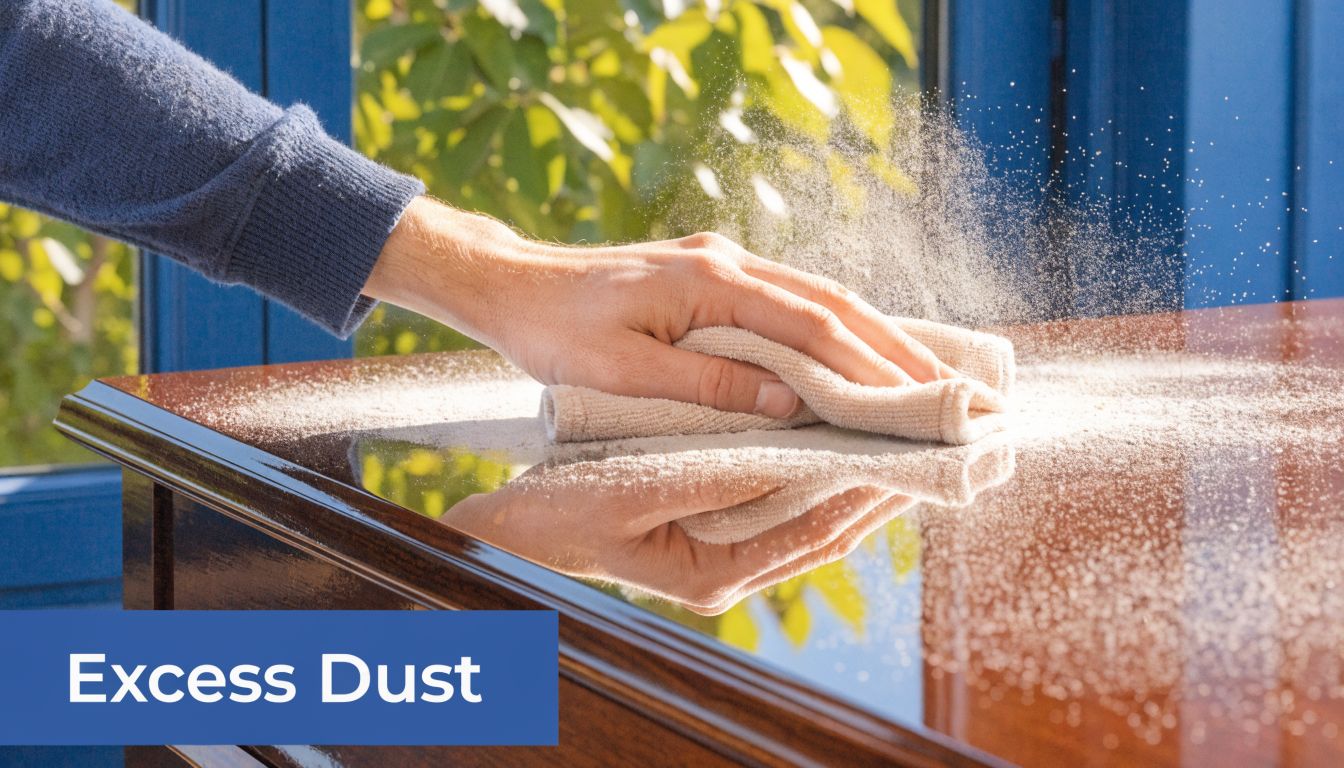
When everyday dust starts feeling excessive
The average American household accumulates about 40 pounds of dust each year, much of which circulates through HVAC ductwork, and over time that buildup can restrict airflow and make the system work harder. The same source also cites a five-year case study in which homes with annual duct cleaning had a 30% decrease in HVAC repairs, according to these air duct cleaning facts.
That doesn’t mean every dusty house needs duct cleaning. Arizona homes deal with outdoor dust all the time. But if you clean surfaces and they look dusty again unusually fast, your HVAC system may be helping move those particles around instead of keeping them contained.
For broader housekeeping strategies, this guide on how to reduce dust in your Richmond home is useful because it focuses on room-level dust control habits that complement HVAC maintenance.
If your furniture gets dusty quickly, don’t assume the ducts are the only cause. Check the filter, the returns, and whether outside dust is entering around doors, windows, or attic penetrations.
Weak airflow in some rooms
Walk room to room while the system is running. Put your hand in front of each vent. You’re not measuring exact airflow. You’re comparing one area to another.
If one bedroom barely moves air while the living room blows hard, something is off. It could be buildup in part of the duct system, a disconnected section, a crushed flex duct, or a balancing issue. Dirty ducts aren’t the only explanation, but they belong on the list.
A few useful checks:
- Compare rooms: Note whether airflow is weak everywhere or only in certain spaces.
- Look at the filter first: If you’re not sure where it is, this guide on where your air filter is in your house can help.
- Check vent obstructions: Rugs, furniture, and closed dampers can mimic duct problems.
- Pay attention to comfort: Stuffy rooms and uneven temperatures often show up before a homeowner ever looks inside the ductwork.
When dust and airflow problems show up together, that combination usually deserves a closer look than either symptom alone.
Rising Energy Bills and Lingering Health Worries
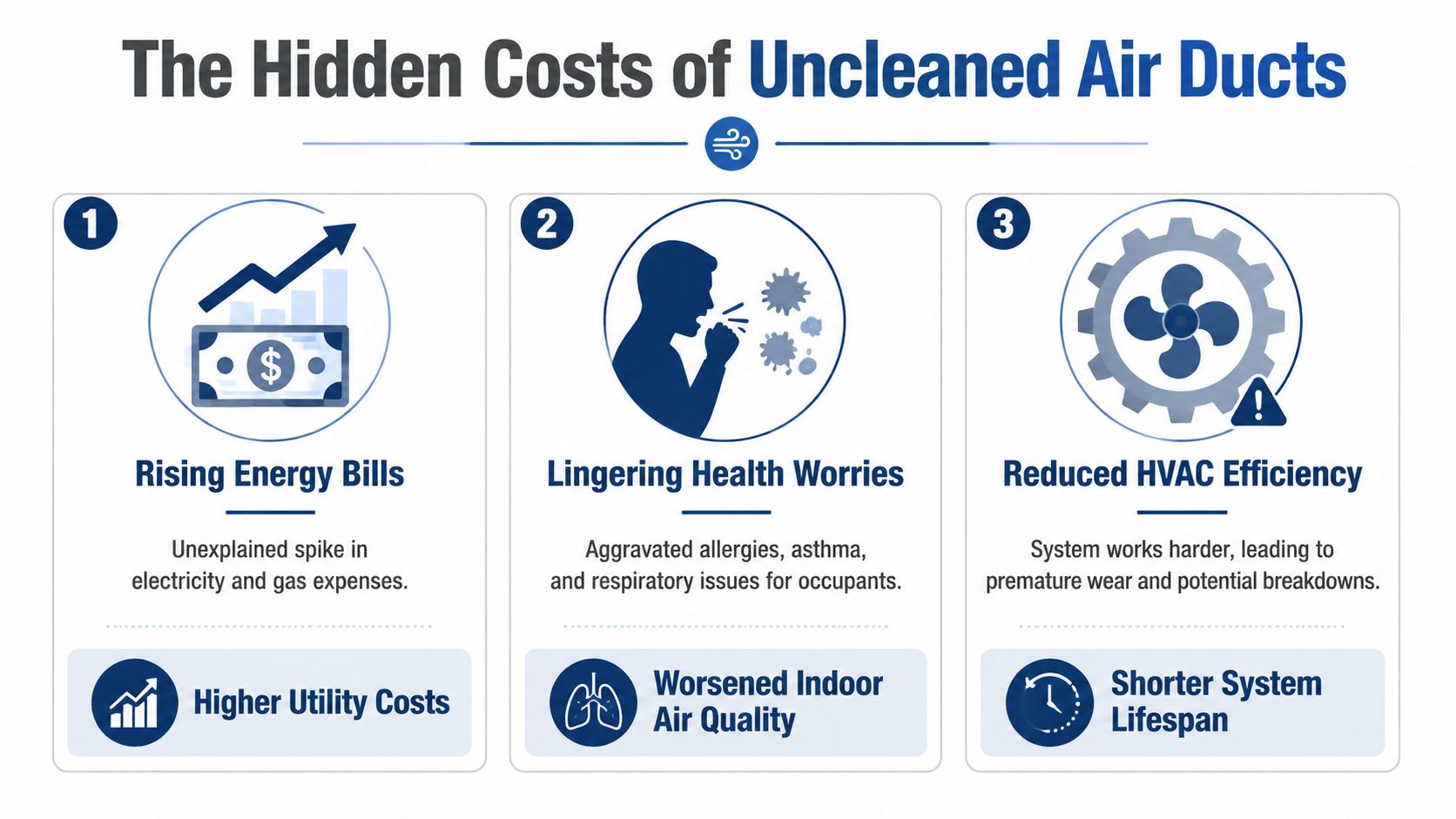
When the electric bill jumps and your usage habits haven’t changed much, your HVAC system is one of the first places to look.
The money side of dirty ducts
According to a NADCA study, dust and debris in ductwork can make heating and cooling systems up to 40% less efficient, and the EPA adds that cleaning HVAC system components can improve efficiency by 20% and potentially save homeowners up to 15% on energy bills, as summarized in this NADCA energy study overview.
Let me explain. Air has to move. When debris reduces airflow through the system, the equipment has to work harder to deliver the same comfort. In Phoenix, where AC systems run hard for long stretches, even a modest airflow problem can show up on your bill faster than it might in a milder climate.
Signs the problem may be tied to duct contamination include:
- Bills rise without a clear weather reason: Especially if your thermostat settings haven’t changed much
- Longer run times: The house takes more time to cool than it used to
- Weaker air delivery: Vents feel less forceful even though the equipment still runs
If you’re trying to rule out other causes too, these HVAC energy saving tips can help you compare duct-related symptoms against other efficiency issues.
The health side people shouldn’t dismiss
Dirty ducts can also affect how the house feels physically, not just financially. Research summarized by Service Tech notes that dirty ducts can trigger allergy symptoms and respiratory illnesses, especially when mold is involved. Musty odor is a primary warning sign in those cases, but even without visible mold, recirculated dust and debris can aggravate sensitive occupants.
That’s why the pattern matters. If sneezing, throat irritation, or general respiratory discomfort seems worse indoors and improves when you leave the house, your HVAC system deserves inspection along with the rest of your indoor air quality setup.
Breathing problems at home don’t prove the ducts are the cause. But if symptoms flare when the system runs, ignoring the ductwork is a mistake.
Homeowners often lose time. They treat the symptom with air fresheners, extra dusting, or a cheap vent vacuum attachment, while the system keeps recirculating the same contaminants.
Red Flags for Mold Pests and Post-Renovation Debris
Some signs are “keep an eye on it” issues. These are not. Mold, pests, and renovation debris are the categories where guessing can cost you time, money, and indoor air quality.
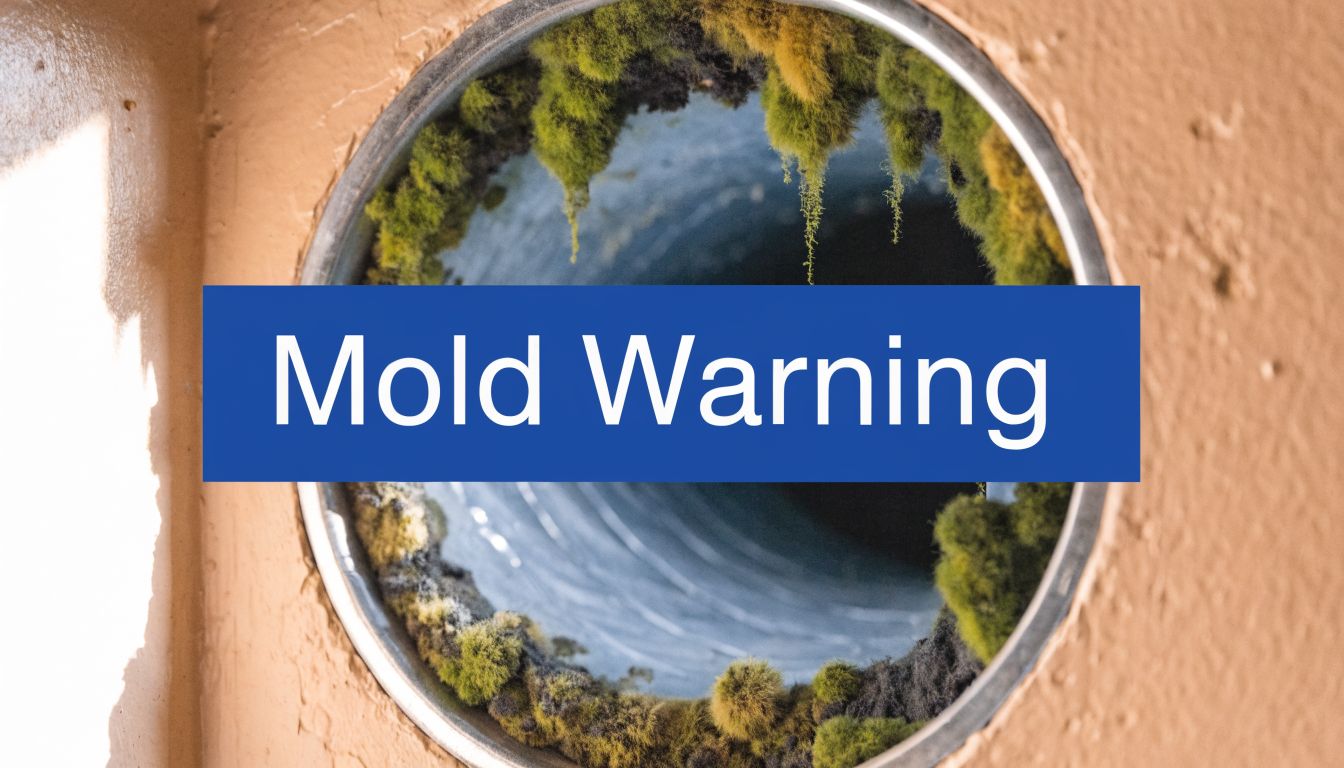
Mold needs a real response
Mold growth in air ducts is a significant health risk, and a distinct musty odor is a primary diagnostic signal. The same guidance notes that dirty ducts can trigger allergy symptoms and respiratory illness, with a general cleaning interval of 3 to 5 years that shortens for homes with allergies or moisture events, according to this duct cleaning and mold overview.
What should make you stop and act?
- Visible mold or mildew on vent registers
- Strong musty smell that keeps returning
- Wet spots near cooling components or insulation
- Past water intrusion or condensation problems
If you want a moisture-focused outside perspective, this article on Florida air duct mold prevention is helpful because it explains why mold cleanup fails when the moisture source isn’t addressed.
Visible growth around vents should never be treated as a cosmetic issue. If moisture remains in the system, the contamination comes back.
For related HVAC component care, coil condition matters too. A dirty or wet coil can contribute to downstream air quality issues, and this overview of air handler coil cleaning gives useful context.
Pests inside ducts
Rodents and insects in ductwork move this out of the “maybe later” category. If you hear scratching in walls or ceilings near duct runs, find droppings near vents, or notice a sharp foul odor that doesn’t fit normal dust or mildew, the system may be contaminated by pests.
That’s not just unpleasant. It means the air pathway through the house may be carrying contaminated particles.
Look for:
- Droppings near registers
- Scratching sounds when the system is off or quiet
- Unusual odor from specific vents
- Debris that looks like nesting material
After remodeling, filters aren’t always enough
Homeowners underestimate renovation dust all the time. Drywall sanding dust is extremely fine. Sawdust, insulation particles, and construction debris can get pulled into returns and spread through the system even when contractors try to contain the work area.
If you’ve recently remodeled a kitchen, opened walls, replaced flooring, or finished a major repair, a clean-looking vent cover doesn’t prove the ducts are clear. Post-renovation contamination often sits deeper in the system where normal vacuuming won’t reach.
This is one of the strongest real-world reasons to schedule a professional inspection.
Why Phoenix and Mesa Homes Have Different Duct Rules
Generic duct cleaning advice usually assumes a generic climate. Mesa isn’t generic.
Arizona’s climate creates unique duct contamination accelerators. Extreme summer heat, low humidity, and high-dust haboobs increase airborne particulate infiltration and moisture condensation risk in cooling systems, potentially shortening the 3 to 5 year cleaning interval national guides often suggest, according to this Arizona duct cleaning resource.
Haboobs change the dust equation
When a dust storm rolls through the Valley, fine particulate gets into places homeowners never intended. Door seals, attic gaps, older window lines, garage entries, and return leaks all become pathways. Even a decent filter can get overwhelmed if the house and duct system are pulling in dust from multiple points.
That means a Mesa homeowner may see signs sooner than someone reading a national article written for a mild, low-dust region.
Our cooling season is hard on airflow systems
Phoenix-area AC systems run for a huge part of the year. More runtime means more air movement, more particulate recirculation, and more wear on filters and internal components. A small contamination issue has more chances to become a comfort issue because the system runs so often.
Monsoon season adds another wrinkle. We live in dry conditions most of the year, then humidity spikes. Cool air moving through parts of the system during those moisture swings can increase condensation risk in the wrong places.
Local rule of thumb
Mesa homeowners should think less in terms of a fixed national calendar and more in terms of triggers:
- Recent haboob exposure
- Heavy AC runtime
- Renovation dust
- Allergy-sensitive occupants
- Signs of moisture during monsoon season
That’s why local homeowners often benefit from region-specific guidance instead of broad internet advice. If you want to compare your home’s situation against local service conditions, this page on duct cleaning in Mesa AZ offers Valley-specific context.
Knowing When to Call for a Professional Inspection
Not every dusty grille means you need a full duct cleaning. That matters, because homeowners get sold unnecessary work all the time.
The EPA says dusty return registers are “normal” and don’t automatically mean your ducts have heavy deposits. The same EPA guidance also highlights the cost gap between a quick assumption and a real diagnosis, since professional cleaning services can run $300-$500+, as explained in the EPA’s guidance on whether you should have air ducts in your home cleaned.
What you can do yourself first
If the only issue is light dust on the vent covers, start with basic maintenance.
Try this first:
- Replace the filter: Especially if it’s clogging faster than usual
- Remove and clean registers: Wash or wipe them and reinstall
- Check visible vent openings: Use a flashlight for obvious buildup
- Monitor airflow and odor: Notice whether symptoms continue after maintenance
If you’re comparing service options later, this guide on finding a duct cleaning service near me can help you understand what to look for.
When professional help is non-negotiable
Call for a real inspection when you notice conditions that basic maintenance won’t solve.
Those include:
- Persistent musty odor from vents
- Visible mold or mildew
- Evidence of rodents or insects
- Poor airflow in parts of the house
- Debris after remodeling or construction
- Unexplained dust plumes when the system starts
- Energy use that seems off along with airflow issues
A proper inspection should go beyond a glance at the registers. Technicians should determine whether contamination is inside the duct system, whether HVAC components are involved, and whether moisture, leakage, or another mechanical problem is contributing to what you’re seeing.
Surface dust is common. Confirmed internal contamination, moisture problems, or pest activity are not DIY territory.
That’s really the difference. If the issue is cosmetic, a homeowner can usually handle it. If the issue affects the air pathway, system performance, or occupant health, it’s time to stop guessing and get a professional answer.
If your home in Mesa or the Phoenix Valley is showing the serious signs above, Comfort Experts can help you get an honest answer instead of a sales pitch. Call 480-207-1239 or schedule service for a professional duct inspection and evaluation.
Whether you require installation, repair, or maintenance, our technicians will assist you with top-quality service at any time of the day or night. Take comfort in knowing your indoor air quality is the best it can be with MOE heating & cooling services Ontario's solution for heating, air conditioning, and ventilation that’s cooler than the rest.
Contact us to schedule a visit. Our qualified team of technicians, are always ready to help you and guide you for heating and cooling issues. Weather you want to replace an old furnace or install a brand new air conditioner, we are here to help you. Our main office is at Kitchener but we can service most of Ontario's cities
Source link