
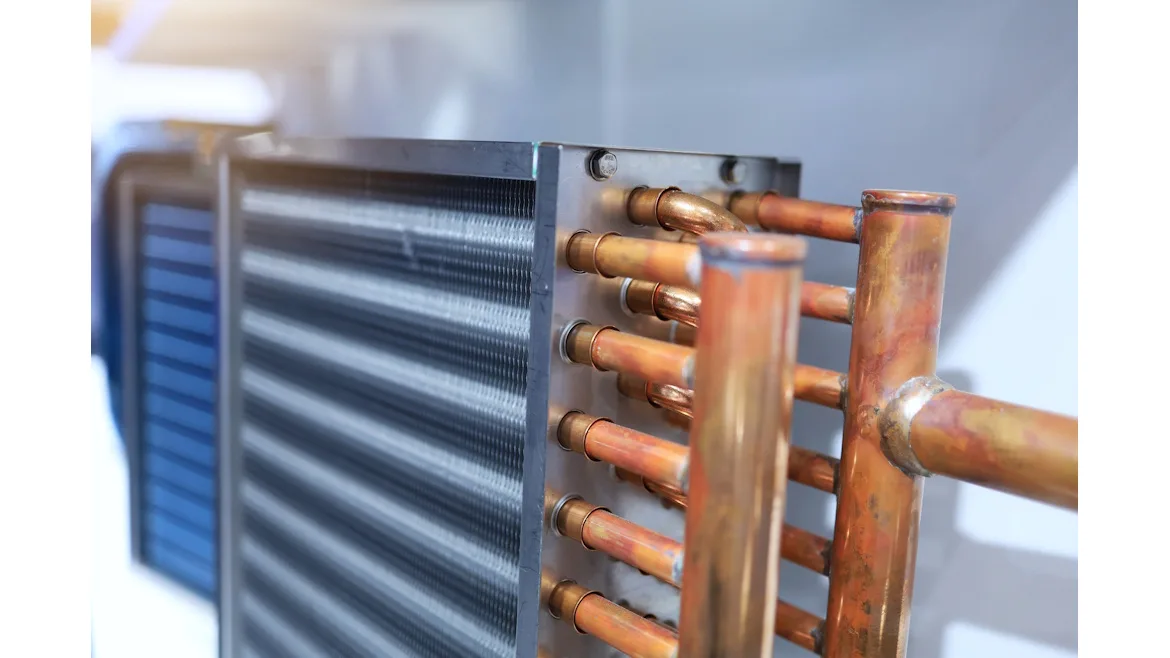
Recently, I walked into a space where the thermostat read 70°F, but the room felt uncomfortably damp. The problem stemmed from a single cooling coil that was being asked to do too much. It was dropping the dry-bulb temperature and simultaneously wringing moisture out of the air. When one coil handles both functions at once, hitting a low dewpoint usually results in overcooling the air to the point where it is no longer pleasant.
This increasingly common issue is the reason that humidity control is becoming more important in HVAC design. Buildings are getting tighter, and owners now expect better indoor air quality and comfort, so it is not surprising that dewpoint is a more critical performance metric than before. As a result, low-dewpoint cooling, paired with separated sensible and latent loads, is reshaping how the whole air-side system gets sized and installed.
The Humidity Factor
Tighter, better-insulated envelopes shrink sensible cooling loads, but latent loads, such as moisture from ventilation, occupants, and processes, don’t shrink with them. As a result, the load mix tilts toward moisture, with a load profile that conventional cooling coils may not handle efficiently. ASHRAE Standard 62.1 on ventilation and Standard 160 on moisture control reinforce this. A growing number of moisture-sensitive spaces, including labs, pharmaceutical production facilities, healthcare suites and data centers supporting AI computing, now treat condensation margin as a hard constraint.
Sharing The Load
Asking one coil to cool and dry at the same time is not effective. As a better alternative, buildings can separate sensible and latent load handling by using a dedicated outdoor air system (DOAS) that delivers low-dewpoint primary air that absorbs the space’s entire latent load. With moisture from ventilation plus internal gains, the zone-level equipment only has to handle sensible cooling. The ASHRAE Design Guide for DOAS (2nd Edition) works through this logic in detail, including an example showing how the DOAS supply-air dewpoint drives both space humidity and the required capacity of downstream equipment.
The Terminal Equipment
Most on-site terminal units, including VAV boxes, VRF terminals, fan coils, and chilled beams, perform best at a sensible heat ratio of 1.0: all sensible cooling, with no moisture removal. That is how their coils are rated and where they behave best. If they are fed primary air that is already dry, and the space dewpoint stays low enough, the terminals never have to dehumidify.
For contractors, the effects of humidity control are meaningful. Terminal cooling capacity drops once latent is handled centrally, so sensible-only coils can run warmer and physically shrink. Condensate handling shrinks with them, as dry coils mean fewer drain pans, traps, condensate pumps, and drain lines, reducing installed cost while eliminating a frequent source of leaks, mold, and maintenance calls. Low-dewpoint air is also what makes ultra-efficient options like chilled beams practical.
Achieving Dry Air
A deep supply dewpoint can be reached several ways, each with familiar tradeoffs. Larger DX systems, depressed chilled-water temperatures, and deeper coils all work, but they add capital cost and lower efficiency. Dedicated dehumidification is the other option, wherein desiccant systems, both solid-desiccant wheels and liquid-desiccant units, remove moisture directly rather than relying on cold coil surfaces, reaching low dewpoints without driving the plant colder. In either case, achieving the outcome of a reliably low supply dewpoint that keeps the space dry is the goal.
Looking for quick answers on air conditioning, heating and refrigeration topics?
Try Ask ACHR NEWS, our new smart AI search tool.
Ask ACHR NEWS
The Efficiency Reward
Energy efficiency comes with humidity control. When the plant no longer has to run cold just to dehumidify, terminal units can run warmer, increasing chiller or VRF efficiency. One industry analysis published in ASHRAE Journal (Vol. 66, No. 1), found that raising chilled-water supply temperature by 1°C can yield on the order of 3.5% in annual chiller energy savings.
For example, healthcare facilities have traditionally relied on overcooling and terminal reheat to manage humidity in patient rooms and critical spaces. However, this energy-intensive approach strains chiller capacity and drives up operating costs. By using systems that handle latent and sensible loads independently, dewpoints can be controlled for greater efficiency.
In The Field
The level of payoff depends on the execution. It is important to verify that the DOAS actually delivers its design supply dewpoint across operating conditions and to mind the sequence of operations between the DOAS and the terminals so the two are not working against each other. When designing retrofits, weigh whether pretreating the outdoor air can rescue a struggling system without a full equipment swap. And with chilled beams or other cold-surface terminals, confirm that space dewpoint stays below every exposed surface temperature before the design is locked.
Humidity control, once an afterthought, is now becoming a design driver. Delivering low dewpoints centrally, and letting zone equipment run dry, makes that equipment smaller, simpler, and easier to install and service. For contractors and building owners, the clear benefit is better humidity performance and a better-functioning building.
Whether you require installation, repair, or maintenance, our technicians will assist you with top-quality service at any time of the day or night. Take comfort in knowing your indoor air quality is the best it can be with MOE heating & cooling services Ontario's solution for heating, air conditioning, and ventilation that’s cooler than the rest.
Contact us to schedule a visit. Our qualified team of technicians, are always ready to help you and guide you for heating and cooling issues. Weather you want to replace an old furnace or install a brand new air conditioner, we are here to help you. Our main office is at Kitchener but we can service most of Ontario's cities
Source link