
The Ideal Home Humidity Level in Ohio
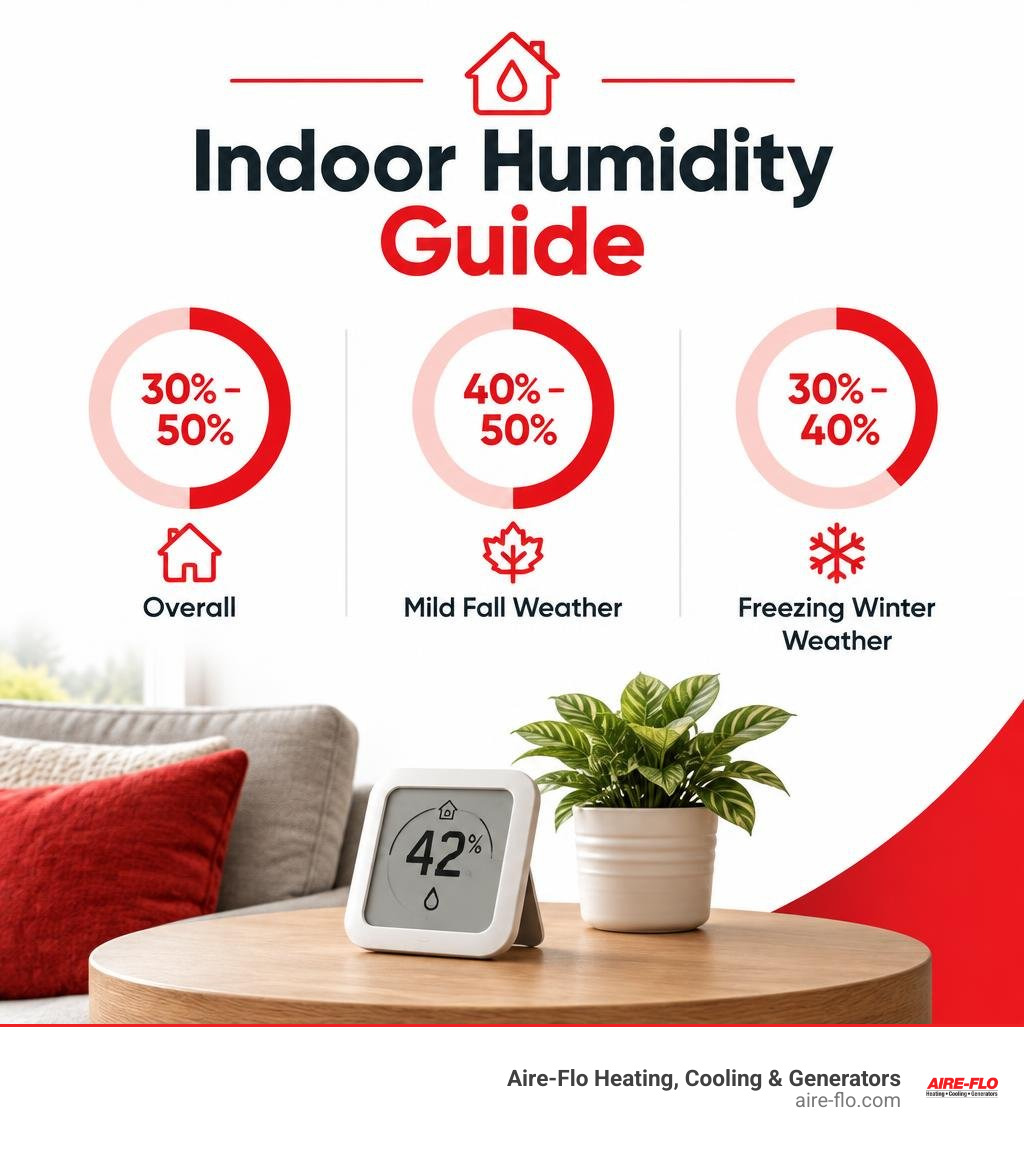
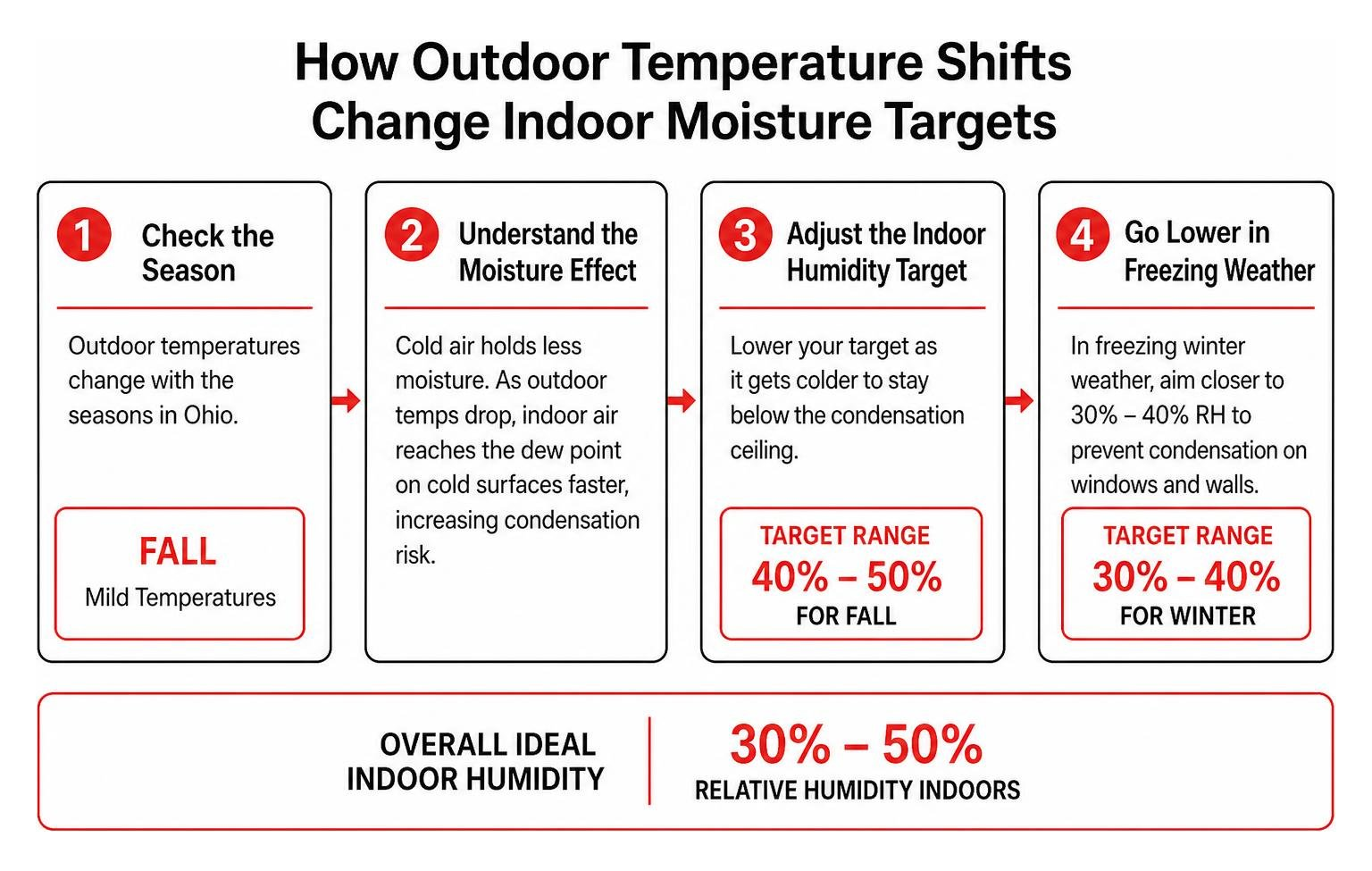
Aim for 30% to 50% relative humidity indoors. In mild fall weather, 40% to 50% is a useful target. During Ohio’s freezing winter weather, aim closer to 30% to 40%. If you see moisture on your windows, lower the humidity and check for other sources of excess moisture.
A digital hygrometer can show you where your home stands. Check it in the rooms you use most, since humidity can differ from one room to the next.
Our team at Aire-Flo Heating, Cooling & Generators has decades of experience with heating and indoor air quality in central Ohio. We can help you find the ideal home humidity level for your space and recommend practical ways to manage it.
Understanding the Ideal Home Humidity Level for Fall and Winter
Relative humidity (RH) refers to the amount of water vapor present in the air compared to the maximum amount the air can hold at that specific temperature. Warm air expands and holds significantly more moisture than cold air. When outdoor temperatures drop during the change of seasons in Ohio, the moisture dynamics inside your living space shift drastically.
Both the Environmental Protection Agency (EPA) and the American Society of Heating, Refrigerating and Air-Conditioning Engineers (ASHRAE) provide clear benchmarks for indoor spaces. The EPA identifies 30% to 50% relative humidity as the ideal target for preventing biological growth while protecting building materials. Meanwhile, ASHRAE Standard 55 establishes 30% to 60% as the broader thermal comfort zone. The Institute of Air Quality Management also recommends keeping indoor levels between 40% and 60% to prevent structural mold.
To put these figures into perspective, the average humidity in the Sahara Desert sits around 25%, while the Amazon rainforest averages 85%. In a residential setting, drifting toward either extreme creates severe comfort and structural problems. Balancing these benchmarks requires adjusting your target downward as winter deepens to avoid hitting the condensation ceiling.
What Is the Ideal Home Humidity Level by Season and Temperature?
During summer, maintaining 45% to 55% relative humidity keeps living spaces comfortable without allowing mold to flourish. However, winter requires a sliding scale. As freezing outdoor temperatures chill your exterior walls and window panes, indoor air that carries too much moisture will hit its dew point upon touching those cold surfaces, turning vapor into liquid water.
The quality of your window glazing plays a major role in this dynamic. Single-pane glass loses heat rapidly and condenses moisture at much lower humidity levels than modern double- or triple-pane windows. Below is a guide for safe indoor humidity targets based on outdoor temperatures:
| Outdoor Temperature (°F) | Recommended Indoor Relative Humidity Target |
|---|---|
| Above 50°F (Mild Fall) | 45% – 50% |
| 30°F to 40°F | 40% – 45% |
| 20°F to 29°F | 35% – 40% |
| 10°F to 19°F | 30% – 35% |
| 0°F to 9°F | 25% – 30% |
| Below 0°F (Deep Freeze) | 20% – 25% |
Treat these winter targets as maximum ceilings rather than fixed goals. If you notice any fogging or water beads forming on your glass, lower your humidistat immediately to safeguard your window trim and insulation.
Why Ohio Cold Snaps Cause Indoor Air to Dry Out
When freezing polar air moves across central Ohio communities like Columbus, Dublin, Worthington, and Delaware, the outdoor vapor pressure drops significantly. Cold winter air simply cannot retain water. When this frigid air infiltrates your house through drafty doors, windows, and framing gaps, your heating system warms it up to room temperature.
Heating that cold air increases its capacity to hold moisture without adding actual water vapor, causing the indoor relative humidity to plummet. Running a forced-air furnace continuously pulls relative humidity down below 20% unless extra moisture is introduced. This phenomenon is a primary reason how winter worsens indoor air, leaving homeowners dealing with parched living spaces.
Signs Your Home’s Moisture Is Out of Balance

When indoor moisture wanders outside the recommended boundaries, your house will begin showing visible symptoms. Recognizing these early warnings protects both your family and your property.
Indicators of Excess Moisture and High Humidity
Elevated indoor moisture often creates subtle structural issues before major damage appears. Watch for these conditions:
- Continuous condensation, fogging, or ice frost forming on window panes and metal sills.
- Damp, musty odors lingering in basements, crawl spaces, closets, and laundry rooms.
- Visible dark mold spotting along bathroom drywall, baseboards, or ceiling corners.
- Peeling paint, bubbling wallpaper, or blistering plaster on exterior-facing walls.
- Warped hardwood floorboards that begin cupping or crowning at the edges.
- A sticky, clammy feeling in the air even when the indoor temperature is set comfortably.
Warning Signs of Excessively Dry Indoor Air
When the furnace strips away moisture during winter cold snaps, dry air leaves its own distinct trail of problems:
- Frequent static electricity shocks whenever you touch metal doorknobs or family members.
- Dry, cracking skin, chapped lips, itchy eyes, and frequent winter nosebleeds.
- Shrinking hardwood flooring planks that leave noticeable gaps between boards.
- Loosening joints on wooden chairs, tables, and cabinets as the wood contracts.
- Musical instruments like acoustic guitars and pianos going out of tune or developing hairline wood cracks.
- Aggravated sinus passages and persistent dry morning coughs.
Health, Allergens, and Virus Transmission Risks
Maintaining balanced indoor moisture is an essential element of seasonal health protection (Jones et al., 2022). The air you breathe impacts your respiratory defenses, allergy triggers, and how long airborne illnesses can linger indoors.
How Humidity Affects Pathogens, Dust Mites, and Mold
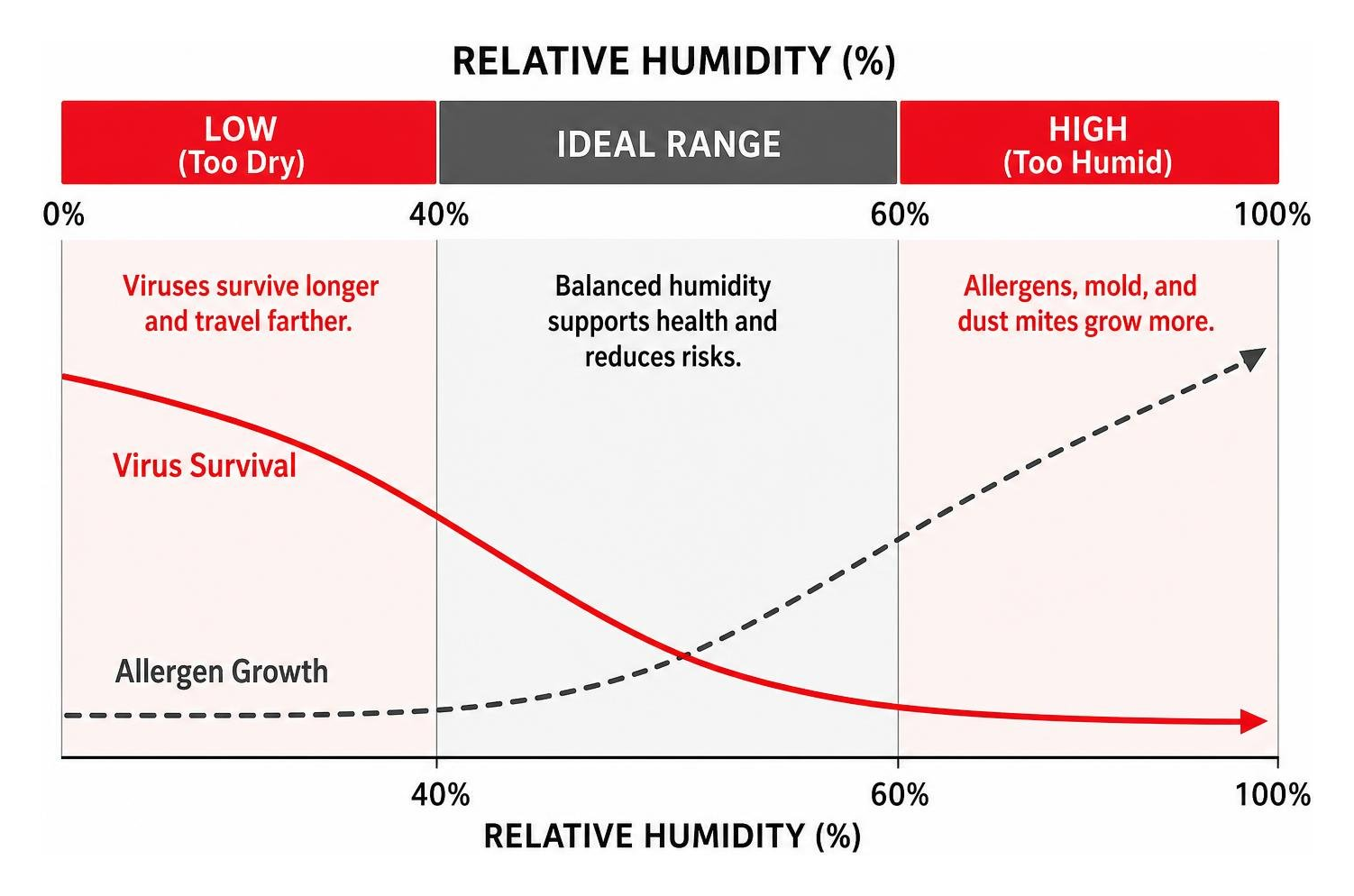
Airborne viruses like influenza survive significantly longer and travel farther when indoor relative humidity falls below 40%. In dry air, infectious respiratory droplets evaporate quickly into tiny aerosol particles, floating suspended in the room for hours. When relative humidity is kept between 40% and 60%, these droplets retain water weight and fall harmlessly to surfaces where routine cleaning neutralizes them.
At the upper end of the scale, high moisture triggers biological contamination:
- Dust mites thrive once humidity reaches 70% and temperatures sit between 68°F and 77°F. Keeping relative humidity below 50% eliminates their primary water source and suppresses their populations.
- Mold can grow on building materials at humidity levels above 55%, with 70% serving as an ideal environment for active spore colonization.
- Bioaerosols and bacterial colonies multiply rapidly in unventilated, high-humidity damp spots.
Respiratory Health and Physical Symptoms
Dry winter air strips moisture from your mucous membranes, weakening the natural mucociliary clearance in your airway that traps bacteria and viruses. Medical research demonstrates that raising low indoor relative humidity produces measurable health benefits:
- A 10 percentage point increase in relative humidity within typical indoor ranges is associated with a 54% reduction in the odds of reporting dry or itchy skin among females.
- The same 10% increase corresponds to a 40% reduction in the odds of experiencing a sore or dry throat.
- Among males, a 10% increase in relative humidity is associated with a 42% reduction in reports of unusual tiredness, fatigue, and drowsiness.
Maintaining stable moisture also eases symptoms of asthma and allergic rhinitis, helping central Ohio families stay healthy through the cold season. Understanding these physiological impacts shows why indoor air quality matters for healthy living.
How to Measure and Control Indoor Relative Humidity
Taking control of your indoor moisture requires reliable tools and simple day-to-day habits. Whether you need to add moisture during a freeze or vent excess dampness after cooking, practical management keeps your home within the safe zone.
How to Measure and Maintain Your Ideal Home Humidity Level
To manage moisture accurately, invest in a couple of digital hygrometers with a rated accuracy of plus or minus 3% RH.
- Sensor Placement: Mount hygrometers on interior walls at eye level, roughly 4 to 5 feet off the floor.
- Avoid False Readings: Keep sensors away from direct sunlight, heating vents, kitchen ranges, and exterior doors. Do not place them on cold exterior walls during winter.
- Multi-Room Monitoring: Check readings in living rooms, bedrooms, and basements separately, as levels can vary widely across your home.
- Thermostat Integration: Many modern smart thermostats monitor relative humidity, but ensure their readings align with standalone hygrometers placed in living areas.
If you struggle with persistent dry air across a multi-story layout, our team at Aire-Flo Heating, Cooling & Generators can install dedicated central HVAC systems equipped with integrated humidification controls.
Actionable Ways to Increase or Lower Indoor Humidity
Everyday household activities introduce or remove significant amounts of moisture. For instance, a single load of wet laundry drying on an indoor rack releases approximately 2 liters of water directly into your air.
To safely raise indoor humidity when the air is too dry:
- Use a whole-home evaporative or steam humidifier tied directly into your central ductwork.
- Leave the bathroom door open after showering to let warm steam circulate into adjoining rooms.
- Air-dry clean dishes or laundry on drying racks inside the home.
- Place oven-safe water pans near heating registers to encourage natural evaporation.
To lower indoor humidity when moisture climbs too high:
- Run kitchen range hoods and bathroom exhaust fans for 20 minutes after cooking or showering.
- Ensure all exhaust fans vent entirely outdoors rather than into an attic or crawl space.
- Operate a whole-home dehumidifier to control excess moisture in damp basements.
- Open windows for 5 to 10 minutes on dry, clear days to exchange stale, damp air.
- Schedule regular maintenance for your air conditioning and heating equipment to verify balanced airflow. Discover more practical steps on how to improve indoor air quality throughout your living spaces.
Frequently Asked Questions About Indoor Humidity
Can houseplants help regulate indoor humidity?
Yes, houseplants can contribute to indoor moisture regulation through transpiration. Plants absorb water through their roots and release roughly 97% of it back into the surrounding air as invisible vapor through their foliage. Varieties such as Boston ferns, spider plants, and peace lilies add gentle moisture to dry winter rooms.
Conversely, if your home struggles with excess humidity during summer or fall, grouping too many large plants in unventilated areas can push moisture levels too high. Keep soil aerated and avoid overwatering to prevent mold growth in the potting mix.
Is 50% humidity too high for a house during an Ohio winter?
Yes, 50% relative humidity is generally too high when outdoor temperatures drop below freezing in central Ohio. While 50% feels comfortable in early fall or spring, cold outdoor air chills exterior walls, window panes, and wall cavities.
Indoor air holding 50% humidity will hit its dew point against these freezing surfaces, leading to heavy window condensation, hidden wall moisture, and potential structural rot. During sub-freezing winter weather, dial your target back between 30% and 40% to keep your building materials safe.
How can HVAC maintenance help manage indoor humidity?
Routine HVAC maintenance ensures your system circulates air at the proper velocity and maintains clean filters for balanced static pressure. Dirty blower wheels, clogged furnace filters, or leaky return ducts pull unconditioned air from attics and crawl spaces, throwing indoor moisture out of balance. Professional tune-ups keep heating elements, evaporator coils, and integrated humidifiers calibrated, protecting both your comfort and energy efficiency.
Conclusion
Maintaining a balanced indoor humidity level through Ohio’s changing fall and winter months creates a comfortable, energy-efficient home while safeguarding your family against dry sinuses and airborne pathogens. Keeping relative humidity between 30% and 50% during mild weather and adjusting closer to 30% to 40% during deep winter freezes prevents moisture buildup on windows while stopping parched winter air from damaging your woodwork.
Since 1951, Aire-Flo Heating, Cooling & Generators has provided 75 years of trusted, top-rated heating, cooling, and air quality services across Columbus, Dublin, Worthington, Upper Arlington, New Albany, and surrounding central Ohio communities. Our team backs every project with a 100% satisfaction guarantee.
For help balancing indoor humidity, improving your home’s air quality, adding a whole-home humidifier, or servicing your heating system, contact our indoor air quality specialists today.
Whether you require installation, repair, or maintenance, our technicians will assist you with top-quality service at any time of the day or night. Take comfort in knowing your indoor air quality is the best it can be with MOE heating & cooling services Ontario's solution for heating, air conditioning, and ventilation that’s cooler than the rest.
Contact us to schedule a visit. Our qualified team of technicians, are always ready to help you and guide you for heating and cooling issues. Weather you want to replace an old furnace or install a brand new air conditioner, we are here to help you. Our main office is at Kitchener but we can service most of Ontario's cities
Source link