
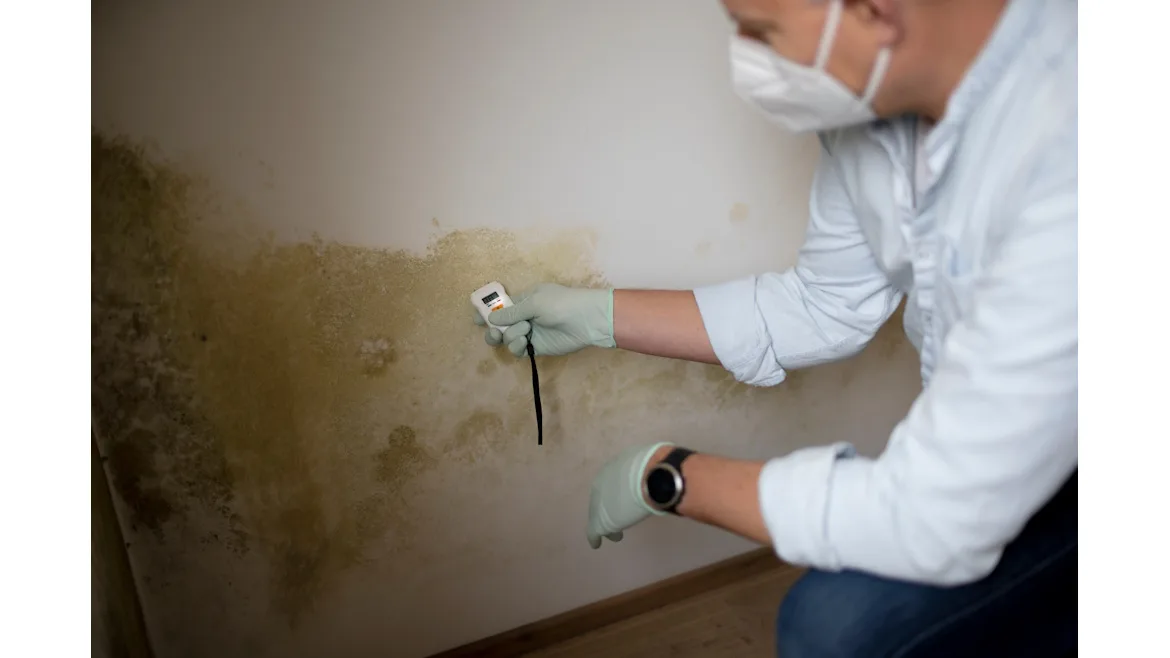
“The word ‘mold’ should never leave the lips of an HVAC contractor or technician.”
That’s straight from David Richardson, vice president of training at the National Comfort Institute.
So why is mold considered a four-letter word in the HVAC industry? As Richardson notes, calling a growth mold is a huge assumption and without the proper training, certifications, and licensing, it could back a technician or company into a corner they don’t want to be in.
When It Rears Its Ugly Head
Coming across organic growth is an inevitability. Unless a technician is properly trained, certified, and equipped for identification and remediation, any attempt to handle it creates significant liability.
First things first: Document everything. Do not disturb the suspected material. Notify the customer and begin looking for the moisture source.
“Avoid identifying the mold species or making health claims unless you are qualified to do so,” said Bob Jordan, CEO of PuroClean Northwest. “For the HVAC contractor, the key question is often not ‘What kind of mold is this?’ but ‘Where is the moisture coming from?’”
Rachel Adams, a Florida Mold Assessor and president of Indoor Environmental Management Inc., recommends the most defensible action: Have the client hire a qualified third-party Indoor Environmental Professional (IEP) to perform a formal assessment, identify moisture sources, and determine the extent of contamination.
Looking for quick answers on air conditioning, heating and refrigeration topics?
Try Ask ACHR NEWS, our new smart AI search tool.
Ask ACHR NEWS
“This approach provides more protection for the contractor from liability, ensures the client receives proper guidance from an independent indoor air quality professional, and prevents accidental cross-contamination or improper handling of mold-impacted materials,” Adams said.
There is also danger in labeling something as mold before lab analysis, noted Doug Hoffman of NORMI. If a customer takes costly action based on an incorrect diagnosis, questions about who is responsible quickly follow.
“Suppose the client decides to move out, rent a room at the Marriott, only to find out that the professional was wrong … who will be expected to pay?” Hoffman said.
Jordan added that remediation itself carries major risks, including employee exposure and spreading contamination to previously unaffected areas.
“Mold contamination should be treated as a hazardous material and handled with appropriate PPE and contamination controls,” he said. “If mold remediation is not part of the HVAC company’s services, engage a qualified mold remediator. Once remediation is complete, the HVAC contractor can return to service the air handler, inspect the duct system, correct HVAC-related moisture problems, and perform their normal work.”
Adams warned that HVAC companies that choose to perform mold-related work are opening themselves to several significant liability risks.
“The biggest liability is causing cross-contamination within a structure due to not understanding proper containment, pressure differentials, and proper mechanical cleaning processes,” she said. Many contractors also rely on antimicrobials or encapsulants rather than removing contaminated materials, and those who fail to correct underlying humidity, drainage, or ventilation issues may be held responsible when growth returns. Performing sampling or formal assessments without IEP qualifications can further expose a company to accusations of practicing outside its scope, she said.
Mold Is a Symptom, Moisture Is the Problem
Once the growth is documented and the customer is notified, the HVAC tech’s job shifts to determining whether the system is contributing to the moisture problem.
Although HVAC components are largely inorganic, Jordan noted that ducts can accumulate dust and other organic debris that, when combined with excess moisture, can support mold growth.
“High humidity alone does not create mold on a clean inorganic duct surface; moisture and an available organic food source must come together,” Jordan said.
Richardson said the location of suspected growth should guide the technician’s next steps. If growth is isolated to the equipment, Richardson said contractors should check condensate drainage, fan speed, filtration and air bypass, and duct location, leakage, and insulation.
“If the suspected growth is around the supply registers, look for proper sealing around the boot and ceiling connections. Also check to ensure there is no bare metal exposed to prevent condensation on the boots,” Richardson said. “If the growth is in the building, the discussion takes a completely different turn. Make sure the HVAC system isn’t contributing to the problem or other fans like exhaust fans are contributing to excessive infiltration.”
All the above-mentioned commonly create these conditions, and they require another level of knowledge and test instruments to handle.
“Contractors who just replace equipment based on what was already there likely won’t be equipped to handle these issues,” Richardson said. “Instead, they could make them worse, guessing at a solution instead of testing and diagnosing to find real answers.”
Improper setup and the “turn it on and walk away approach” should not be considered a commissioning and verification strategy, and in new homes, ventilation strategies driven by builders using exhaust fans to simply meet code requirements could contribute to moisture issues.
This is where Hoffman also sees additional liability.
“The danger would be when the HVAC company thought they could solve a mold problem by only focusing on the HVAC system when the entire house needs to be addressed,” Hoffman said. “The HVAC system is just the ‘trash can’ and ‘distribution system’ for the bad air, not always the source.”
Selling Solutions (And Prevention)
At its essence, mold prevention is really moisture control. In this sense, there are a lot of tools HVAC technicians can bring to the fight.
Adams said contractors can legitimately and ethically sell mold-prevention services even when there is no visible mold, as long as they focus on the conditions that allow mold to develop rather than claiming there is a mold problem.
“The key is positioning mold prevention as a value-added service rooted in science and building performance: preventing moisture problems, improving indoor air quality, protecting building materials, and reducing long-term repair costs,” Adams said. “Homeowners respond well to prevention when it’s framed as protecting their investment — not as selling fear, but as eliminating the conditions that allow mold to take hold in the first place.”
An HVAC contractor can start by explaining that most mold problems begin long before mold is visible, Adams noted. Oversized equipment, poor dehumidification, duct leakage, infiltration, improper airflow, and ventilation failures all create moisture conditions that support microbial growth.
Hoffman also offered his four-step approach for prevention:
1) Control moisture — Proper sizing, ventilation, and dehumidification should be designed for the specific environment.
2) Use good filtration — Capture and remove the “trash” that can accumulate in the system.
3) Use proactive air purification — Employ technologies intended to reduce microbial contamination in the air and on surfaces.
4) Maintain the system — Keep the unit clean and efficient through a regular service and maintenance program.
For contractors not specialized in mold remediation, Hoffman recommends establishing a relationship with a well-trained IAQ/Mold Assessor who can evaluate the entire environment and determine what role, if any, the HVAC system plays.
“We teach that the HVAC system is either part of the remediation protocol or isolated from it,” Hoffman said. “This depends on the contamination level of the system, the air, the design, the airflow and the engineering controls needed.”
This all folds into Richardson’s final advice: Stay in your lane and don’t try to be the hero.
“Identify the obvious issue(s) you can handle and then get your customer in touch with the right professionals to handle situations outside your scope of expertise,” Richardson said.
IAQ Q&A
We asked David Richardson: If you were training a technician who opened an air handler and found suspected mold, what would you want that technician to do next from an HVAC diagnostic standpoint?
Answer:
• Document the conditions and take photos to save with the customer’s files.
• Have a written plan and planned responses to handle customer concerns and assure everyone in the company says the same thing in these situations. If in doubt, check with a designated person at the office who has the knowledge and training to handle this type of situation.
• If appropriate, address any obvious issues first instead of looking for the complicated ones. If in doubt, play it safe, and don’t do anything that could lead to the situation getting worse.
• Know who to hand off the complicated situations to when these events happen. They will require specialized training, skills, and test instruments to diagnose correctly.
Whether you require installation, repair, or maintenance, our technicians will assist you with top-quality service at any time of the day or night. Take comfort in knowing your indoor air quality is the best it can be with MOE heating & cooling services Ontario's solution for heating, air conditioning, and ventilation that’s cooler than the rest.
Contact us to schedule a visit. Our qualified team of technicians, are always ready to help you and guide you for heating and cooling issues. Weather you want to replace an old furnace or install a brand new air conditioner, we are here to help you. Our main office is at Kitchener but we can service most of Ontario's cities
Source link