By Stacey Gearhart
Extreme weather is changing the way contractors and customers think about comfort systems. As temperatures become more unpredictable, the traditional assumption that geography alone determines the right heating or water heating technology is becoming less reliable. Systems once associated primarily with mild climates are increasingly being engineered to perform in colder conditions, while plumbing systems must be prepared to withstand similar limits.
This change offers HVAC and plumbing professionals the opportunity to take a more holistic approach to selecting systems and assessing their performance, one that considers the whole home or building rather than treating heating, cooling and water heating as separate systems.
Rethinking the Heating Equation
Furnaces have long been a dependable choice in consistently cold regions. Gas-fired heating systems, in particular, can provide rapid, high-temperature heat during prolonged cold snaps, making them a familiar solution across the Upper Midwest, Northern Plains and parts of the Northeast.
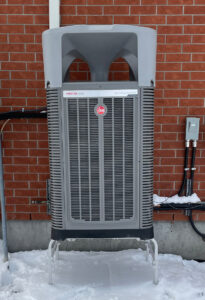
Heat pumps, meanwhile, transfer heat rather than generate it. They use electricity to extract available heat from outdoor air and move it indoors, while also providing cooling during warmer months. Historically, this made heat pumps particularly attractive in moderate climates. That distinction is becoming less relevant as advances in heat pump technology continue to expand their viability across a broader range of climates. As a result, contractors and customers have more options when evaluating heating systems for homes or buildings that experience extreme winter conditions.
This does not mean heat pumps are automatically the right choice. Instead, it gives contractors another solution to consider based on climate, insulation, ductwork, energy costs and customer priorities.
Where dual-fuel systems fit
In areas where temperatures range from moderate to intense, a dual-fuel system is a strong alternative. The system combines a heat pump with a gas-fired heating system, so the heat pump handles heating under more moderate conditions before switching to the furnace when the temperature drops to an exceptionally cold level. The approach can provide efficient operation when outdoor conditions are favorable, while retaining the furnace’s high-temperature heating capability during severe cold.
For contractors, this also shows how important it is to consider the entire system, including system controls, equipment compatibility and correct sizing, if the two technologies are to work together efficiently.
Harsh weather doesn’t stop at HVAC
The impact of bitter cold temperatures extends into the plumbing system, as well. Heat pump water heaters, for example, can continue to provide hot water in cold weather, but the installation environment and maintenance requirements warrant consideration.
Units installed in unheated spaces can be exposed to lower temperatures, while condensate drains and exposed water lines may be vulnerable to freezing. Maintaining appropriate clearance around the equipment also helps ensure sufficient airflow and efficient operation.
Contractors should consider measures such as insulating exposed pipes and condensate lines, maintaining proper airflow, checking for leaks or corrosion and following the manufacturer’s operating-temperature guidelines. In particularly cold environments, backup electric operation or other freeze-protection strategies may also need to be considered.
These elements reinforce the connection between the HVAC and plumbing trades. As heat pump technology becomes more prevalent for both space conditioning and water heating, contractors need to understand how equipment interacts with the conditions inside and around the home or building.
Maintenance becomes even more important
No form of heating or water heating is immune to the effects of severe weather, and regular maintenance can help the equipment to function efficiently and spot potential problems before they become more serious.
In HVAC systems, this involves maintaining airflow, replacing filters, ensuring outdoor equipment is free of debris, and scheduling regular system inspections. When it comes to heat pump water heaters, contractors should also take into account factors such as condensate management, filters, anode rods, tank sediment and temperature and pressure relief valves.
Preparation is particularly important before an intense weather season. A system that performs reliably under normal conditions may face additional demands when temperatures reach seasonal extremes.
A more integrated approach to comfort
As climate conditions become more variable and technology continues to develop, there will be no one-size-fits-all solution. The most suitable system will be determined by several factors such as outdoor temperatures, the way a house or building is built, the level of insulation, the ductwork, the availability of energy and the customer’s objectives.
For HVAC and plumbing professionals, the key is to go beyond a one-size-fits-all mindset. Knowing how new technologies like cold-climate heat pumps and dual-fuel systems work in the whole home or building, and how hazardous weather affects plumbing, helps contractors give better advice.
Severe weather may be challenging, but it’s also a catalyst accelerating innovation across the trades. As HVAC and plumbing technologies continue to converge, contractors who take a whole-home or building view will be better positioned to succeed by helping customers maintain comfort, efficiency and reliable performance, regardless of what the weather brings.
Stacey Gearhart is senior vice president of product, marketing & training at Rheem North America.

Whether you require installation, repair, or maintenance, our technicians will assist you with top-quality service at any time of the day or night. Take comfort in knowing your indoor air quality is the best it can be with MOE heating & cooling services Ontario's solution for heating, air conditioning, and ventilation that’s cooler than the rest.
Contact us to schedule a visit. Our qualified team of technicians, are always ready to help you and guide you for heating and cooling issues. Weather you want to replace an old furnace or install a brand new air conditioner, we are here to help you. Our main office is at Kitchener but we can service most of Ontario's cities
Source link