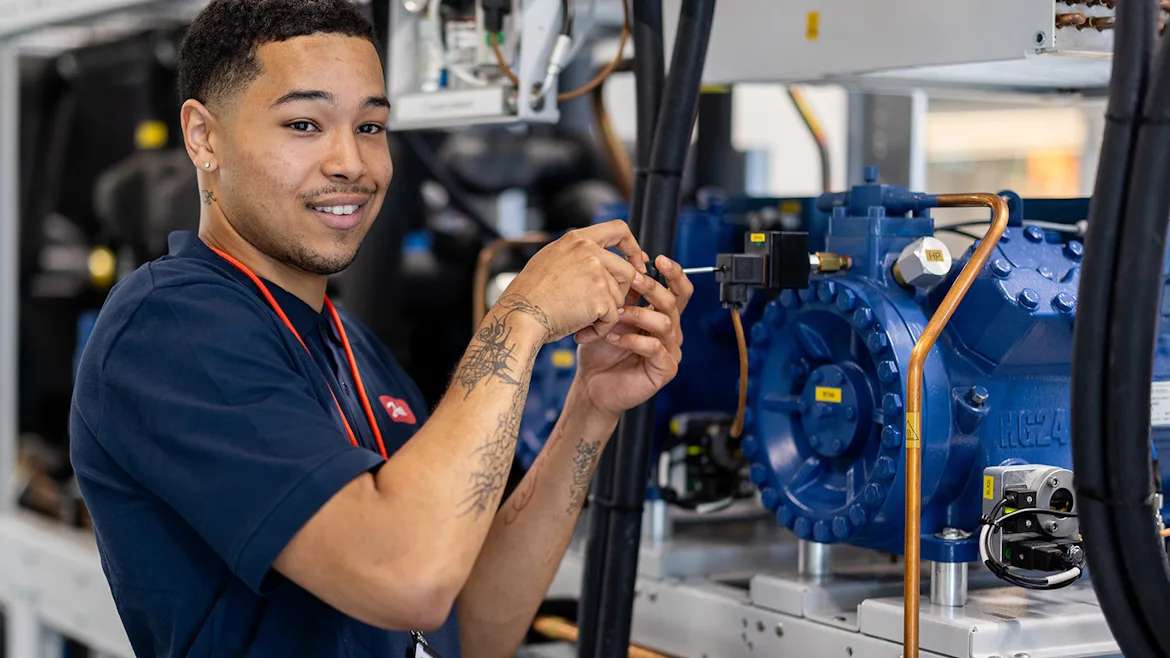
Transitioning from an HFC/HFO refrigeration system to a system using CO₂ can produce significant savings over the system’s lifetime, according to an Environmental Protection Agency (EPA) report. While transcritical CO₂ refrigeration systems offer both financial and environmental benefits, including lower maintenance costs, they do require specialized preventive maintenance to ensure optimal performance and energy savings.
Because transcritical CO₂ systems operate at higher pressures (typically 2,000 psi and higher) than traditional HFC systems, all components must be rated for these conditions and a preventive maintenance program put in place, with frequent inspections and verification that all components and protection devices are functioning correctly.
Leak Detection
Although CO₂ is nontoxic and nonflammable, leaks, even small ones, are still a health hazard, due to oxygen depletion in closed spaces. They can also significantly affect system efficiency and operational stability, leading to loss of refrigerant charge, unstable system pressures, and increased compressor workload. Preventive maintenance should include routine leak inspections at common failure points such as compressor connections, valve bodies, threaded fittings, pressure relief valves, and brazed joints.
Regular leak detection schedules — monthly or quarterly, depending on system size — can help identify problems before they become costly service events. Electronic CO₂ leak detectors can be a valuable maintenance tool, but need to be calibrated at regular intervals. Documenting leak locations and repair history can also help identify recurring problem areas.
High-Pressure Components
As noted above, CO₂ systems operate at high pressures. Preventive maintenance must include regular inspection of high-pressure components such as compressors, gas coolers, pressure regulators, and relief valves. Technicians should check for signs of mechanical stress, vibration damage, corrosion, or improper mounting.
Pipe supports and brackets should also be inspected to ensure they are secure and prevent movement under pressure fluctuations. In addition, relief valves should be checked for proper installation and any signs of discharge, and be replaced if a discharge occurred. In systems with relief valve manifolds or vent lines, technicians should verify that discharge paths remain unobstructed and compliant with safety requirements.
EEVs and PRVs
Electronic expansion valves (EEVs) and pressure-regulating valves (PRVs) play a critical role in maintaining system stability in CO₂ systems. These valves regulate evaporator pressure, flash gas management, and gas cooler pressure. Over time, valves can experience wear, contamination, or improper response due to debris or oil buildup.
Looking for quick answers on air conditioning, heating and refrigeration topics?
Try Ask ACHR NEWS, our new smart AI search tool.
Ask ACHR NEWS
Preventive maintenance should include verifying valve response through controller diagnostics and checking for erratic superheat or pressure control behavior. Technicians should also inspect wiring connections, actuator functionality, and valve positioning feedback where applicable. Early identification of control valve issues can prevent efficiency losses and unstable system operation.
Sensor Accuracy
Sensors provide critical data on pressure, temperature, and flow measurements to rack controllers that regulate system operation. Over time, sensors may drift out of calibration due to vibration, thermal cycling, or environmental conditions. Even small inaccuracies can lead to improper controller decisions, such as incorrect gas cooler pressure optimization or unstable evaporator control. Periodic verification of sensor readings against calibrated instruments, along with checking the pressure transducers and temperature probes at least once annually, ensures accurate system control.
Oil Management
Because CO₂ behaves differently than many traditional refrigerants, proper oil separation and return are critical. As part of preventive maintenance, technicians should inspect oil separators, oil level regulators, and oil return lines, verify proper oil levels in compressors, and monitor oil condition for signs of contamination or degradation.
Compressor health can also be assessed by monitoring operating parameters such as discharge temperature, amperage, and compression ratios. Controller logs should be checked for intermittent oil fail alarms, as identifying abnormal trends early can help prevent compressor failures and extend equipment life.
Gas Coolers
The gas cooler plays a central role in heat rejection for transcritical CO₂ systems. Its performance directly affects system efficiency, especially during high ambient temperature conditions. Reduced heat transfer efficiency in the gas cooler can increase system pressures and energy consumption.
Preventive maintenance should include regular cleaning of gas cooler coils to remove dirt, debris, and environmental buildup that can restrict airflow. Technicians should also inspect fan motors and blades for proper operation and balance, and verify that airflow paths are unobstructed and that fan speed controls are functioning properly.
In the case of adiabatic gas coolers using a water spray system, both the system and drain should be checked to ensure proper water flow, drainage, and accuracy of airflow temperature after wetted pads.
Remote Monitoring
Remote monitoring platforms allow technicians to observe system performance over time and respond quickly to anomalies. Using these tools effectively can significantly reduce downtime and service costs and help shift service strategies from reactive repairs to proactive system optimization. Technologies like advanced rack controllers and electronic monitoring systems provide valuable insight into system performance and can help identify maintenance issues before they escalate.
Technicians can review controller alarms, trend logs, and system data to identify patterns such as frequent pressure fluctuations, unstable superheat control, repeated alarm conditions, as well as compressor vibration and energy consumption patterns. This analysis can identify underlying problems such as early signs of component degradation, enabling a proactive response before problems reach a critical stage.
Another critical component of optimal system maintenance and performance is technician training. Service personnel must be proficient in the safety protocols, specialized tools, and diagnostic procedures required for CO₂ systems. Manufacturers of CO₂ systems and their related components can support end users through hands-on training and education.
Whether you require installation, repair, or maintenance, our technicians will assist you with top-quality service at any time of the day or night. Take comfort in knowing your indoor air quality is the best it can be with MOE heating & cooling services Ontario's solution for heating, air conditioning, and ventilation that’s cooler than the rest.
Contact us to schedule a visit. Our qualified team of technicians, are always ready to help you and guide you for heating and cooling issues. Weather you want to replace an old furnace or install a brand new air conditioner, we are here to help you. Our main office is at Kitchener but we can service most of Ontario's cities
Source link