Across global HVACR markets, the conditions surrounding refrigerant use are changing in ways that are both regulatory and practical. The global phasedown of hydrofluorocarbons (HFCs) under the Kigali Amendment to the Montreal Protocol, along with evolving regional policies – such as the Ozone-depleting Substances and Halocarbon Alternatives Regulations (ODSHAR), which bring Canada in line with the Kigali Amendment – are reshaping supply dynamics. As availability shrinks due to the ODSHAR phasedown schedule tightening and costs rising, the industry is increasingly turning toward recovered refrigerant as part of the solution.
This shift introduces new considerations. Refrigerant is no longer simply a commodity moving from manufacturer to system; it is part of a broader lifecycle that includes recovery, testing, reprocessing, and reuse. When managed properly, this lifecycle supports both environmental goals and operational continuity. When it is not, it can introduce risks that undermine system efficiency, reliability, and longevity.
Across many regions, industry codes of practice and regulatory frameworks require that refrigerant intended for reuse – particularly in systems other than those from which it was removed – be tested and, if necessary, reprocessed to meet defined quality standards. These requirements ensure that reclaimed refrigerant performs equivalently to virgin product. Understanding what those standards entail, and why they matter, has become essential knowledge for contractors, facility managers, and system owners alike.
What the AHRI Standard 700 Governs
At the center of this discussion is the AHRI 700 Standard, a globally recognized specification that defines acceptable purity levels for refrigerants. Rather than focusing on origin, the standard focuses on composition. Whether newly produced or reclaimed, refrigerant must meet the same thresholds for contaminants, moisture, acidity, and other quality indicators.
The purpose is straightforward: establish a consistent benchmark that ensures refrigerant will behave predictably in a system. To achieve this, AHRI 700 outlines allowable impurity limits and the analytical methods used to verify compliance – methods that standardize evaluation across facilities and regions.
The scope of the standard is broad. It applies across refrigerant types, including CFCs, HCFCs, HFCs, HFOs, hydrocarbons, and carbon dioxide, and is relevant for both new and existing equipment. This reflects the reality of modern HVACR systems, which often operate across a mix of refrigerants and legacy infrastructure.
What distinguishes AHRI 700 is its specificity. It does not merely suggest that refrigerant should be “clean” or “fit for use”; it defines exactly what that means through measurable thresholds, creating a shared language for quality across the industry.
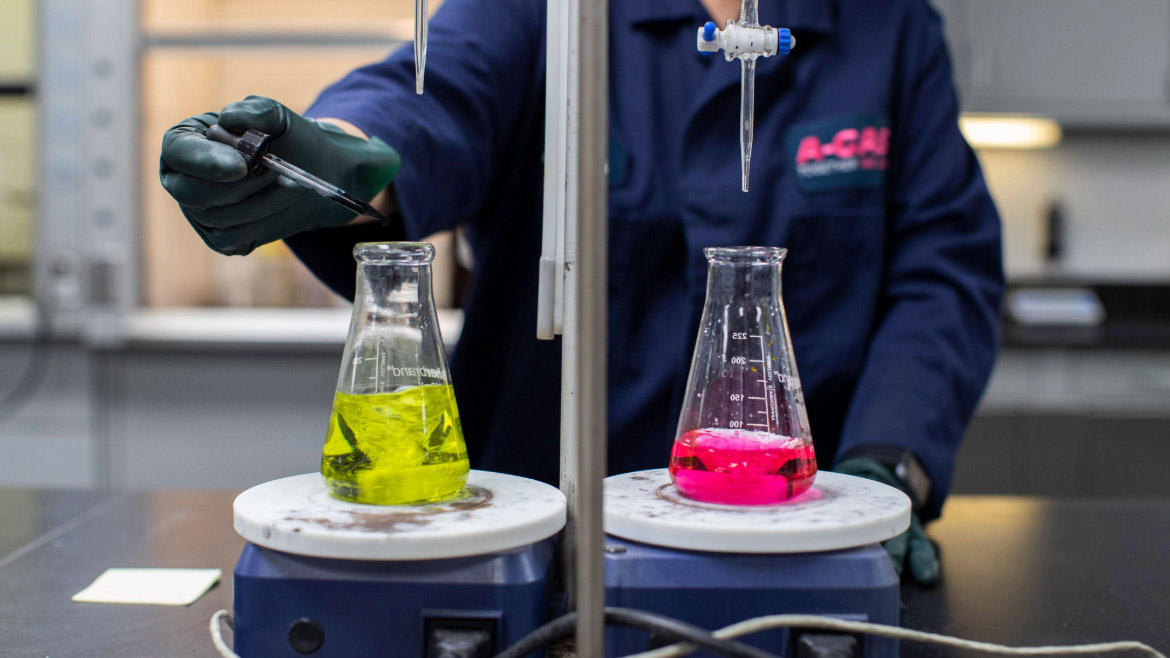
ANALYSIS: Laboratory analysis verifies refrigerant purity against AHRI 700 thresholds – ensuring it meets stringent standards before being classified as reclaimed. (Courtesy of A-Gas Canada)
Why Purity Is Integral
It can be tempting to view refrigerant quality as a secondary concern – something that matters only at the margins of system performance. In practice, purity plays a central role in how a system operates over time. Contaminants such as moisture, acids, and non-condensable gases can have cascading effects. Moisture can lead to corrosion and acid formation, degrading system components. Acidity can damage compressors and compromise lubricants. Non-condensables reduce heat transfer efficiency, forcing systems to work harder and consume more energy.
Even small deviations from purity standards can translate into measurable impacts. Reduced efficiency increases operating costs. Increased wear shortens equipment lifespan. In severe cases, contamination can result in system failure and costly repairs.
Low-purity refrigerants can also cause corrosion, copper plating on internal components, and damage to assemblies such as compressors and oil pumps. These are well-documented failure modes that arise when quality is not controlled. For contractors, the implications are equally significant – introducing substandard refrigerant carries both technical and reputational risk, often leading to inefficiencies, failures, and costly callbacks. Seen in this light, AHRI 700 is less about compliance and more about risk management. It establishes a baseline that protects both equipment and the stakeholders responsible for maintaining it.
Reclamation as Infrastructure, Not Afterthought
As reliance on reclaimed refrigerant grows, reclamation is becoming a core part of HVACR infrastructure. It is not a single step, but a sequence of operations designed to restore refrigerant to virgin-grade quality. The process begins with recovery, capturing refrigerant from an existing system. From there, it undergoes treatments such as removal of non-condensable gases, oil, and chlorides, filtration, drying, and separation or distillation. Each step targets specific contaminants, progressively improving purity.
Testing is integrated throughout. Analytical methods defined by AHRI 700 verify that each parameter meets required thresholds. Only once these criteria are satisfied can the refrigerant be classified as reclaimed to standard. This emphasis on verification differentiates true reclamation from informal reuse or “recycling,” where some impurities might be removed but there is not a quality or performance standard. Simply transferring refrigerant between systems without testing introduces uncertainty; reclamation removes that uncertainty through measurement and control.
Beyond restoring usability, this process supports lifecycle refrigerant management. By recovering and reprocessing refrigerant, the industry reduces reliance on new production while minimizing emissions associated with disposal and leakage. In this sense, reclamation is both an operational tool and an environmental strategy.
Building Confidence in a Circular Supply Model
As reclaimed refrigerant becomes a larger share of the supply mix, confidence in its quality becomes critical. System owners need assurance that it will perform as expected, and contractors need confidence that it will not introduce hidden risks. This is where standardization and capability intersect. Meeting AHRI 700 is one part of the equation; having the infrastructure and expertise to consistently achieve that standard is another.
A-Gas, a global leader in lifecycle refrigerant management, brings a level of technical depth and operational integration that goes beyond standard reclamation models. Rather than treating recovery, testing, and reprocessing as discrete steps, A-Gas operates a fully closed-loop system – tightly controlling refrigerant quality from initial recovery through final certification. This includes advanced laboratory analysis, proprietary separation and purification technologies, and rigorous verification against AHRI Standard 700 at multiple stages.
What differentiates this approach is not just the ability to meet the standard, but the consistency and scale at which it is achieved. Through purpose-built reclamation infrastructure and in-house analytical capabilities, A-Gas’ reclaimed refrigerant quality is dependable – something not necessarily common in more fragmented supply chains. The result is a product that contractors and system owners can rely on with the same confidence as virgin refrigerant, without added performance risk.
This level of control also enables a more effective circular supply model. Rather than treating reclamation as reactive or last resort, A-Gas positions it as a proactive, engineered solution to supply constraints and environmental targets. Refrigerant is continuously managed, requalified, and returned to market in a way that preserves both performance and value.
In this context, AHRI 700 does more than define compliance; it provides the foundation for high-quality circularity. A-Gas’ ability to meet and validate against this standard at scale allows reclaimed refrigerant to function not as a compromise, but as a dependable and strategic part of modern HVACR operations.
Toward a More Resilient and Efficient HVACR Ecosystem
The growing importance of reclaimed refrigerant is reshaping how the HVACR industry approaches quality, supply, and responsibility. In Canada, reclaimed refrigerants will be critical as the ODSHAR phasedown tightens in 2029, 2034, and 2036 and the availability of service gas shrinks. What was once peripheral is becoming central to system performance and environmental stewardship. AHRI Standard 700 sits at the heart of this transition. By defining “acceptable” in measurable terms, it supports both operational reliability and sustainability goals, ensuring reclaimed refrigerant can be used with confidence across the industry.
At the same time, the standard underscores a larger truth: refrigerant quality cannot be assumed. It must be verified and managed throughout its lifecycle. This requires not only adherence to standards but investment in the processes that make compliance possible. For contractors and system owners, the takeaway is clear: refrigerant decisions no longer end at selection and installation; they extend to sourcing, testing, and lifecycle management. Addressing these factors proactively can reduce risk, improve efficiency, and support long-term system health.
As the industry continues transitioning to lower-GWP alternatives and navigating tighter supply conditions due to phasedown and quota environments, the role of reclaimed refrigerant will only expand. Ensuring that it meets rigorous quality standards is not just a technical requirement; it is essential to building a resilient and sustainable HVACR ecosystem.
Whether you require installation, repair, or maintenance, our technicians will assist you with top-quality service at any time of the day or night. Take comfort in knowing your indoor air quality is the best it can be with MOE heating & cooling services Ontario's solution for heating, air conditioning, and ventilation that’s cooler than the rest.
Contact us to schedule a visit. Our qualified team of technicians, are always ready to help you and guide you for heating and cooling issues. Weather you want to replace an old furnace or install a brand new air conditioner, we are here to help you. Our main office is at Kitchener but we can service most of Ontario's cities
Source link