
What Contractors Need to Know
One of the most important things HVAC contractors should be aware of is that heat pumps require different sizing logic, Bullock explains.
“For example, heat capacity matters more than the traditional cooling capacity and relies heavily on controls and sensors,” she says. “So weather conditions can also have a large impact on performance — things like wind, something that may not have been considered before, have an impact.”
Bullock says Carrier’s new rooftop and hybrid heat pump units are designed as a natural evolution of its legacy platforms, allowing contractors to work with familiar equipment.
According to Leal, heat pumps have three primary differences from traditional RTUs: heating source, electrical requirements, and system integrations.
“The heating source shifts from gas to an electric heat pump and how the unit works,” she explains. “Traditional RTUs use natural gas or electric resistance for heat, whereas a heat pump uses the refrigeration cycle to provide both heating and cooling. The electrical requirements will be higher, which is the biggest installation difference, as heat pumps require a greater electrical capacity. And heat pumps often feature more advanced, smart controls along with defrost cycles.”
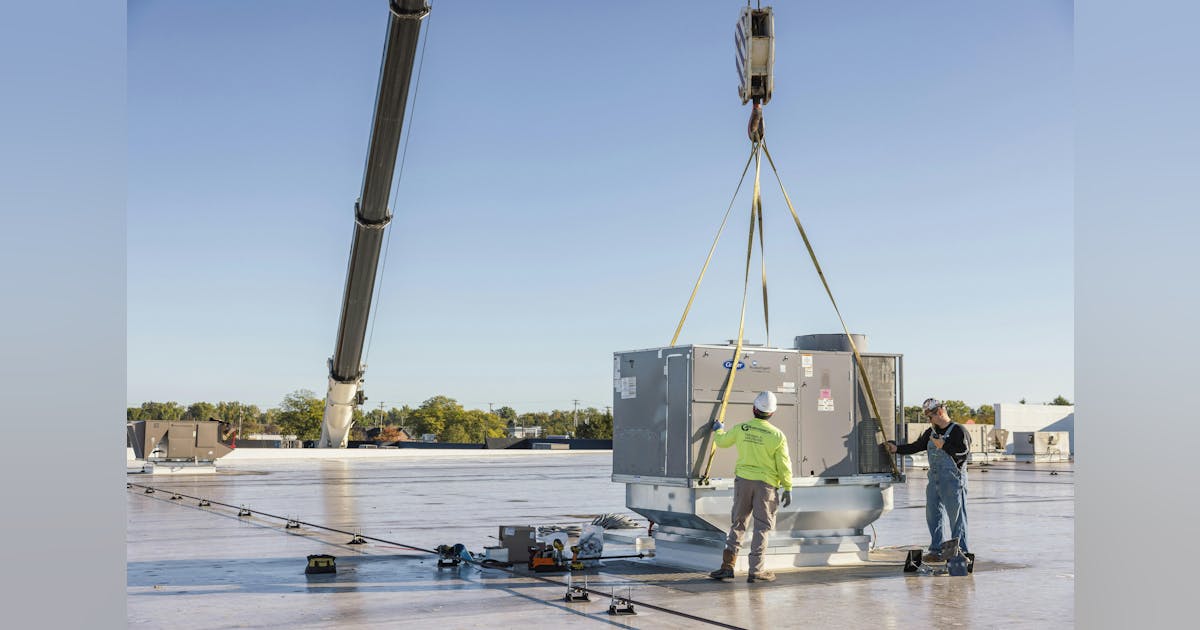
Leal emphasizes that modern rooftop heat pumps are designed with footprints similar to traditional RTUs, making replacements more seamless when contractors are properly trained in system application and sizing. While installations involve some new considerations, Leal says they become straightforward with training, and improved equipment design is making systems easier to install, service, and maintain overall.
Compared to traditional RTUs, rooftop heat pumps require more attention to the total cost of ownership, especially heating performance at various outdoor temperatures, Breczinski notes.
“Installations are generally not more complicated—they’re simply different,” he says. “The mechanical steps will feel familiar to anyone experienced with traditional RTUs, but rooftop heat pumps introduce several elements that require closer attention. Contractors need to account for full‑electric heating operation, understand defrost behavior, correctly configure auxiliary heat, and ensure the controls are set up to deliver the intended comfort, efficiency, and performance. When these factors are addressed upfront, installations are straightforward and predictable.”
In terms of maintenance for these systems, while the core maintenance tasks remain similar, there is a greater emphasis on consistency and adherence to recommended schedules, Leal explains.
“Skipping routine tasks, like filter replacements, or coil cleaning can significantly impact system performance over time,” she says. “Maintenance is best approached as scheduled and preventative, with intervals tailored to the specific environment and application. Different operating conditions may require different frequencies, making a one-size-fits-all approach less effective.”
The key difference, Breczinkski adds, is that because rooftop heat pumps rely on the refrigeration cycle year-round, coil cleanliness, airflow, and refrigerant performance have a greater impact on heating output. “Technicians also need to verify reversing valve operation, temperature sensors, and defrost sequences. Because the compressor runs in both heating and cooling seasons, regular performance checks become more important than with cooling‑only RTUs.”
Whether you require installation, repair, or maintenance, our technicians will assist you with top-quality service at any time of the day or night. Take comfort in knowing your indoor air quality is the best it can be with MOE heating & cooling services Ontario's solution for heating, air conditioning, and ventilation that’s cooler than the rest.
Contact us to schedule a visit. Our qualified team of technicians, are always ready to help you and guide you for heating and cooling issues. Weather you want to replace an old furnace or install a brand new air conditioner, we are here to help you. Our main office is at Kitchener but we can service most of Ontario's cities
Source link