
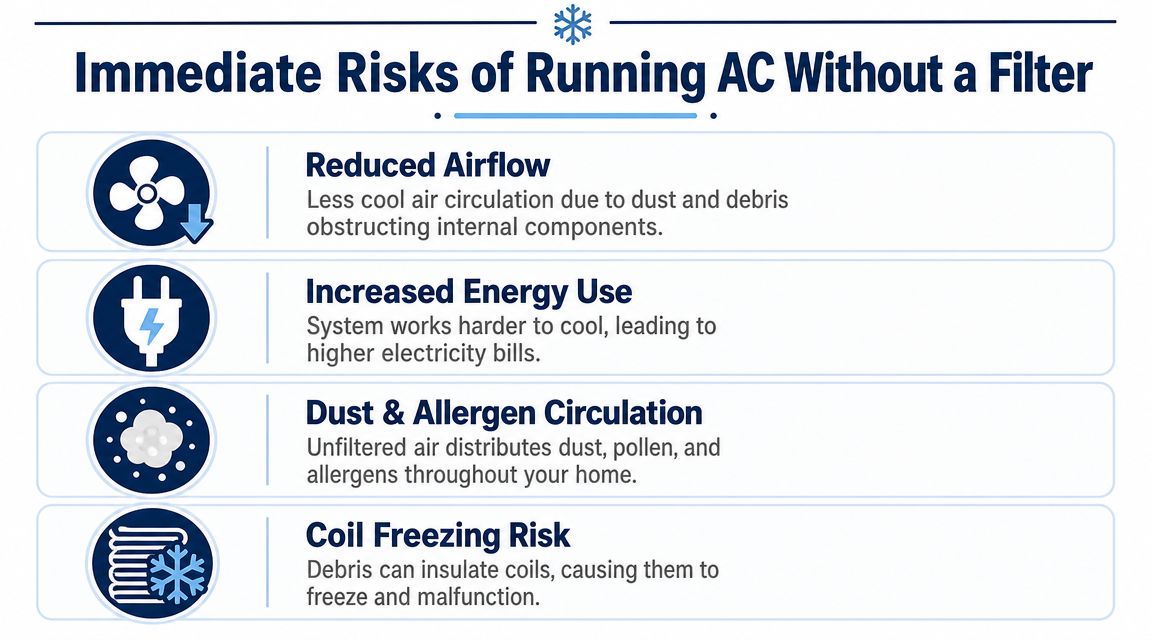
When people ask about running an air conditioner without filter, it’s usually not a theory question. It’s a hot-day, house-won’t-wait, “Can I get by until tomorrow?” kind of question. The short answer is that your AC may still run for a while, but that does not mean it’s safe for the system or for the air your family is breathing.
The Critical Role of Your AC Filter
A missing filter doesn’t look like a big deal. It’s a thin panel. It slides in and out. Easy to forget.
But in real HVAC work, that filter is not a minor accessory. It’s the bodyguard for your AC’s lungs.
What the filter actually protects
Inside your system are parts that need clean airflow to do their job. The big one homeowners need to care about is the evaporator coil, which gets cold and pulls heat out of your indoor air. There’s also the blower section that moves air through the house. When the filter is in place, it catches dust, pet dander, pollen, and floating debris before that stuff gets dragged into the equipment.
Without the filter, that dirt goes straight where it shouldn’t.
Imagine driving your truck down a dusty road with no air cleaner on the engine. It may keep moving for a bit. That doesn’t mean the inside is staying clean.
The filter also protects your home’s air
The other job is just as important. The filter is the main barrier that keeps everyday particles from cycling back through the house. Without it, what’s already floating around indoors keeps getting pulled through the system and pushed back into bedrooms, hallways, and living spaces.
If someone in your house deals with allergies or irritation from dusty air, this matters right away. If you’re already thinking beyond the HVAC equipment itself, a separate room solution like this expert guide to virus air purifiers can help you compare air-cleaning options, but it does not replace the need for a proper AC filter.
A central AC filter is not optional. It protects the machine and the people living with the machine.
If you’re not sure where your filter is
Many homeowners don’t know whether their system has one filter, multiple filters, or where the slot is located. That’s more common than people think, especially in homes with return grilles in ceilings or hallways. If that’s you, this guide on where your air filter is in your house is a good starting point.
Here’s what matters most:
- Equipment protection: The filter helps keep internal parts from getting coated with dust.
- Air quality: It captures debris that would otherwise recirculate through the home.
- System performance: Clean airflow helps the AC cool the house the way it was designed to.
- Preventive maintenance: A basic filter change is one of the cheapest ways to avoid bigger service problems.
People sometimes assume the AC cabinet itself will somehow “screen out” the dirt. It won’t. The system was built to operate with a filter in place. Remove that barrier, and you’re asking sensitive parts to work in a dirty airstream.
Immediate Risks of an Unfiltered System
Homeowners are often deceived. The thermostat is calling, the unit turns on, air comes out of the vents, and the house starts cooling. So it feels like everything is fine.
It might not be.
What can happen in the first few hours
Running unfiltered can create strain fast. According to HVAC consumer guidance summarized by Filterbuy, even a few hours of operation without a filter can let dust coat the evaporator coil, reduce airflow, and make the compressor run longer, which raises energy use and can shorten equipment life. The same guidance says going without a filter should be treated as only a very short emergency measure, often described as no more than a few hours to a day, not overnight or over a weekend, as explained in this article on whether you can run your AC without a filter.
That chain reaction matters because the coil is cold and often damp during cooling. Dust doesn’t just pass by politely. It sticks.
Why cooling performance drops so quickly
Once dirt starts collecting on the coil, it acts like a blanket over the part that’s supposed to transfer heat. Your AC now has to work harder to do the same job. Airflow can weaken. Rooms may cool more slowly. The system may run longer than usual.
In practical terms, homeowners often notice things like:
- Weak air at the vents: The blower is moving air through a dirtier path.
- Longer cooling cycles: The unit keeps running because heat transfer isn’t happening as well.
- Dustier indoor air: Debris that should have been trapped keeps circulating.
- Strange icing behavior: In some systems, airflow reduction can help create conditions where the coil starts freezing.
Practical rule: If the filter is missing, don’t assume “it’s cooling, so it’s okay.” A system can appear normal while dirt is already starting to stick where you can’t see it.
Why “just for tonight” is a gamble
In Phoenix-area homes, air isn’t always as clean as people think. Pets, open doors, remodeling dust, attic leakage, and daily desert dust all change the picture. A spotless home may buy you a little time compared with a dusty one, but that does not make unfiltered cooling harmless.
Let me explain. The danger is partly hidden because the first problem isn’t always a loud failure. Sometimes it’s the beginning of coil fouling, airflow restriction, and extra runtime. Those are the kind of problems that show up later as poor performance, icing, or a repair call when you least need one.
Long-Term Damage and Hidden Costs
A short mistake can often be corrected. A habit is where the expensive stuff starts.
Once a system runs unfiltered for days or longer, the dirt doesn’t stay in one place. It moves deeper into the equipment and starts affecting parts that are harder to clean and more costly to replace.
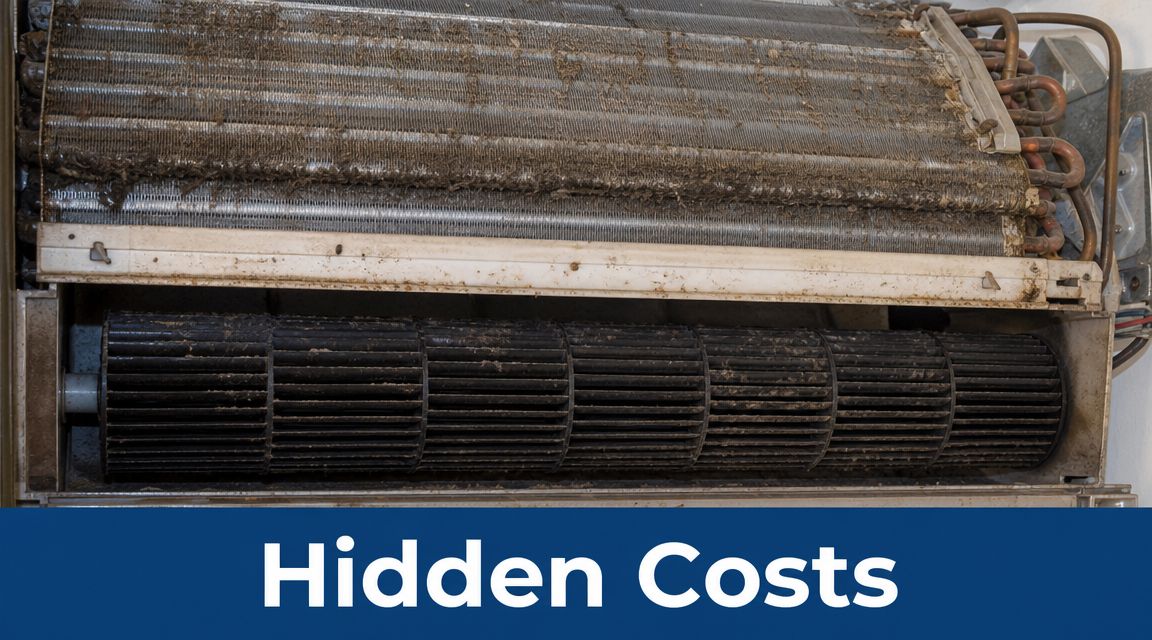
Guidance from Ed’s Heating and Cooling warns that without a filter, particles bypass the return-side capture stage, recirculate through the occupied space, and load downstream parts like coil surfaces and the condensate drain. That guidance also warns this can contribute to drain clogging and water leaks, and that missing-filter operation can create maintenance and warranty risk because manufacturers generally require proper filtration for normal operation and related repair coverage, as noted in this piece on what happens when you run your air conditioner without a filter.
That drain issue catches people off guard. Dust mixes with moisture and turns into a sludge. Then the water that should leave the system backs up instead.
What that can cost you beyond the AC itself
The trouble with long-term neglect is that it spreads the pain around the house:
- Drain problems: Water can back up and leak where it shouldn’t.
- Indoor air concerns: Dust and fine particles keep recirculating instead of being captured.
- Repair coverage problems: A manufacturer may not treat missing-filter damage like a normal defect.
- Bigger mechanical wear: The harder the system works, the harder it is on key parts.
That’s also why replacement conversations come up sooner than homeowners expect. If you ever need a realistic picture of total ownership costs, not just the equipment price, this article on planning your new AC system budget is useful context.
The repair that often snowballs
One of the costliest consequences of restricted airflow is stress on the cooling process itself. When homeowners ask whether a dirty or neglected system can end up damaging the heart of the cooling side, the answer is yes, it can put major components at risk. If you want a plain-language look at one of those larger repairs, this overview of air conditioner compressor replacement shows why small maintenance misses can become major bills.
A missing filter rarely stays a “filter problem.” It turns into an airflow problem, then a coil problem, then sometimes a water problem, and eventually a repair-budget problem.
How to Check Your System and What To Do in an Emergency
If you’ve just discovered the filter is missing, stay calm. Don’t panic and don’t start taking the unit apart.
Start with a simple check, then make the safest next decision based on what you find.
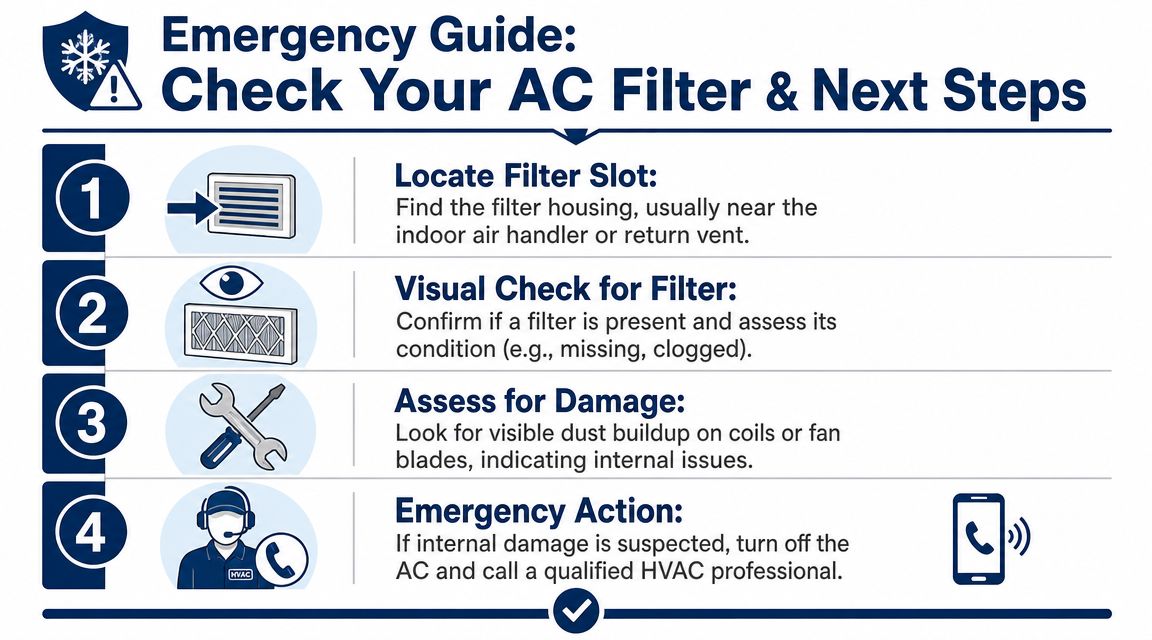
First, confirm whether the filter is actually missing
Some homeowners assume the filter should be at the air handler, but in their home it’s behind a large return grille in a hallway ceiling or wall. Others have more than one return.
Use this quick checklist:
Check the return grille or filter rack
Look for a slot near the indoor unit or behind the largest return vent.Look at the airflow arrow on the filter frame
If there is a filter, make sure it’s facing the right direction.Inspect the slot itself
If it’s empty, don’t guess. Confirm whether another filter location exists elsewhere in the house.Look for signs of dirt around the opening
Dust streaks, buildup, or loose debris near the rack can suggest the system has been pulling dirty air.
If you need more help figuring out whether the symptoms you’re seeing point to a bigger issue, this page on how to diagnose AC problems can help you sort through the basics before you call for service.
How long is too long in an emergency
The uncomfortable truth is that there isn’t one clean cutoff that fits every house. Guidance discussed by Queen City HVAC points out that the risk is not binary. Some sources say even short operation can let dust coat the coil and clog the condensate drain, while others suggest a cleaner environment may allow only a few hours before meaningful contamination starts. The same guidance says a stronger answer should separate clean versus dusty homes, fan-only versus cooling mode, and immediate damage versus cumulative damage, as described in this article on running an AC without a filter.
That lines up with what technicians see in the field. A home with pets, heavy foot traffic, open windows, or renovation dust is riskier than a very clean, tightly kept house.
What to do right now
You know what? It’s not always as simple as “just leave it running until you get a new one.” Cooling mode is the bigger concern because the wet coil catches dirt faster.
Use this approach:
- Best choice: Turn the system off until the proper filter is installed.
- If the house is dangerously hot and you’re in a pinch: Keep operation as limited as possible and get the correct filter in place fast.
- Fan-only is less risky than active cooling: But it still moves unfiltered air through the system, so it’s not a free pass.
- Avoid homemade dense materials: Don’t tape cardboard, towels, or anything heavy over the return. That can choke airflow and create a different problem.
A very light, porous temporary material may seem like a clever bridge, but it’s still a stopgap at best, and only for a very limited moment while you actively solve the problem. It is not a substitute for a real HVAC filter.
If you’ve already run the system unfiltered and now notice weak airflow, water around the unit, odd smells, or poor cooling, stop using it and have it inspected.
Choosing and Maintaining the Right AC Filter
Once the emergency is over, the goal is simple. Put in the right filter and stay consistent.
That matters because the indoor-air effect is immediate when a filter is missing. HVAC guidance notes that the filter is the main barrier stopping dust, pet dander, pollen, and other particulates from recirculating through the home, and it commonly recommends replacing standard 1-inch filters every 30 to 60 days or every 1 to 3 months, depending on system and household conditions, as explained in this guide on whether you can run your AC without a filter.
What MERV really means for a homeowner
MERV is just a rating that tells you how fine a filter’s capture ability is. Higher isn’t automatically better for every system. A stronger filter can catch smaller particles, but it also has to match what your equipment can handle without hurting airflow.
A practical way to consider this:
- Lower MERV: Better for basic dust capture and easier airflow.
- Mid-range MERV: A good fit for many homes that want stronger everyday filtration.
- Higher MERV: Useful in some situations, but only if the system is designed for it.
If allergies are a major concern in your home, this guide on best HVAC filters for allergies is worth reading before you buy a stack of filters that may not fit your system’s needs.
AC Filter Comparison for Arizona Homes
| Filter Type | MERV Rating | Captures | Cost | Replace Every (Phoenix) |
|---|---|---|---|---|
| Fiberglass flat filter | Lower-range MERV | Larger dust and debris | Lower upfront cost | Check often and replace more frequently in dusty conditions |
| Standard pleated filter | Mid-range MERV | Dust, pet dander, pollen, and common household particulates | Moderate cost | Commonly every 30 to 60 days for standard 1-inch filters, depending on conditions |
| High-efficiency electrostatic or premium pleated filter | Higher MERV options available | Finer particulates and stronger whole-home filtration | Higher upfront cost | Depends on system design, household dust load, and manufacturer guidance |
A routine that actually works
The best filter plan is the one you’ll keep up with.
Try this:
- Write the install date on the frame: Don’t rely on memory.
- Set a phone reminder: Put it on your calendar the same day you install the new one.
- Check sooner if you have pets or dust: Arizona homes can load filters fast.
- Watch for warning signs: A filter that darkens quickly usually tells you something about your indoor dust load.
One practical option for homeowners who want help matching filter choice to airflow and equipment condition is Comfort Experts, which provides maintenance and diagnostics for systems that may already be showing signs of filter-related stress.
When Filter Neglect Requires Professional Help
Sometimes a new filter fixes the issue. Sometimes it doesn’t.
If the system still acts wrong after the filter is replaced, that usually means the dirt made it past the point of simple prevention and into the point of cleanup or repair.
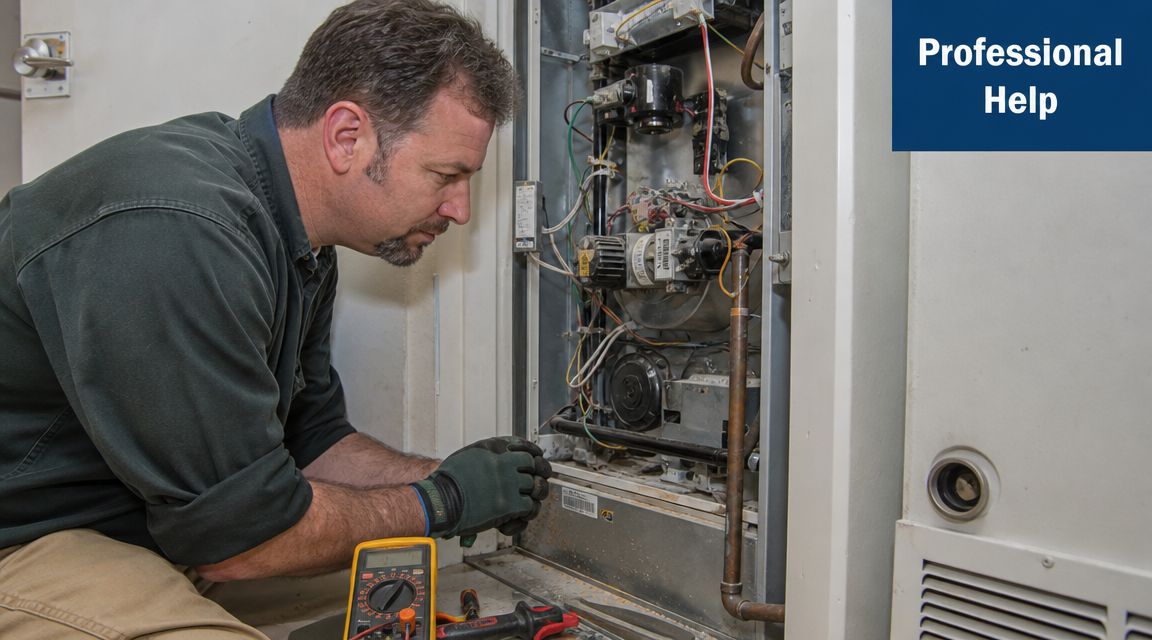
Signs the problem is no longer a DIY fix
A technician should look at the system if you notice any of these after replacing the filter:
- Weak airflow continues: The problem may be deeper than the filter slot.
- Musty or dirty odors: A fouled coil or damp buildup may be involved.
- Water around the indoor unit: That can point to drain trouble or icing aftereffects.
- Noises that weren’t there before: Rattling, buzzing, or strain sounds should not be ignored.
- Cooling still feels off: If the house isn’t reaching temperature normally, internal cleaning or repair may be needed.
For homeowners comparing local service options, this page on AC repair service near me can help you understand what to look for when it’s time to bring in a pro.
Can the damage be reversed
This is the question people really want answered. Sometimes yes. Sometimes no.
Guidance from Atlantic Refrigeration notes that prolonged unfiltered operation can make the evaporator coil “completely” unfixable, while other sources point to prompt filter replacement plus inspection and cleaning as the main response. The same discussion notes that homeowners are increasingly asking about post-exposure recovery and whether filter neglect can void warranty coverage for related repairs, as described here in what happens if you run AC without a filter.
That’s the practical timeline homeowners need to understand:
- Hours: Often still recoverable if caught fast.
- Days: Inspection becomes more important.
- Weeks: Cleaning may not be enough, depending on how dirty the system got.
Some missing-filter problems are reversible. Some become parts-and-labor problems. The sooner you catch it, the better your odds.
If your AC has been running without a filter, or you’ve replaced the filter and the system still isn’t acting right, the safest next step is to have it checked before the problem spreads.
If you want a straight answer on what shape your system is in, reach out to Comfort Experts. You can call 480-207-1239 or schedule service for an inspection and get a clear recommendation before a small filter mistake turns into a larger repair.
Whether you require installation, repair, or maintenance, our technicians will assist you with top-quality service at any time of the day or night. Take comfort in knowing your indoor air quality is the best it can be with MOE heating & cooling services Ontario's solution for heating, air conditioning, and ventilation that’s cooler than the rest.
Contact us to schedule a visit. Our qualified team of technicians, are always ready to help you and guide you for heating and cooling issues. Weather you want to replace an old furnace or install a brand new air conditioner, we are here to help you. Our main office is at Kitchener but we can service most of Ontario's cities
Source link