Key Takeaways
- A limit code names a symptom, not a cause: “Limit circuit defective” tells you a safety opened, not why it opened. Swap the limit without finding the heat trap and you have booked your own callback.
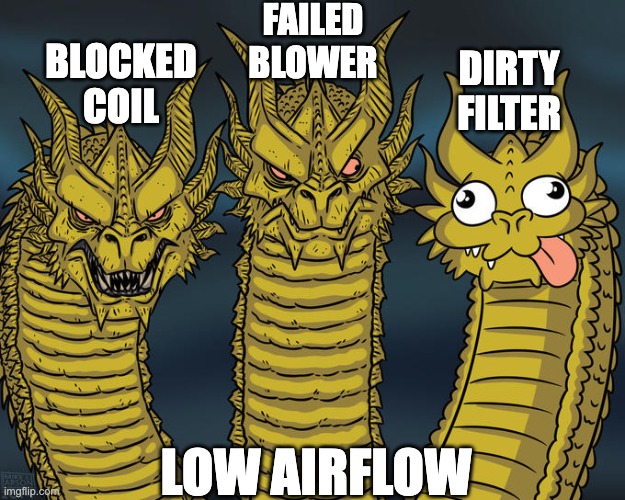
- Most limit trips are airflow problems: A dirty filter, a loaded blower wheel, a slow motor, a blocked coil, or closed registers let heat stack up on the exchanger faster than the system can move it away. Trane lists restricted airflow as the leading cause of limit failure, ahead of switch wear.
- Temperature rise and static pressure settle the argument: Compare your measured rise to the range stamped on the data plate, then read total external static. Those two numbers tell you whether you are starving the system for air or overfiring it.
- AI widens the list, your meter closes it: A good prompt can remind you of a cause you forgot. It cannot read the exchanger temperature or ohm the switch. Confirm every suspect with a measurement before you quote the homeowner.
A control board flashes a code. The app on your phone, or the chatbot you typed it into, comes back with “limit circuit.” So you grab a limit switch off the truck, throw it in, button up the furnace, and head to the next call. Twenty minutes later the homeowner calls back. Same furnace, same lockout, and now you are fixing it on your own time and your own dime.
The code was honest. The diagnosis was lazy. A furnace high limit does not open because it felt like it. It opens because something let heat build where heat is not supposed to build. This is the trap that AI makes easier to fall into, because the first line of any answer reads like a verdict. It is not. Here is how to walk the fault tree that a limit actually sits on.
What the Limit Circuit Actually Does
The high limit is a temperature operated safety wired into the 24 volt control circuit. When the air or metal temperature around it climbs past its setpoint, it opens, the board loses its permission to fire, and the furnace shuts down. “Open limit” means the board lost that safety permission. Nothing more. A board will report “limit circuit” for an open switch, a broken wire, a corroded connector, or its own input fault, so the code is a starting line, not a finish line. If you want a refresher on how the board reads these inputs, our guide to HVAC PCB components breaks down the control side.
One distinction matters more than any other here, and AI will almost never draw it for you. A high limit and a rollout switch are not the same animal. A rollout switch is a manual reset safety that trips when flame escapes the burner box, and it points at a blocked or cracked heat exchanger, a plugged flue, or starved combustion air. A rollout is never a nuisance trip. If you find one tripped, you owe that system a full combustion and venting workup before you even think about resetting it. Reset and run a rollout without finding the cause and you are gambling with somebody’s house.
The Real Suspect List: Why a Limit Opens
Every cause on this list ends the same way, with heat piling up on the heat exchanger. Your job is to figure out which one.
Airflow starvation is the heavy favorite. A dirty filter, a blower wheel packed with dust, a PSC motor on a weak capacitor or an ECM dropping out, closed dampers, crushed flex, or an undersized return all choke the air that carries heat away from the exchanger. Trane’s own troubleshooting literature puts restricted airflow at the top of the limit failure list, ahead of plain switch wear.¹ The US Department of Energy notes that a clogged filter alone can raise system energy use by 5 to 15 percent, and a neglected system by up to 30 percent, so the restriction is never harmless.² Pull static and filter data with static pressure testing and confirm the filter penalty with the method in our filter pressure drop breakdown.
Overfiring is the next branch. Too much gas means too much heat for the airflow the system was designed to move. Check manifold pressure against the rating plate and confirm the orifice size, exactly as laid out in checking manifold gas pressure.
Venting and draft problems belong on the list too. A weak or overheating induced draft motor changes how the furnace sheds heat, and our note on how to prevent the induced draft motor from overheating covers what to watch.
The switch itself can genuinely fail, from fatigue after years of cycling, an out of spec setpoint, a corroded terminal, or a rodent chewed wire. It belongs on the list. It just does not belong at the top of it.
Here is the part worth saying plainly. There is no honest statistic that says a specific percentage of these calls trace to dirty filters. Anyone who quotes you a clean number is guessing. What the manufacturer data supports is the ranking: airflow first, fire second, the switch last. AI can hand you this whole list in two seconds. Only your readings tell you which branch you are standing on.
The Measurement That Settles It
Temperature rise is the fastest airflow verdict in heating. Every gas furnace data plate specifies a rise window, usually about 30 degrees wide, like 35 to 65°F. You measure supply temperature, subtract return temperature, and compare. This is not a field opinion. ACCA Manual S makes verifying temperature rise inside the rated range a required commissioning step, which means a rise reading is a standard, not a hunch.³

Pair rise with total external static pressure and the picture sharpens fast. Run the two together and read it like this:
- High rise and high static means the system cannot move air. Airflow restriction. Hunt the filter, the blower wheel, the coil, the ductwork.
- High rise and normal static means the air is moving but the fire is too big or the blower speed is too low. Look at gas pressure and blower tap.
- Normal rise and the furnace still locks out points you back at the switch, its wiring, or a connector.
When rise climbs above the high number on the plate, the metal around the limit eventually passes its setpoint and the switch opens, doing exactly what it was built to do. Repeated cycling on that limit fatigues the switch and cooks the heat exchanger over time, which is how a pure airflow problem turns into a parts problem if you keep ignoring it. For the full sequence from code to cause, keep our general guide to HVAC troubleshooting within reach.
Where AI Helps and Where It Hurts
AI earns its place when you feed it real data. Hand it the furnace model, the exact code, your measured rise and static, and the list of what you already checked, and it will return a ranked set of suspects and remind you of a branch you skipped. That is a useful second opinion. The Copeland trainers on the HVAC Know It All podcast made the same point from the manufacturer side: the tool is only as good as what goes into it, and the answer always traces back to a source that may or may not deserve your trust.
AI hurts when you treat the first line as the work order. “Replace the limit” is where a lazy diagnosis starts, not where a good one ends. Use AI to point at which sense to use and which meter to pull, then let the meter rule. If you want the broader picture of where these tools fit in the trade, our technician’s guide to AI and automation maps it out, and the companion piece on how to actually prompt a service call shows how to get a useful answer in the first place.
🎙️ Related podcast episode: Jim Fultz and Joshua Souders of Copeland join Gary to break down how AI helps techs and where it quietly leads them wrong.
Don’t Create the Next Callback
Once you clear the actual cause, prove it. Run the furnace through a full heat cycle, re-check rise, and watch the limit behave across the whole call for heat. Then write the root cause on the invoice so a future trip is not mistaken for a brand new problem.
If the dollars do not move you, ACCA’s numbers should. The association pegs a typical service callback at roughly $650 all in, and a 5 percent callback rate at $80,000 to $100,000 or more in losses per year for a contractor.⁴ The truck roll by itself runs $150 to $200 before you touch a tool.⁵ Replacing a good limit because a code or a chatbot told you to is how a tech turns one paid call into two unpaid ones. Read codes like a starting point, not a sentence, the same way our breakdown of the most common furnace error codes and the deeper dive on gas fired ignition problems treat them.

The code names the symptom. You name the cause. In a field where everybody on the truck can pull the same AI answer in the same two seconds, the tech who measures is the one who gets paid once and stays gone. Run rise and static on your next limit call before your hand ever touches the parts bin.
Additional Sources
- “Furnace Limit Switch: Its Job and Signs of Problems,” Trane Technologies, manufacturer troubleshooting resource, 2025.
- “Maintaining Your Air Conditioner,” US Department of Energy, Energy Saver guidance, 2024.
- ANSI/ACCA 3 Manual S, Residential Equipment Selection, Air Conditioning Contractors of America, 3rd Edition, 2023.
- “The True Cost of Callbacks,” Air Conditioning Contractors of America, industry blog, 2025.
- “HVAC Callbacks: Cost, Reputation, and Solutions,” Plumbing & HVAC Magazine, trade publication, 2026.
Whether you require installation, repair, or maintenance, our technicians will assist you with top-quality service at any time of the day or night. Take comfort in knowing your indoor air quality is the best it can be with MOE heating & cooling services Ontario's solution for heating, air conditioning, and ventilation that’s cooler than the rest.
Contact us to schedule a visit. Our qualified team of technicians, are always ready to help you and guide you for heating and cooling issues. Weather you want to replace an old furnace or install a brand new air conditioner, we are here to help you. Our main office is at Kitchener but we can service most of Ontario's cities
Source link