
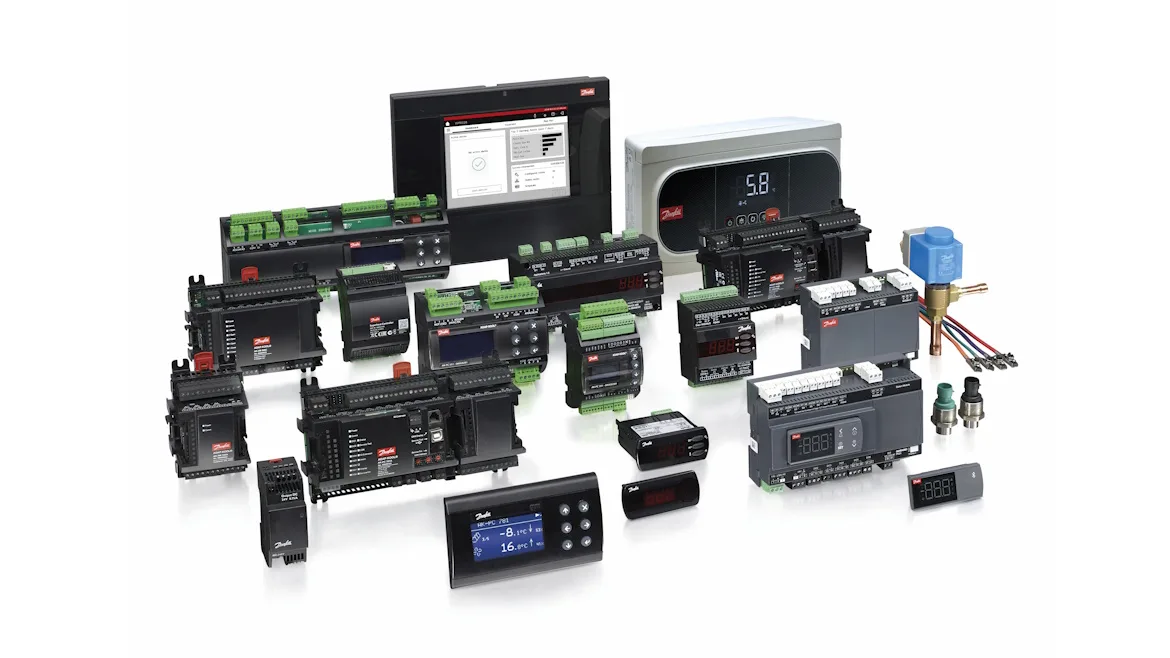
As CO₂ refrigeration systems become more prevalent in supermarkets and commercial and industrial refrigeration settings, the technology supporting them has evolved. Modern CO₂ systems require more advanced controls than traditional HFC systems. This complexity stems from the unique thermodynamic characteristics of CO₂ and the need for precise, rapid control of multiple pressure levels throughout the refrigeration cycle.
At the center of the system is a dedicated rack controller that coordinates the operation of critical components, including the high-pressure valve, receiver bypass valve, parallel compression system, medium-temperature compressors, ejectors, and gas cooler fans. Unlike conventional systems that may rely on relatively simple pressure control strategies, CO₂ systems require continuous optimization across multiple operating conditions.
The rack controller processes information from numerous sensors and executes control algorithms that can respond quickly to changing ambient conditions, refrigeration loads and equipment performance requirements. This coordination enables the system to maximize energy efficiency while maintaining stable operation and protecting equipment from excessive pressure or temperature conditions.
Rack Control Coordination
The high-pressure section of a CO₂ system is a critical area. Gas cooler sensor accuracy for ambient temperature and gas cooler outlet temperature measurements is essential and is used by the controller to determine the ideal pressure setpoint for the high-pressure valve. Even small inaccuracies in sensor readings can result in suboptimal pressure control, increased energy consumption, and reduced system performance.
Ejectors and high-pressure valves must operate in a coordinated manner to maximize energy efficiency while maintaining system stability. For systems utilizing combination liquid/vapor ejectors, the controller must determine which technology to prioritize for peak performance and efficiency, based on operating conditions and system demand.
Additional coordination is required to determine when the high-pressure valve should supplement ejector performance. During varying load conditions, the rack controller continuously balances ejector operation and valve modulation to maintain optimum efficiency.
The intermediate pressure level introduces another layer of complexity to CO₂ refrigeration management. Systems utilizing flash gas bypass valves and parallel compression technology require constant coordination between multiple components. The rack controller determines when the system should transition from valve control to parallel compression. Under lower loads, the flash gas bypass valve may adequately manage flash gas generated within the receiver. As the load increases, however, the rack controller can activate parallel compressors, which recover this flash gas and improve overall system efficiency.
Looking for quick answers on air conditioning, heating and refrigeration topics?
Try Ask ACHR NEWS, our new smart AI search tool.
Ask ACHR NEWS
The controller must also determine when the flash gas bypass valve should supplement parallel compression control. During periods when parallel compressors reach maximum capacity, the bypass valve can help maintain stable receiver pressure and prevent system disturbances.
Another critical task is coordinating operation between the intermediate pressure controls and the high-pressure valve. Improper management can result in excessive receiver pressure buildup, reducing efficiency and potentially impacting reliability.
At the low-pressure side of the system, coordination extends beyond the refrigeration rack and into the refrigerated display cases and evaporators. Modern controls leverage intelligent communication between rack controllers and case controllers to optimize performance throughout the store.
One example is Danfoss’s CALM™ (CO₂ Adaptive Liquid Management) strategy. This approach, combining an intelligent system manager, smart pack, case controller, and liquid ejector, allows the rack controller to coordinate liquid ejector performance with superheat control. By integrating these functions, the system can maximize the benefits of liquid ejectors while maintaining proper refrigerant delivery and stable evaporator performance.
Continuous suction pressure monitoring provides additional opportunities for optimization. Rack controllers can implement suction floating strategies that adjust operating pressures based on refrigeration demand and ambient conditions. Higher suction pressures often translate directly into compressor energy savings while maintaining required product temperatures.
Suction pressure monitoring also supports emergency coordination with case controls during abnormal operating events. In situations involving elevated suction pressures, coordinated responses between the rack and case controllers can help maintain food temperatures until normal operation is restored.
Digital Maintenance
As refrigeration systems become more digitally connected, technician responsibilities are extending beyond the refrigeration circuit. Digital maintenance tasks include monitoring network health, installing firmware updates, managing cybersecurity requirements, maintaining controller backups, and ensuring proper configuration management.
Technicians must be able to perform sensor calibration, transducer verification, communication bus troubleshooting, and alarm management. Because control decisions rely heavily on sensor data, inaccurate readings can lead to improper valve positioning, inefficient compressor operation, or nuisance alarms.
Communication network troubleshooting has become another essential skill. Common failure points include communication faults, failed sensors, valve driver malfunctions, network configuration errors and lost synchronization between controllers. Effective troubleshooting increasingly requires both refrigeration expertise and digital diagnostic skills.
Looking To The Future
The latest generation of CO₂ refrigeration systems is increasingly connected to centralized monitoring and analytics platforms. System managers act as the store’s data hub, collecting alarms, trend data, performance metrics, and energy consumption information. Through connectivity to cloud platforms, building management systems (BMS), BACnet and Modbus networks, and enterprise monitoring services, technicians and facility managers can diagnose problems, adjust settings, and review performance data without traveling to the site.
The growing availability of operational data enables advanced analytics that support predictive maintenance programs. By identifying performance trends and early warning indicators, operators can address developing issues before they become equipment failures. This reduces downtime, improves energy efficiency, and enhances food safety compliance through more consistent temperature management.
IoT gateways, cloud-based analytics platforms, AI-assisted fault detection tools, and fully connected refrigeration ecosystems are transforming how CO₂ refrigeration systems are managed. Rather than reacting to equipment failures, operators will increasingly rely on intelligent software to predict issues, optimize performance, and automate decision-making.
Whether you require installation, repair, or maintenance, our technicians will assist you with top-quality service at any time of the day or night. Take comfort in knowing your indoor air quality is the best it can be with MOE heating & cooling services Ontario's solution for heating, air conditioning, and ventilation that’s cooler than the rest.
Contact us to schedule a visit. Our qualified team of technicians, are always ready to help you and guide you for heating and cooling issues. Weather you want to replace an old furnace or install a brand new air conditioner, we are here to help you. Our main office is at Kitchener but we can service most of Ontario's cities
Source link