Understanding Heat Pump Advantages Over Traditional HVAC Systems
The heat pump advantages over traditional hvac systems are real, measurable, and worth knowing before your next equipment decision. Here is a quick summary:
Heat Pump Advantages Over Traditional HVAC at a Glance:
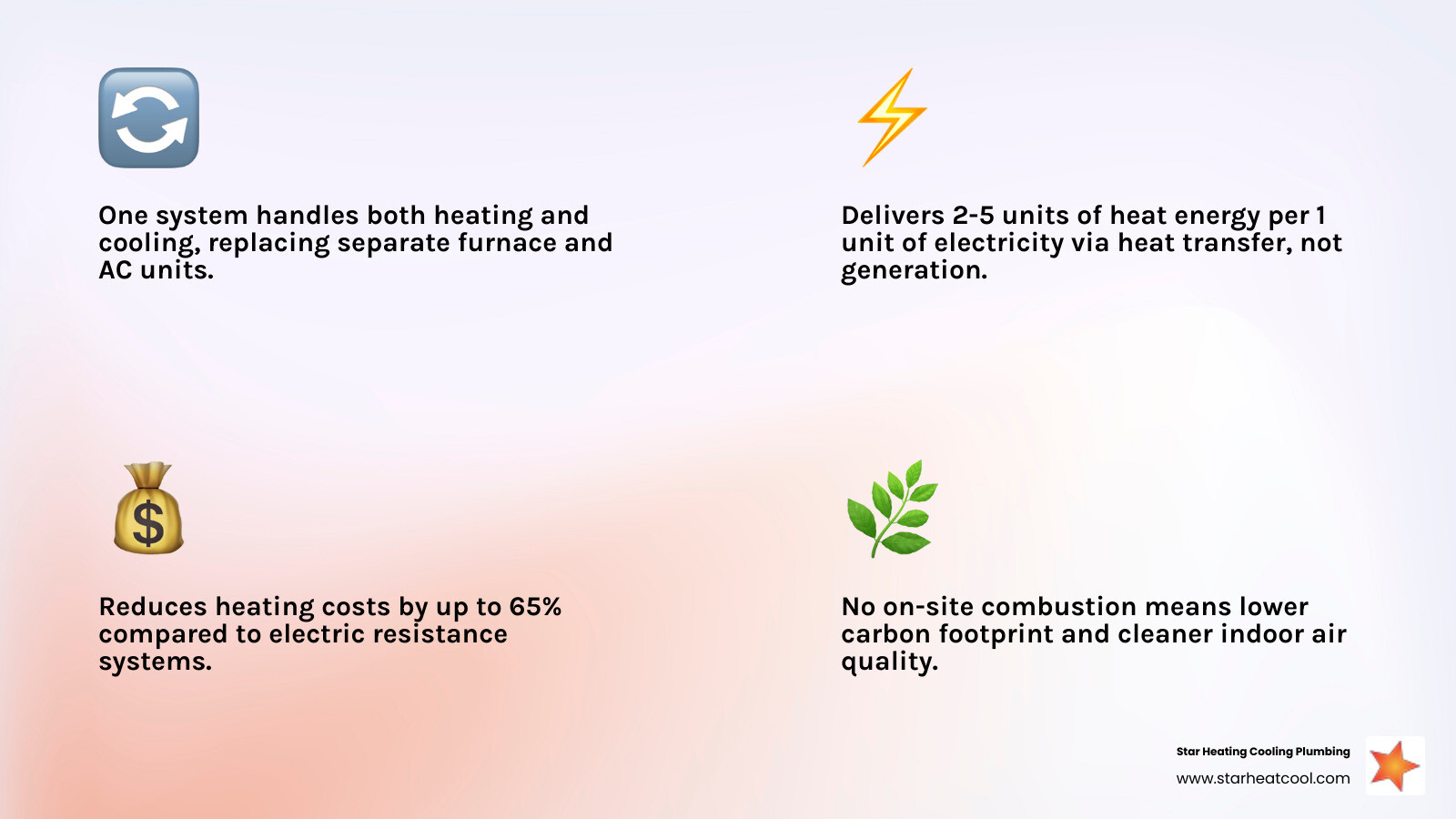
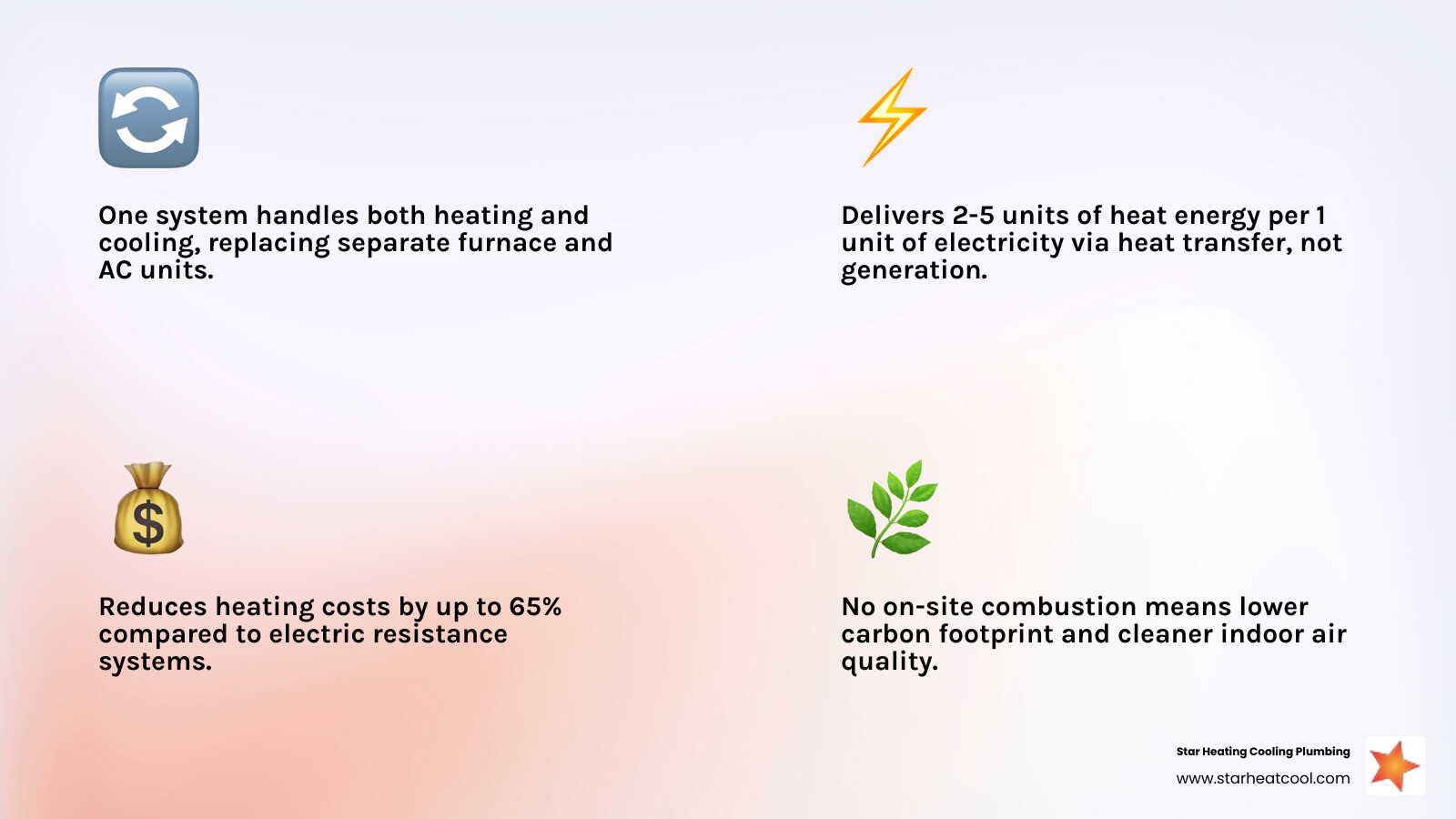
- One system, two jobs — heats and cools your home, replacing both a furnace and an air conditioner
- Higher energy efficiency — moves heat instead of generating it, delivering 2 to 5 units of heat energy for every 1 unit of electricity consumed
- Lower operating costs — can reduce heating electricity use by up to 65% compared to electric sensitivity systems
- Cleaner operation — no on-site combustion, no exhaust gases, better indoor air quality
- Consistent comfort — variable-speed technology maintains steadier temperatures with less on/off cycling
- Longer cooling system lifespan — typically 15 to 20 years, outlasting most standalone air conditioners
- Environmental benefits — lower carbon footprint, especially as the electrical grid incorporates more renewable energy
If you are a homeowner in Fishers, IN dealing with rising energy bills or an aging furnace and AC, understanding these differences can help you make a smarter long-term investment in your home’s comfort.
Heat pump technology has improved dramatically over the past decade. Modern systems can extract usable heat from outdoor air even at temperatures as low as -18°C — meaning Indiana winters are well within their operating range. Meanwhile, traditional furnaces burn fuel to generate heat from scratch, and standalone air conditioners only cool. Neither does what a heat pump does on its own.
I’m Jeff Rich II, operations leader at Star Heating Cooling Plumbing with decades of hands-on experience in dual-fuel applications, zoning systems, and energy efficiency upgrades — all areas that directly shape the heat pump advantages over traditional hvac that homeowners ask me about every season. In the sections below, we will walk through exactly how these systems compare so you can decide what makes sense for your home.
To truly grasp why a heat pump is such a game-changer, we have to look at the “magic” under the hood. While a furnace creates heat by burning natural gas or using electric resistance (think of a giant toaster), a heat pump doesn’t “make” heat at all. Instead, it uses a refrigerant cycle to move heat from one place to another.
In the summer, it acts exactly like a high-end air conditioner, pulling heat out of your Fishers home and dumping it outside. In the winter, a clever component called a reversing valve flips the script. It extracts thermal energy from the outdoor air—yes, even when it feels freezing to us—and pumps that warmth into your living room. Because it is moving heat rather than creating it from scratch, it is fundamentally more efficient than any traditional combustion system.
Key Heat Pump Advantages Over Traditional HVAC for Year-Round Comfort
When we talk about heat pump effectiveness, the biggest “pro” is dual functionality. In a traditional setup, you have two separate machines: a furnace for the winter and an AC for the summer. A heat pump handles both. This means you only have one outdoor unit to maintain, simplifying your home’s mechanical footprint.
But comfort isn’t just about the temperature on the thermostat; it’s about how that air feels. Traditional furnaces often blast hot air until the house hits a certain temperature, then shut off, leading to “hot and cold spots.” Modern heat pumps, especially those with variable-speed compressors, provide much more consistent temperatures. They run at lower speeds for longer periods, which also makes them world-class at humidity control. By keeping the air moving steadily, they pull more moisture out of the air during our humid Indiana summers than a standard single-stage AC ever could.
Superior Energy Efficiency and Utility Savings in Fishers, IN
As we move through April 2026, energy efficiency has become the top priority for homeowners in Carmel and Noblesville. This is where the heat pump advantages over traditional hvac really shine in the data. We measure this efficiency using three main ratings:
- COP (Coefficient of Performance): This measures how much energy you get out versus what you put in. A traditional electric heater has a COP of 1.0 (1 unit of heat for 1 unit of electricity). Modern heat pumps often boast COPs between 2.0 and 5.4. That means for every $1 you spend on electricity, you get up to $5 worth of heat.
- HSPF2 (Heating Seasonal Performance Factor): This tracks heating efficiency over an entire season. High-efficiency models now reach ratings as high as 13.2, far surpassing the “100% efficiency” limit of even the best gas furnaces.
- SEER2 (Seasonal Energy Efficiency Ratio): This tracks cooling efficiency. Modern heat pumps are often more efficient at cooling than standard central air units.
A great example of this peak performance is The Infinity Series Greenspeed Heat Pump from Carrier. It uses variable-speed technology to “sip” electricity, adjusting its output in tiny increments to match your home’s needs exactly.
Efficiency Benefits at a Glance:
- 65% Savings: Ground-source heat pumps can yield up to 65% savings on heating costs compared to electric furnaces.
- 52% Energy Reduction: Real-world case studies have shown homeowners reducing overall energy use by more than half after a professional heat pump installation.
- 3-for-1 Energy: An air-source heat pump can deliver up to three times more heat energy than the electrical energy it consumes.
Performance Comparison: Heat Pumps vs. Traditional Furnaces and AC
To help you visualize the choice, let’s look at how these systems stack up side-by-side.
| Feature | Heat Pump | Traditional Gas Furnace | Central Air Conditioner |
|---|---|---|---|
| Primary Function | Heating & Cooling | Heating Only | Cooling Only |
| Energy Source | Electricity | Natural Gas / Propane | Electricity |
| Efficiency Metric | Up to 400%+ (COP 4.0) | Max 98% (AFUE) | SEER2 Ratings |
| Lifespan | 15–20 Years | 15–30 Years | 10–15 Years |
| Environmental Impact | Very Low (No combustion) | Moderate (Fossil fuels) | Low (Electric) |
| Carbon Monoxide Risk | None | Possible (Requires venting) | None |
When comparing a heat pump to a gas furnace, the biggest difference is the “thermal balance point.” This is the outdoor temperature where the heat pump can no longer pull enough heat from the air to keep up with the home’s heat loss. In the past, this was a major drawback. However, 2026 technology has pushed that limit further than ever. Many modern systems can now operate efficiently well below freezing, only switching to “auxiliary heat” (electric strips or a backup furnace) during the absolute coldest nights in Greenfield or Zionsville.
Environmental Heat Pump Advantages Over Traditional HVAC Systems
For our neighbors looking to reduce their carbon footprint, the choice is clear. Because heat pumps run on electricity, they can be powered by renewable sources like wind or solar. Traditional furnaces, however, are locked into burning fossil fuels for their entire lifespan.
By switching to professional heat pump services, you are effectively “electrifying” your home. Research shows that switching from a gas furnace to an air-source heat pump can reduce household CO2 emissions by about 40%. As the Indiana power grid continues to incorporate more renewable energy, your heat pump actually gets “greener” over time—something a gas furnace can never do.
Climate Suitability: Are Heat Pumps Effective for Indiana Winters?
One of the most common questions we hear in McCordsville and Fortville is: “Can a heat pump really handle an Indiana January?”
The answer is a resounding yes, but with a slight asterisk. At -18°C (about 0°F), the outdoor air still contains roughly 85% of the heat content found at 21°C (70°F). Modern cold climate heat pumps are specifically designed with advanced compressors to squeeze that heat out of the freezing air.
However, for total peace of mind, many of our customers choose a hybrid heating or dual-fuel system. This setup pairs a high-efficiency heat pump with a gas furnace. The heat pump handles the heating for about 85-90% of the year (when it’s most efficient), and the gas furnace only kicks in as a “backup” during those rare, extreme sub-zero polar vortex events. This gives you the best of both worlds: incredible efficiency in Indiana’s climate and the “blast furnace” power of gas when you truly need it.
Reliability, Lifespan, and Maintenance Considerations
When you invest in a new HVAC system, you want it to last. A major heat pump advantage over traditional hvac is the lifespan of the cooling components. While a standard central AC unit typically lasts 10 to 15 years, a well-maintained heat pump often reaches the 15 to 20-year mark.
Because a heat pump works year-round, regular maintenance is even more critical than it is for a furnace. Think of it like a car you drive every day versus one you only drive in the summer. To keep your system running at peak efficiency and to protect your warranty, we recommend a professional tune-up twice a year—once before the cooling season and once before the heating season.
Our Seasonal Maintenance Checklist Includes:
- Cleaning Coils: Dirt on the outdoor coils forces the compressor to work harder, killing efficiency.
- Checking Refrigerant Levels: A small leak can cause the system to lose its heating capacity entirely.
- Inspecting the Reversing Valve: This is the heart of the system that allows it to switch between modes.
- Clearing Debris: Ensuring the outdoor unit has plenty of “breathing room” for airflow.
If you ever notice your system struggling to keep up, or if your utility bills take a sudden spike, don’t wait. Getting a professional heat pump repair early can prevent a small sensor issue from turning into a major compressor failure. For a deeper dive into troubleshooting, check out our Complete Guide to Heat Pump Repair.
Conclusion
The shift toward heat pump technology isn’t just a trend—it’s the future of home comfort. From the massive energy savings and dual-mode functionality to the environmental benefits and improved indoor air quality, the heat pump advantages over traditional hvac are undeniable for homeowners in the Greater Indianapolis area.
At Star Heating Cooling Plumbing, we’ve been a part of the Fishers community since 1987. As a family-owned, Carrier Factory Authorized Dealer, we don’t just sell equipment; we design comfort solutions tailored to the unique needs of Indiana homes. Whether you are in Carmel, Westfield, or New Palestine, our licensed and highly qualified technicians are here to help you navigate the switch to a more efficient home.
Ready to see how a modern system can transform your utility bills and your home’s comfort? Contact us today to learn more about Heat Pump Installation & Replacement in Fishers, IN. We look forward to showing you why your old furnace is right to be a little jealous!
Whether you require installation, repair, or maintenance, our technicians will assist you with top-quality service at any time of the day or night. Take comfort in knowing your indoor air quality is the best it can be with MOE heating & cooling services Ontario's solution for heating, air conditioning, and ventilation that’s cooler than the rest.
Contact us to schedule a visit. Our qualified team of technicians, are always ready to help you and guide you for heating and cooling issues. Weather you want to replace an old furnace or install a brand new air conditioner, we are here to help you. Our main office is at Kitchener but we can service most of Ontario's cities
Source link