If you’re thinking about buying a generator, you’ve probably noticed that they often come with a hefty price tag for an appliance that may not get used frequently. That’s why it’s important to carefully weigh the pros and cons before making such a purchase.
Pros of Generators
Generators have not only kept homes and businesses running throughout power outages but have also saved lives. They’ve kept electricity-dependent medical devices going and allowed families to stay in their homes during brutal winter temperatures that would have otherwise been fatal. These benefits alone are enough for homeowners to buy at least a small, portable generator that can power a space heater in the winter or the fridge or oxygen machine in the summer. Here are other pros when it comes to generators:
- Smaller generators can be moved and taken far from the home. They can warm up construction sites, camping areas, or outdoor winter parties. They also cost much less than standby generators.
- Generators can use several types of fuel, which makes them versatile. Fuels that power generators are gasoline, propane, natural gas, and diesel fuel.
- Generators are famously reliable. When standby generators detect a power outage, they come on immediately.
Cons of Generators
For all their utility, generators do have drawbacks:
- They need lots of maintenance. Filters need to be changed regularly, as do fuel and oil, among other maintenance tasks. Components need to be checked and repaired or replaced if necessary.
- They tend to be noisy.
- Portable generators don’t last long, especially if they’re used a great deal.
- Generators can’t be used indoors because of the risk of potentially fatal carbon monoxide poisoning.
- Gas-fueled generators guzzle gas, and the gas needs to be safely stored.
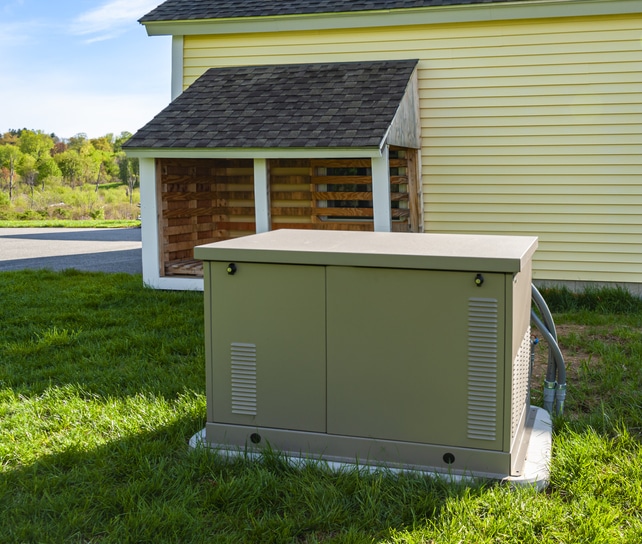
- Standby generators are meant to power the entire house during a blackout. They are large, and they need a designated space outside.
- Standby generators are expensive to install, and many are expensive to buy. Like your HVAC system, they need to be the right size for your home. A generator that’s too large wastes energy and therefore costs money. A generator that’s too small won’t serve your home the way it must during a power outage, especially if the outage is prolonged.
Besides these general pros and cons, different types of generators have benefits and drawbacks specific to them. For example, diesel generators don’t need as much maintenance as other types of generators because they have fewer moving parts. They’re tough and can handle more of a load than similarly sized generators that use different fuel. Cons include a high installation cost. Diesel generators are also loud and unwieldy, and they need to be protected from precipitation. They easily rust and are hard to winterize.
Though portable generators are handy, their power is limited, and they’re noisy. They need a lot of care, and if they’re mishandled, they can cause fires. Because they use fossil fuels, portable generators are not eco-friendly.
When you need generator installation services in Tennessee, contact Pioneer Heating, Cooling, Plumbing, & Electrical.
Whether you require installation, repair, or maintenance, our technicians will assist you with top-quality service at any time of the day or night. Take comfort in knowing your indoor air quality is the best it can be with MOE heating & cooling services Ontario's solution for heating, air conditioning, and ventilation that’s cooler than the rest.
Contact us to schedule a visit. Our qualified team of technicians, are always ready to help you and guide you for heating and cooling issues. Weather you want to replace an old furnace or install a brand new air conditioner, we are here to help you. Our main office is at Kitchener but we can service most of Ontario's cities
Source link