

Your hands are cracked and every light switch gives you a shock. Then one cold morning, you find water beading on the inside of your windows. Dry air and wet windows might seem like opposite problems, but they can both be traced back to humidity.
So, what should the humidity be in your house in winter? The EPA recommends keeping indoor humidity between 30% and 50%. In winter, set your humidifier between 30% and 40%. For the coldest days, go even lower.
Let’s talk about humidity and how to handle it during these frigid months.
Why Winter Air Dries Out Your Home
Cold air holds little moisture. When outdoor air leaks into your home and your heating system warms it, that small amount of moisture spreads through warmer air. As a result, the relative humidity drops.
Relative humidity measures how much moisture the air holds compared to the most it could hold at that temperature. Warm air can hold more, so the same moisture reads lower once it’s heated.
Every draft around a window or door lets in more dry air. Sealing those gaps, one of our winter energy-saving tips, means less dry air coming in.
Signs Your Home Is Too Dry
When indoor humidity in winter drops too low, you may notice:
- Dry, itchy skin and chapped lips
- Static shocks
- A sore throat or irritated sinuses
- Nosebleeds
- Gaps in hardwood floors
- Cracks in wood furniture or trim
Signs Your Home Is Too Damp
Too much moisture shows up on the coldest surfaces in your home:
- Condensation or frost on the inside of windows
- Damp spots or discoloration in cold corners
- Musty odors
- Peeling paint near windows
Is 70% humidity too high in a house in winter? Yes. The EPA advises keeping indoor humidity below 60%. Left alone, excess moisture can lead to mold growth.
Why Your Home Can Be Too Dry and Too Damp at Once
Window glass and exterior corners are the coldest surfaces in your home. When warm, humid air touches a cold surface, the air cools and can’t hold as much moisture. The extra moisture turns into water.
The colder it gets outside, the colder those surfaces get. In extreme cold, even 40% humidity can cause condensation. Moisture also builds up room by room. Showering, cooking, and doing laundry add it in specific spots.
Let’s get back to what the humidity should be in your house in winter. You should have enough moisture to keep your family comfortable, but not so much that it collects on cold glass. The right humidity in your house in winter changes depending on the weather.
What Humidity Should Your House Be in Winter?
For most of the winter, aim for 30% to 40%. The ideal indoor humidity in winter also depends on the temperature outside, so lower your target as it gets colder.
Use this guide:
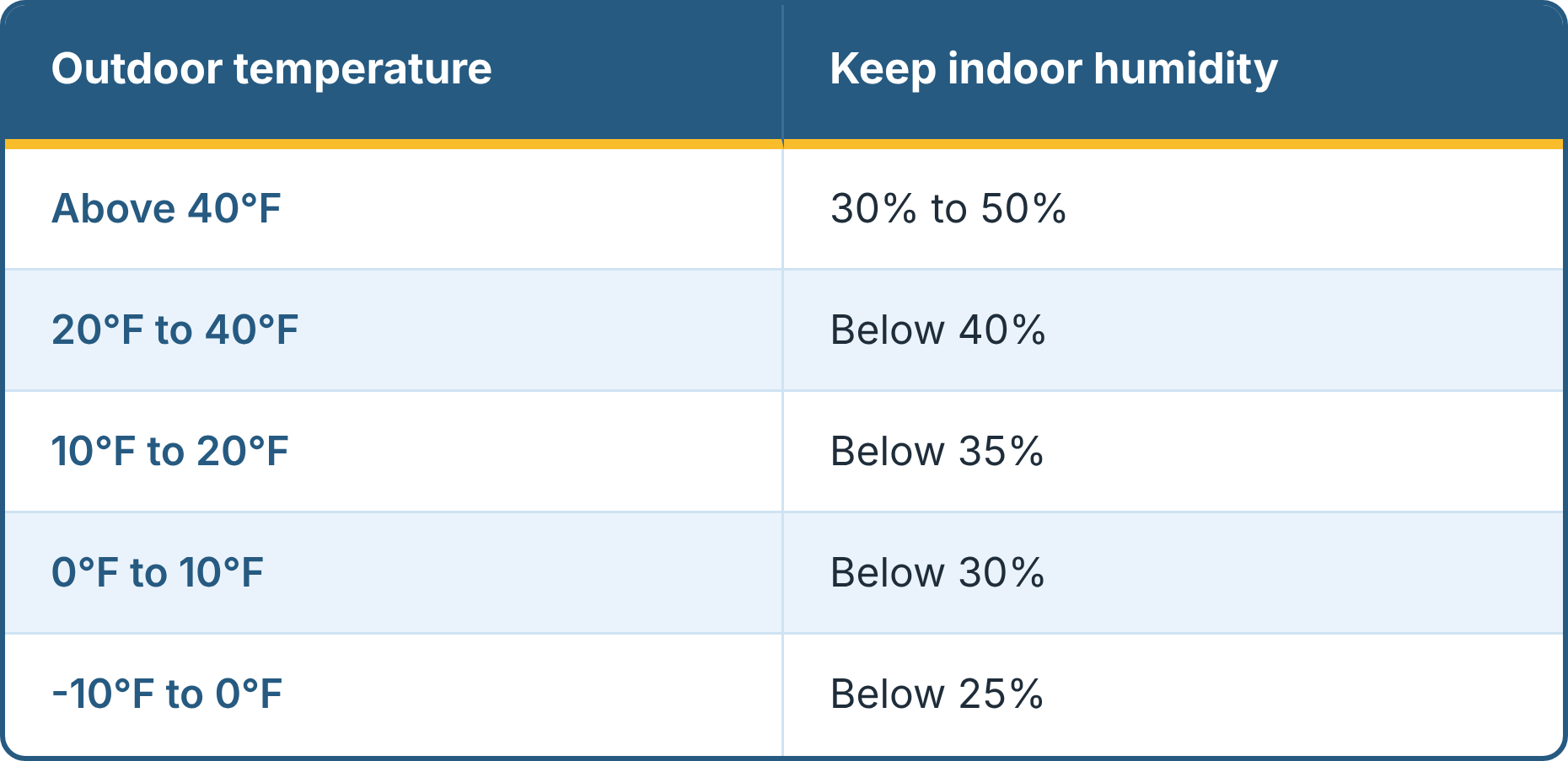
Is 30% humidity too low in winter? Not on a cold day. When temperatures fall into the single digits, drop humidity below 30% to keep your windows and walls dry.
What should you set your humidifier to? Start between 30% and 40%. Turn it down when a cold snap moves in or condensation appears on your windows. Winter weather in central Maryland and southern Pennsylvania can change quickly, so keep an eye on the forecast.
Some whole-home humidifiers adjust humidity on their own based on the outdoor temperature.
How to Check the Humidity in Your Home
The humidity in your house in winter can change from day to day. A humidity gauge (or hygrometer) shows you the levels. They’re available at most hardware stores. Once you have one, here’s how to get an accurate reading:
- Place it in a central room.
- Keep it away from vents, windows, doors, direct sun, and your humidifier.
- Check it at different times of day and after the weather changes.
- Check damp rooms, like bathrooms, separately.
Similar rules apply to thermostat placement. Once you know your numbers, you’ll know whether your home is near the ideal indoor humidity in winter or needs a little more help getting there.
How to Bring Your Home Back Into Balance
If Your Home Is Too Dry
- Seal drafts around windows and doors
- Run a room humidifier where the air feels driest
- Install a whole-home humidifier
Room humidifiers can work well for individual rooms, but they need frequent refilling and regular cleaning. A whole-home humidifier works with your heating system to add moisture throughout your home. Learn more about our indoor air quality services.
If Your Home Is Too Damp
- Run bathroom and kitchen exhaust fans
- Lower your humidifier setting as temperatures fall
- Consider whole-home ventilation
Condensation on cold surfaces could be a sign of inadequate ventilation. Tightly built homes can trap moisture inside. An AprilAire ventilation system replaces stale indoor air with fresh, filtered outdoor air.
Find the Right Balance With Holtzople
You shouldn’t have to spend the winter reaching for lotion or wiping down windows. For more than two decades, our family-owned team has helped homeowners across Frederick, MD, and southern Pennsylvania stay comfortable through every season.
To determine what the humidity should be in your house in winter, our certified technicians can help. Request an appointment today before the cold takes hold. And if your heating system hasn’t had its fall tune-up yet, ask about it when you call.
Whether you require installation, repair, or maintenance, our technicians will assist you with top-quality service at any time of the day or night. Take comfort in knowing your indoor air quality is the best it can be with MOE heating & cooling services Ontario's solution for heating, air conditioning, and ventilation that’s cooler than the rest.
Contact us to schedule a visit. Our qualified team of technicians, are always ready to help you and guide you for heating and cooling issues. Weather you want to replace an old furnace or install a brand new air conditioner, we are here to help you. Our main office is at Kitchener but we can service most of Ontario's cities
Source link
