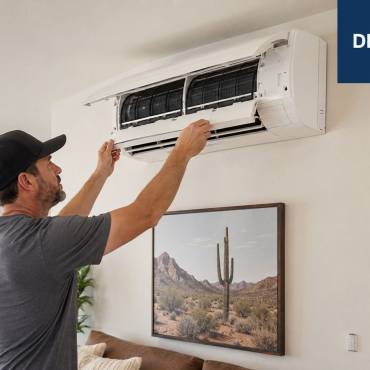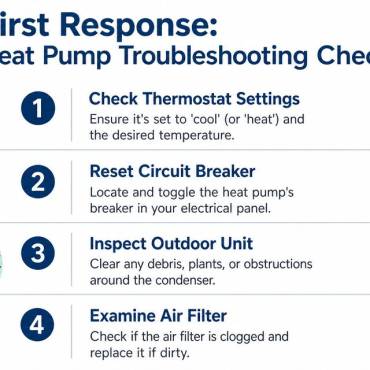
A Mesa homeowner usually starts looking up when to replace an AC unit at the worst time. The house won’t cool down, the system is running all afternoon, and the next repair estimate lands right in the middle of an Arizona heat wave.
The practical answer isn’t just whether the unit can be fixed. It’s whether fixing it still makes sense for this house, this system, and this climate.
Deciding Between AC Repair and Replacement in Mesa
In Mesa and across the East Valley, this decision usually shows up in July or August. The AC is limping along, a bedroom stays warm at night, and the system that “worked fine last year” now can’t keep up with the thermostat.
That’s when the actual question changes from can it be repaired to should it be repaired.
For older systems, age matters more in Arizona than it does in milder places. If an AC unit is 10 to 15+ years old, especially in Mesa’s heat and dust, it’s often near the end of its useful life. Older units often last only 10 to 12 years, while modern units typically last 15 to 20 years, according to this Mesa-focused repair or replace guide.
A good decision usually comes down to four things:
- System age: Older equipment may still run, but it often runs poorly.
- Repair size: A small electrical fix is different from a compressor or coil issue.
- Performance in real heat: If the house never gets comfortable in late afternoon, that matters.
- Future utility bills: A repair can restore operation without restoring efficiency.
For a deeper side-by-side look at the decision, this breakdown of AC repair vs replacement is a useful starting point.
There’s a similar logic in other parts of the house too. A roof, for example, can often be patched, but repeated patching on an aging system doesn’t always save money long term. That’s why Superior Home Improvement’s roofing advice is a helpful comparison. The same principle applies to HVAC. A repair can be technically possible and still be the wrong investment.
Practical rule: In Arizona, the best repair decision is the one that gets through more than the next hot week. It should make sense for the next few seasons.
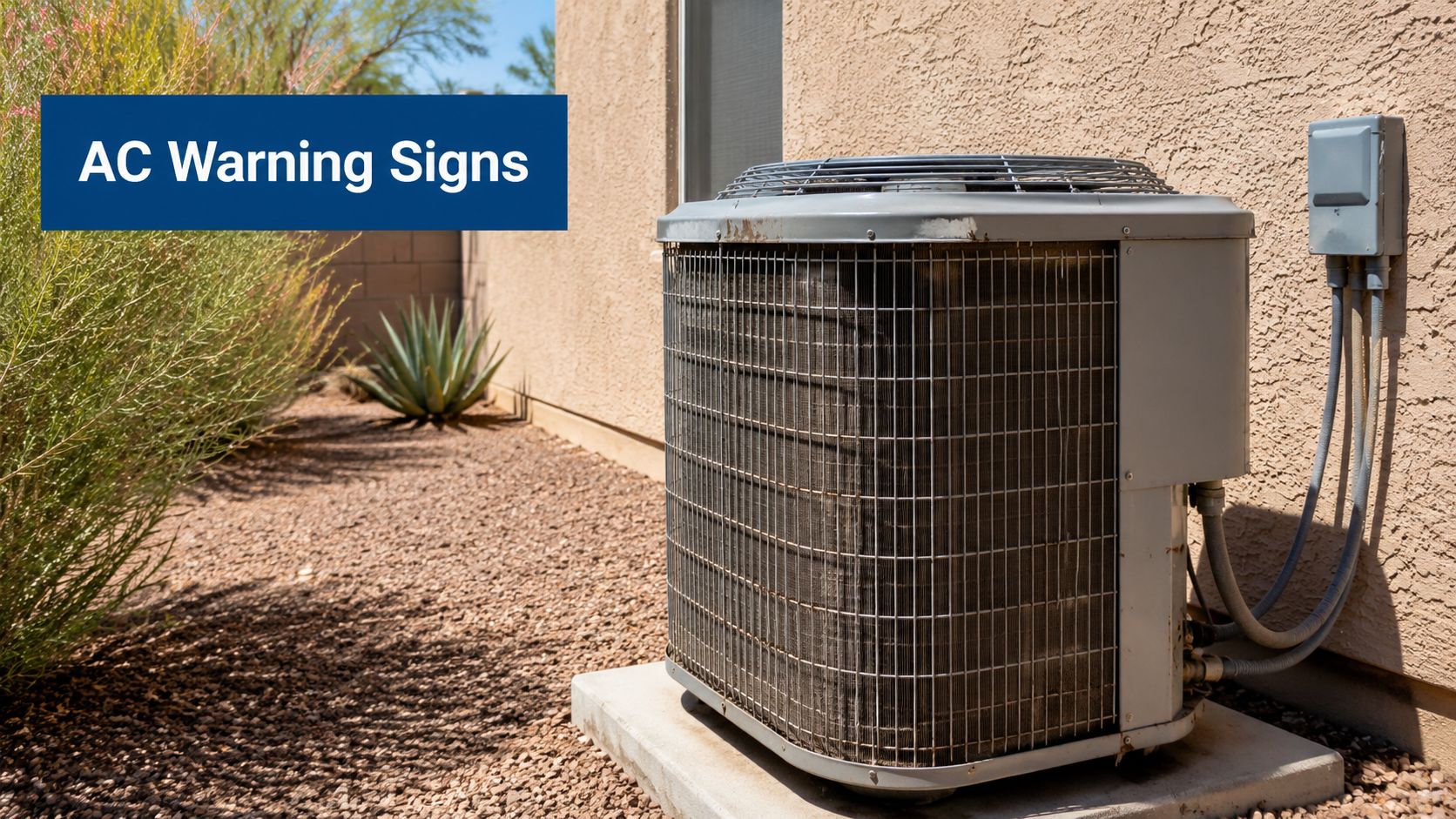
5 Warning Signs Your AC Unit Is Failing
Some failing systems are obvious. Others still run, but they’re telling on themselves every day through noise, uneven cooling, or a power bill that suddenly doesn’t make sense.
It runs constantly and still doesn’t cool well
In Mesa, this is one of the clearest warning signs. The thermostat says one thing, but the living room feels another way. The unit may run for long stretches in the afternoon and never really catch up.
That usually points to a system that has lost capacity, airflow, or efficiency. Sometimes the issue is repairable. Sometimes it’s a sign the equipment is worn down.
The utility bill jumps for no clear reason
A summer bill will always be higher in the Valley. What matters is the unexplained spike. If the home’s usage habits haven’t changed and the bill still rises sharply, the system may be working much harder to deliver less cooling.
That’s a known replacement signal in this market. Drastic, unexplained spikes in utility bills during the summer months in Phoenix and Mesa, separate from normal seasonal increases, are a primary indicator of an inefficient HVAC system in need of attention, according to this local replacement timing guide.
Repairs keep stacking up
One isolated repair doesn’t automatically mean replacement. But repeated calls for different parts on the same aging system usually mean the unit is wearing out as a whole, not just in one spot.
A common pattern looks like this:
- First visit: Capacitor or contactor issue.
- Next visit: Fan motor trouble.
- Later: Refrigerant, compressor, or coil concerns.
That pattern matters more than any one invoice.
Temperatures are uneven from room to room
One bedroom is cold. Another stays warm. The back of the house struggles all evening. In older East Valley homes, duct issues can contribute, but an aging AC system often plays a role too.
If the equipment can’t move enough cooled air or hold steady output, comfort starts breaking apart room by room.
New noises, smells, or short cycling show up
Grinding, squealing, rattling, or frequent on-off cycling aren’t normal signs of healthy equipment. They don’t always mean the system must be replaced immediately, but they do mean it needs proper diagnosis.
For a fuller checklist, this guide on signs your AC needs replacing helps homeowners sort normal wear from end-of-life behavior.
When an AC starts acting like an old truck, every noise doesn’t mean the engine is done. But repeated noises, poor performance, and rising operating cost usually mean the whole vehicle is getting expensive to keep on the road.
The Critical Role of Age and Refrigerant Type
Age is more than a number on a data plate. In Mesa, age tells a technician how many summers that equipment has already fought through, how much dust it has pulled through coils, and how much rooftop or side-yard heat the components have absorbed.
Why an old working unit can still be a liability
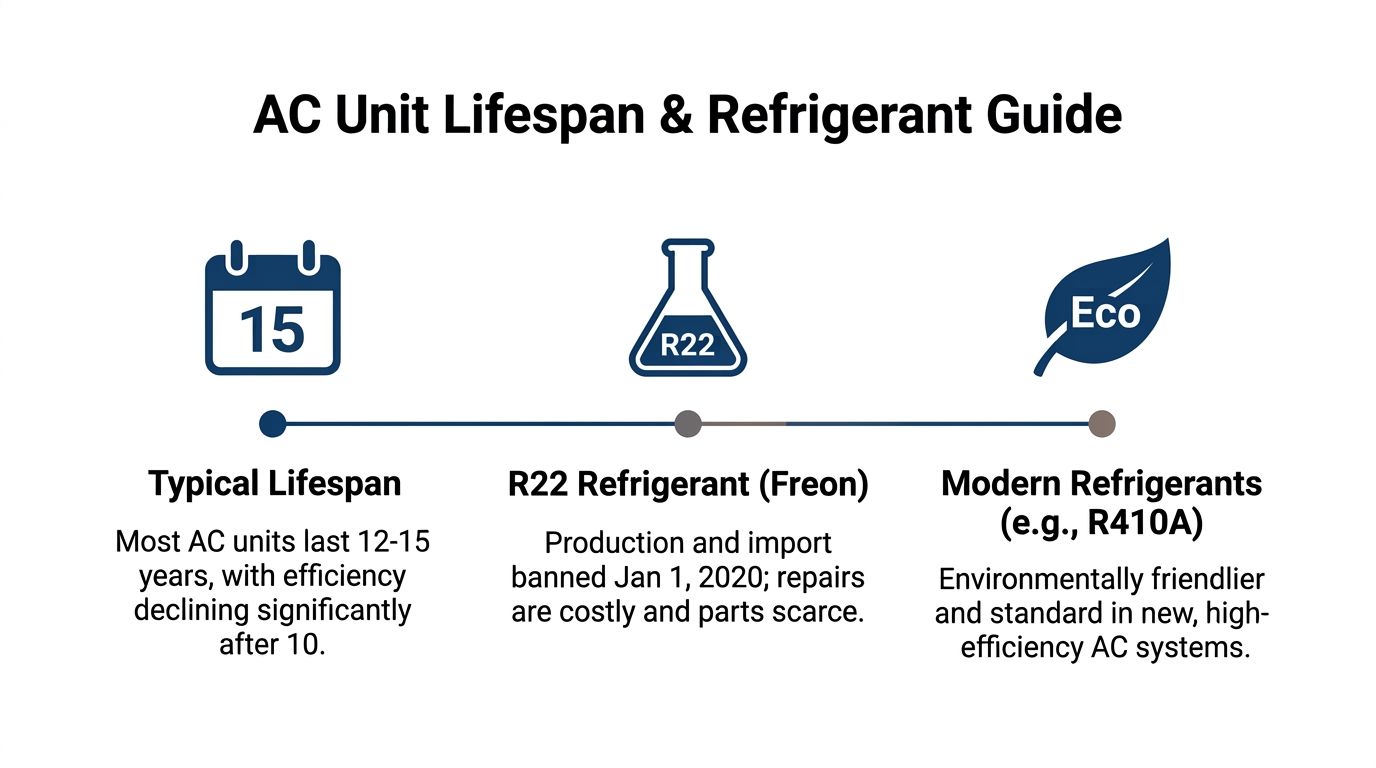
A system can still turn on and still be a poor bet. One source notes that the average lifespan of a central air conditioning unit is 10 to 15 years, with systems over 12 years old becoming significantly less efficient and more prone to frequent repairs, and units older than 15 years typically reaching the end of their functional life. It also notes that in demanding climates, where AC systems can run 14 to 20 hours daily during summer, lifespan may compress further, as explained in this HVAC lifespan discussion.
That’s Arizona in plain terms. The system may still run. It just may not be running economically or reliably.
Why R-22 changes the conversation
The refrigerant type is one of the fastest ways to tell whether an AC is old enough to be a risky investment. A major warning sign is the use of R-22 (Freon®) refrigerant, which is banned for new production and typically indicates the unit is at least 15 years old, making it increasingly expensive to maintain, according to this air conditioner lifespan guide.
For homeowners, that means a repair on an R-22 system isn’t just a repair. It’s a repair on obsolete equipment.
The Arizona version of this decision
A simple way to think about it is an older pickup with discontinued parts. If it needs a small fix, that can still make sense. If it needs major work and the parts are harder to find, the repair bill starts buying time instead of buying value.
Field note: When a system is old and uses outdated refrigerant, a major repair often restores operation for now, not confidence for the next several summers.
How to Calculate Repair vs Replace Costs in Arizona
National rules of thumb are useful, but they can mislead Mesa homeowners if they’re applied blindly. The desert market has different pressures, and replacement pricing in this area doesn’t always line up with the assumptions behind national formulas.
The two common rules homeowners hear
The first is the 50% rule. If repair costs reach 50% or more of a new system’s price, replacement is usually the better move, especially on older equipment, as outlined in this HVAC replacement guide.
The second is the $5,000 rule. Multiply the unit’s age by the repair cost. If that number goes over $5,000, replacement is usually recommended, according to this HVAC replacement article.
Those rules can help. They just aren’t the whole story in Arizona.
Why Mesa changes the math
The local problem is straightforward. National rules often assume systems in the $6,000 to $8,000 range, but Mesa replacement costs average $10,000 to $14,000, which can make the same repair look wasteful under one rule and reasonable under another, as explained in this Arizona-focused rule of 5000 analysis.
That’s why a homeowner shouldn’t let one formula make the decision alone.
For more context on service-side pricing and what a repair estimate usually needs to include, this Mesa homeowners’ guide to AC repair is worth reviewing.
Arizona repair versus replace example
| Unit Age | Repair Quote | Age x Repair Cost | Decision Guideline (Arizona-Adjusted) |
|---|---|---|---|
| 8 years | $500 | $4,000 | Usually repair if the issue is isolated and the system has otherwise performed well |
| 12 years | $500 | $6,000 | Borderline under the $5,000 rule. Check overall condition, bill history, and refrigerant type |
| 12 years | $4,000 | $48,000 | Strong replacement candidate under the $5,000 rule, but still compare that repair to the actual local replacement quote |
| 15 years | $3,500 | $52,500 | Usually replacement territory, especially if comfort and efficiency have been slipping |
| 16 years | $2,000 | $32,000 | Often replacement if the unit is older, inefficient, or facing repeat failures |
A better local framework
Instead of using one rule, stack the decision this way:
- Start with age: Older systems deserve more scrutiny.
- Compare repair size to actual local replacement price: Not a national average.
- Look at performance: If the system still struggles after repair, it wasn’t money well spent.
- Factor in the next likely repair: A big invoice on a worn system is rarely the last one.
A localized framework is better than a slogan. In Arizona, a system’s value isn’t just what it costs to fix today. It’s what it costs to live with through the next summer.
Looking Beyond the Price Tag Efficiency Rebates and Comfort
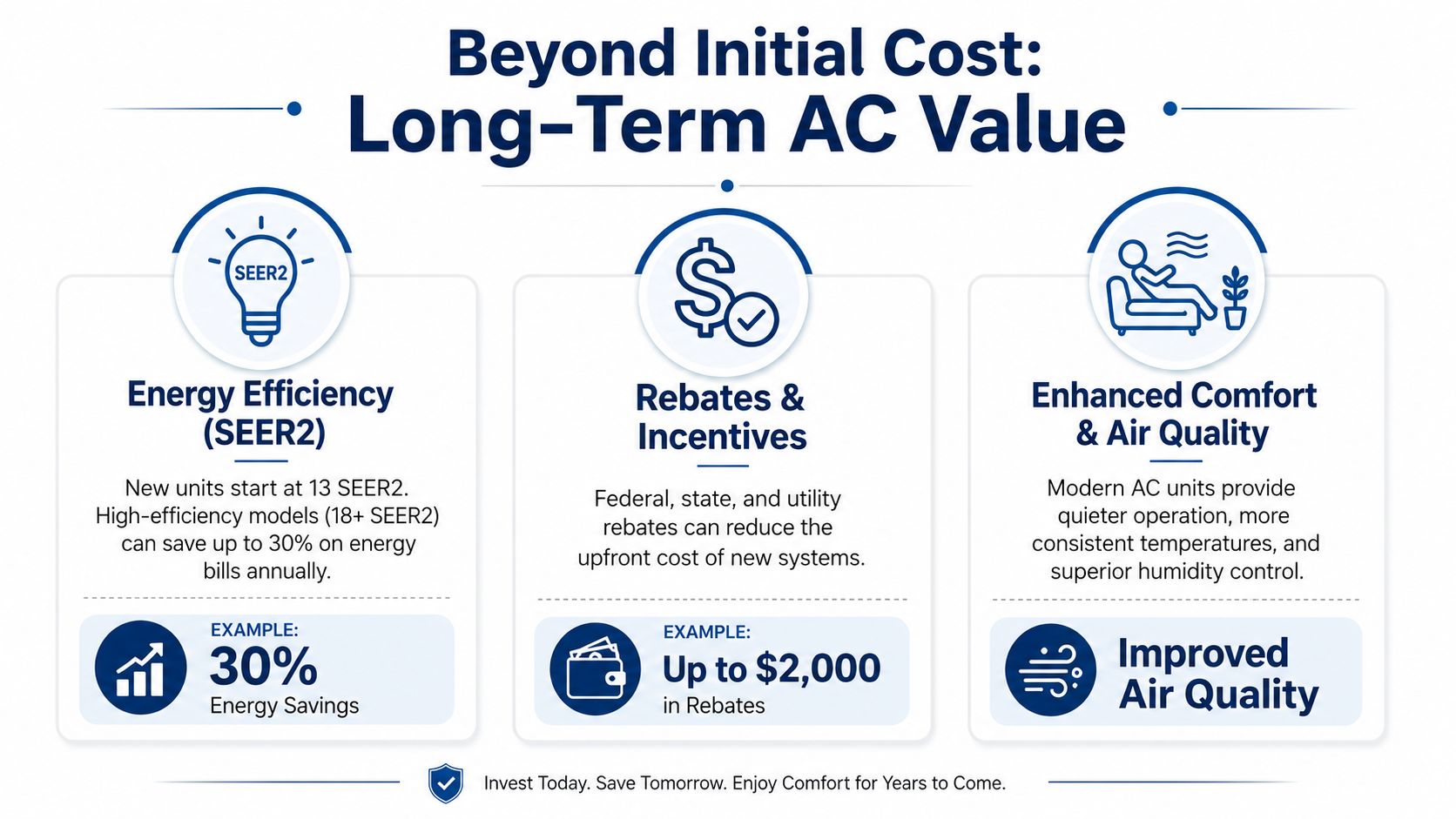
A replacement decision shouldn’t stop at the estimate in front of the homeowner. The critical comparison is old system plus repairs plus high summer bills versus a properly selected new system that cools the house better and uses less electricity doing it.
Efficiency matters more in Arizona
In the East Valley, AC isn’t a luxury appliance. It’s one of the biggest operating systems in the house. That’s why efficiency changes matter. High-efficiency ENERGY STAR-rated units can reduce heating and cooling costs by up to 20%, according to this air conditioning replacement overview.
That doesn’t mean every homeowner needs the highest-end equipment available. It does mean an aging, inefficient unit can, over time, cost more than expected month after month.
Comfort problems a new system can solve
A replacement can also fix issues that repairs often don’t solve well:
- Hot spots upstairs or in back bedrooms: Often tied to aging equipment, weak airflow, or poor system matching.
- Long run times in late afternoon: Common with worn systems that have lost efficiency.
- Monsoon season stickiness: Better equipment control can improve comfort during humid stretches.
- Excess dust concerns: Duct sealing, filtration, and system updates can work together better than patching one old component.
Shading and heat-gain reduction can help too. For homes getting hammered by afternoon sun, this guide to solar screen costs is a practical companion to HVAC planning because reducing solar load can support better overall cooling performance.
Rebates can change the timing
For some households, available incentives help move replacement from “later” to “now.” Local utility offers can make a meaningful difference, and this guide to SRP rebates for Mesa homeowners can help sort through what may apply.
There’s also the service side of the decision. A system selected for the house, duct layout, and usage pattern usually performs better than one chosen only by sticker price. That’s where a detailed AC replacement and installation in Mesa process matters.
A cheap repair can be expensive if it leaves the home uncomfortable and the bill high. A good replacement should improve both the meter and the living room.
Your Decision Checklist and How to Partner with a Pro
The best replacement decisions usually come from a short checklist, not from panic. In Mesa, that matters because emergency calls during peak summer leave less room for careful thinking.
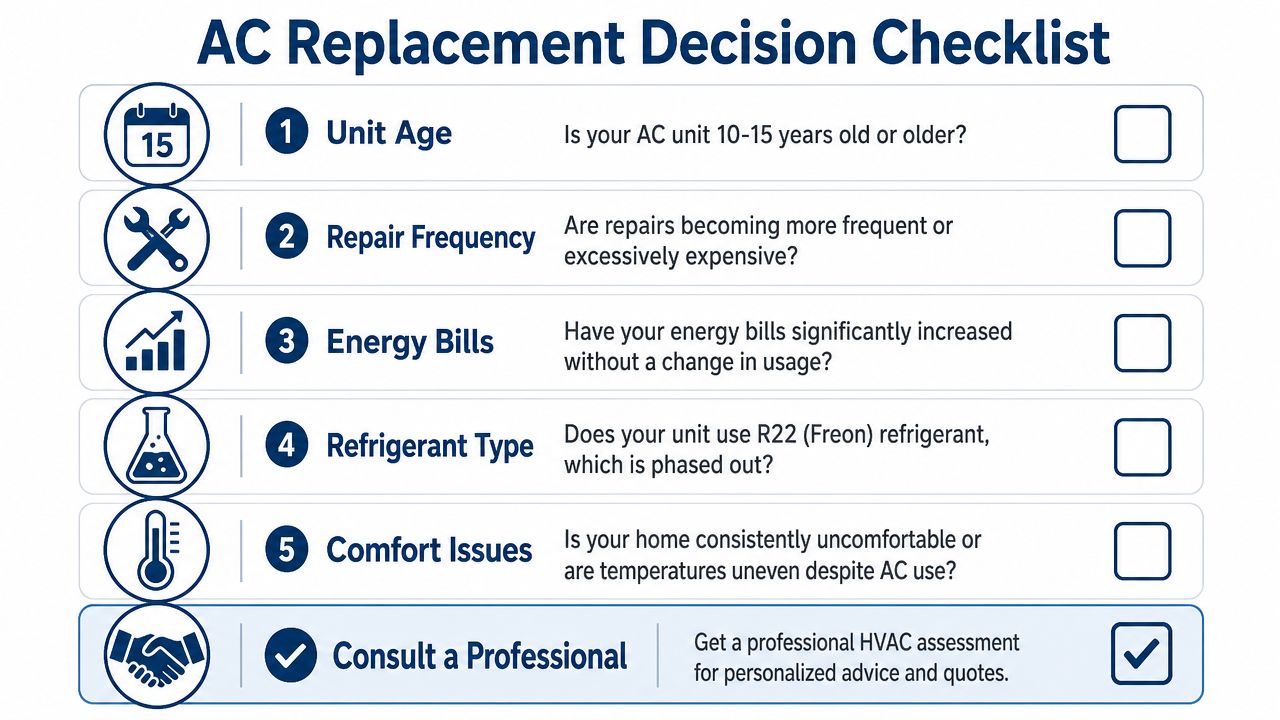
Use this checklist before approving major work
- Check the unit age: If the system is well into the older range, a large repair deserves a second look.
- Review repair history: One visit is one thing. A pattern of failures is another.
- Look at the summer bill trend: An unexplained jump can point to a unit that’s losing efficiency.
- Confirm the refrigerant type: Older refrigerant can make continued repair a poor value.
- Judge the home, not just the machine: If rooms are uneven and the house never feels right, the system may no longer fit the job.
Ask for real diagnostics, not just a verdict
This is one of the most overlooked parts of the process. Homeowners facing a $3,000 to $4,000 compressor quote rarely ask for amp-draw data, even though it can reveal a non-failing compressor. The same source notes that a compressor operating at 50% of max amp draw is healthy, while 80% indicates it is near failure, as discussed in this compressor diagnostic video.
That matters because “bad compressor” can become “replace the whole system” very quickly.
A trustworthy HVAC company should be able to explain what failed, what was tested, and why the recommendation makes sense.
Timing can help if the system is still hanging on
If the unit is still operating and the diagnosis doesn’t demand immediate shutdown, planning replacement outside peak emergency conditions can help a homeowner think more clearly. Fall and spring usually allow more breathing room for comparing options, reviewing system type, and discussing airflow or duct improvements.
For properties with other cooling equipment or mixed system needs, even adjacent trades can matter. Commercial or specialty cooling setups sometimes need coordinated electrical support, and resources like this 24/7 cooler repair electrician page can be useful in the right context.
A homeowner who wants a local second opinion should look for an HVAC contractor in Mesa that explains the diagnosis in plain language, checks system age and refrigerant, and doesn’t jump straight from one failed part to full replacement without evidence.
Replace the system when the repair no longer protects comfort, reliability, or operating cost. Repair it when the problem is isolated and the system still has solid years left.
Comfort Experts serves Mesa and the East Valley with practical HVAC help for homeowners trying to make a smart repair-versus-replace decision. If the AC is struggling, the bill is climbing, or a major repair quote doesn’t feel right, call 480-207-1239 or schedule service for a clear diagnosis and next-step recommendation.
Whether you require installation, repair, or maintenance, our technicians will assist you with top-quality service at any time of the day or night. Take comfort in knowing your indoor air quality is the best it can be with MOE heating & cooling services Ontario's solution for heating, air conditioning, and ventilation that’s cooler than the rest.
Contact us to schedule a visit. Our qualified team of technicians, are always ready to help you and guide you for heating and cooling issues. Weather you want to replace an old furnace or install a brand new air conditioner, we are here to help you. Our main office is at Kitchener but we can service most of Ontario's cities
Source link