What Does a Whole-House Generator Cost in Columbus?
For most Columbus homes, a professionally installed whole-house standby generator is a major home upgrade, not just a piece of equipment. The final cost depends most on the generator’s size, fuel source, automatic transfer switch, electrical work, gas-line distance, concrete pad, permits, and site conditions.
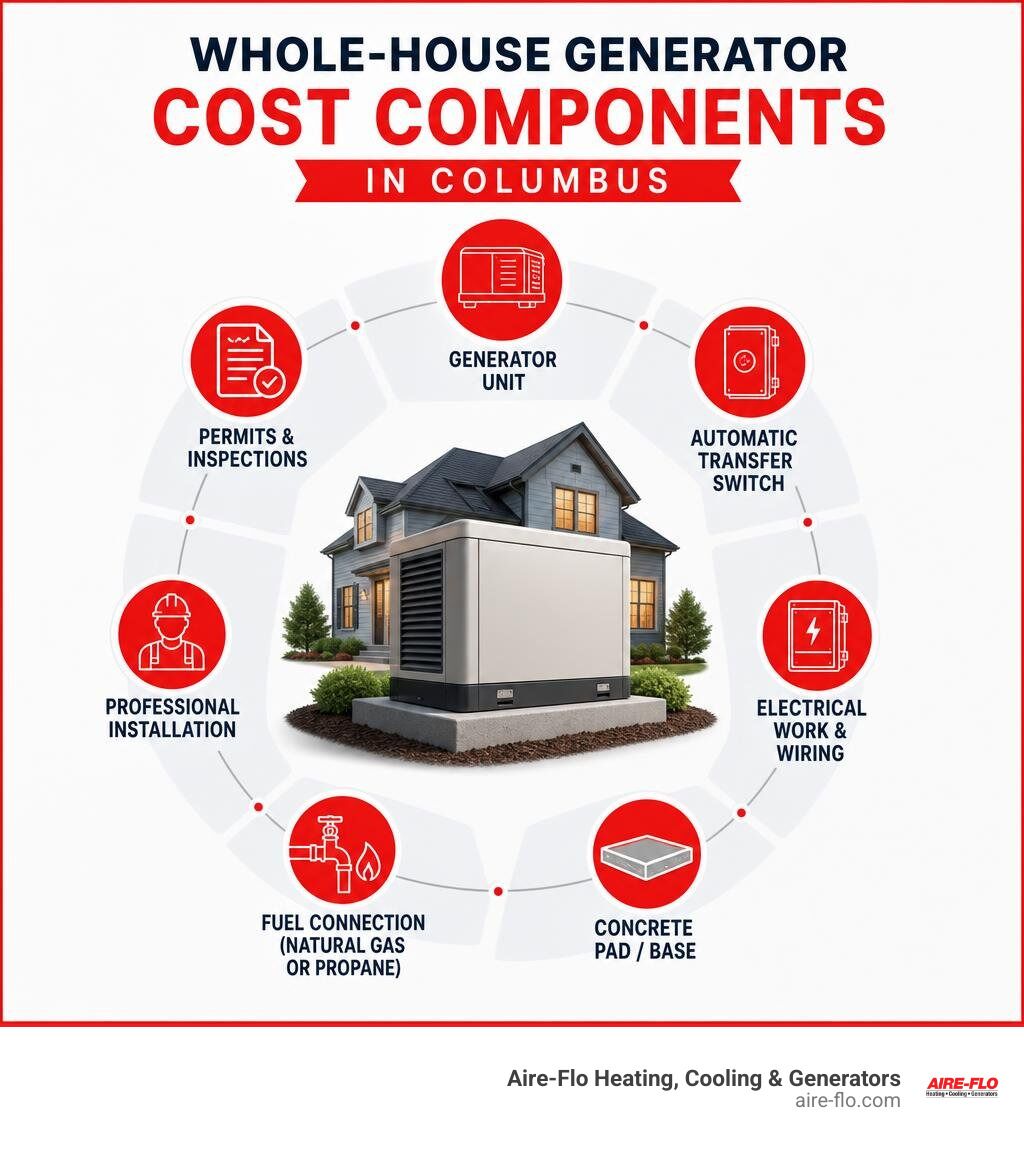
A practical starting point is to budget for a system that includes:
- A properly sized standby generator
- An automatic transfer switch for safe, automatic power changes
- Electrical panel connections and wiring
- A stable pad or base
- Natural gas or propane connections
- Local permits, inspections, and professional installation
Columbus installation costs often run below national averages because local labor costs are generally lower than in many large U.S. metros. Still, a long gas-line run, a propane tank, difficult access, or a larger home with electric heat or multiple AC systems can raise the total quickly. The best way to avoid overpaying is to start with a professional load calculation, then compare detailed quotes that show every included component.
At Aire-Flo Heating, Cooling & Generators, our team helps Central Ohio homeowners plan dependable comfort and backup-power systems. In this guide to whole house generator cost Columbus homeowners can expect, we break down the choices that most affect your budget and long-term reliability.
Average Whole-House Generator Cost Columbus Breakdown in 2026
When evaluating your overall investment, it helps to understand how expenses are divided among equipment manufacturing, professional trades, and local administrative requirements. Many homeowners wonder how much are whole house generators once everything is installed and running. Rather than a single fixed expense, a standby system consists of connected mechanical and electrical projects that must meet strict safety standards.
Equipment, Materials, and Permit Expenses
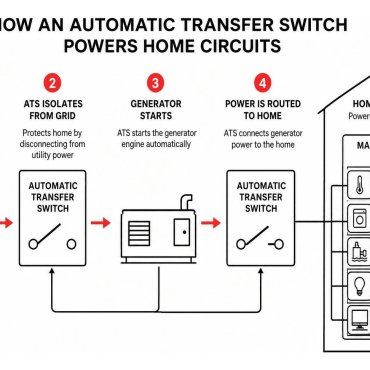
The core equipment package accounts for the largest share of your initial outlay. This includes the engine and alternator unit, outdoor composite mounting pad, cold-weather protection kit, and the automatic transfer switch (ATS). The ATS safely isolates your home from the utility grid before turning on generator power, which prevents dangerous backfeeding to utility workers.
Beyond the generator unit itself, specialized materials are required for safe operation. High-grade copper electrical wiring, flexible conduit, subpanels, heavy-duty gas piping, and shut-off valves all contribute to material expenses. For homeowners reviewing generator installation cost in Columbus OH 2026 pricing, local building and mechanical permits also represent a mandatory portion of the budget. Municipalities across Central Ohio require permit filings and safety inspections to verify that gas pressures, exhaust clearances, and electrical grounding meet standards established by organizations like the National Fire Protection Association and local building authorities.
Local Labor Rates and Installation Complexity
Installation labor typically represents roughly one-third of the total turnkey project expense. Standby generator installation is not a single-trade job. It demands coordination between licensed electricians and qualified mechanical piping specialists.
Labor expenses fluctuate based on the physical complexity of your property:
- Distance to utilities: When your electrical panel and gas meter sit on opposite sides of your home, running conduit and gas pipe through basements, crawlspaces, or underground trenches increases labor hours.
- Service panel upgrades: Older homes in mature neighborhoods may require service panel updates or dedicated subpanels before an automatic transfer switch can be wired safely.
- Site grading and pad preparation: Level ground simplifies base installation, while sloped yards require custom leveling, gravel base stabilization, or poured concrete work.
| Feature / Consideration | Portable Generator with Manual Switch | Whole-House Standby Generator System |
|---|---|---|
| Initial investment level | Moderate entry point | Higher initial investment |
| Starting mechanism | Manual pull or push-button start | Fully automatic transfer switch |
| Fuel delivery | Manual gasoline or propane tank fills | Continuous utility natural gas or large LP tank |
| Power capacity | Critical essential circuits only | Whole-home power, including heating and AC |
| Weather operation | Requires outdoor setup during storms | Permanently enclosed and weatherproof |
| Home value addition | Minimal direct appraisal impact | Measurable asset value addition |
System Sizing and Fuel Type Price Considerations
A properly matched generator balances reliability with operating efficiency. Sizing a system is not a matter of guessing by square footage. It requires calculating the continuous running watts and surge wattage demanded by heavy motor loads, such as your air conditioner, furnace blower, well pump, and refrigerator.
Sizing Impact on Whole-House Generator Cost Columbus
Generator capacity is measured in kilowatts (kW), and selecting the right size plays a significant role in equipment expense. Understanding how to size a home generator without overpaying helps you avoid excess capacity that burns more fuel than necessary.
Systems generally fall into distinct categories based on household demand:
- Essential circuits: Powers basic heating controls, refrigeration, lights, sump pump, and standard outlets during an outage.
- Standard whole-home: Supports complete household lighting, kitchen appliances, and central air conditioning or heat pump systems for typical mid-sized homes.
- High-capacity / large footprint: Designed for larger properties with multiple HVAC systems, outbuildings, electric vehicle chargers, or high-draw luxury appliances.
Our team also handles code-compliant generator installation for Columbus homes that need a correctly sized standby system connected to existing electrical and fuel infrastructure.
Fuel Options and Site Infrastructure Requirements
Your choice of fuel influences both upfront installation complexity and ongoing operating costs. Most suburban homes across Columbus utilize continuous natural gas lines, while rural properties often rely on dedicated liquid propane (LP) storage tanks.

When reviewing natural gas or propane generator: a guide for Dublin homes, keep these site infrastructure factors in mind:
- Natural gas advantages: Natural gas offers an uninterrupted fuel supply delivered straight from the utility line, eliminating fuel storage tanks and manual refills. However, if your existing gas meter is undersized for the added demand of a generator, the gas utility may need to upgrade the meter diaphragm.
- Propane storage requirements: For properties without natural gas infrastructure, liquid propane is a strong alternative with indefinite shelf life. This route requires leasing or purchasing an on-site tank, running underground fuel lines, and establishing automated delivery schedules with an LP supplier.
Project Timeline, Installation Steps, and Regional Comparison
Installing a standby generator involves several distinct phases that ensure your backup power system operates automatically and safely the moment utility grid power drops out. Knowing what to expect during a generator installation helps you plan ahead and coordinate each milestone smoothly.
Step-by-Step Installation Process in Central Ohio
The installation typically takes several scheduled visits to accommodate permit reviews and utility coordination:

- Comprehensive site assessment: Our technicians inspect your electrical service panel, measure distances to the gas meter or LP tank, calculate load requirements, and confirm local setback ordinances.
- Foundation and placement prep: A level composite mounting pad or poured concrete slab keeps the generator elevated above ground moisture, snow accumulation, and localized pooling.
- Mechanical and fuel hookups: Gas specialists tap into the primary gas line, install dedicated shut-off valves, and run pipe directly to the unit.
- Electrical integration: Licensed electricians mount the automatic transfer switch, wire generator circuits into the primary breaker box, and configure wireless monitoring systems.
- System commissioning and inspection: Technicians simulate a full utility power failure, verify voltage and frequency stability under load, and finalize sign-offs with local municipal building inspectors.
If an existing standby unit shows fault lights, fails an exercise cycle, or struggles under load, Aire-Flo Heating, Cooling & Generators provides generator repair for homeowners across Columbus and surrounding Central Ohio communities.
Columbus vs. National and Ohio Regional Averages
Central Ohio homeowners benefit from an advantageous regional pricing landscape. When evaluating why homeowners in Columbus OH should consider generator installation, regional labor indices reveal that Columbus installation costs trend noticeably below national averages. Lower general construction overhead and competitive local skilled labor rates keep turnkey expenses accessible.
Across Ohio, markets like Dayton and Toledo reflect similar overall labor rates, though regional differences arise based on municipal permitting fees, soil conditions for trenching, and utility provider requirements. In Columbus, widespread natural gas access across Franklin, Delaware, and surrounding counties allows the majority of installations to proceed without the added expense of auxiliary fuel storage tanks.
Long-Term Maintenance, Fuel Consumption, and Value
A home standby generator is an engineered machine with an internal combustion engine that requires regular care. Planning for routine maintenance helps the unit start reliably in sub-zero winter temperatures or during severe summer thunderstorms.
Operating Costs and Ongoing Service Plans
Operating expenses depend on the duration of outages and the fuel source used. Natural gas remains the most economical fuel source per hour of operation under typical electrical loads, whereas liquid propane costs slightly more per hour based on seasonal fuel delivery pricing.
To protect your equipment, an annual maintenance routine is essential:
- Fluid and filter changes: Engine oil and oil filters must be changed annually or after extended continuous runtime during an outage.
- Battery testing and replacement: Generator starting batteries require automated trickle charging and should be replaced every few years to prevent starting failures.
- Valve adjustments and spark plugs: Regular mechanical tuning maintains clean combustion and prevents carbon buildup on engine valves.
Homeowners can consult our keeping the lights on generators FAQ to learn more about routine service schedules.
Property Value and Avoided Storm Loss Return
A whole-house standby generator provides financial protection that goes well beyond convenience. Outages during severe Ohio winter storms can cause home heating systems to fail, leading to burst plumbing pipes and extensive water damage. Exploring how to stay powered through winter storms: generator installation benefits in Columbus OH illustrates how uninterrupted backup power preserves home structural integrity, prevents flooded basements from disabled sump pumps, and eliminates costly food spoilage and displaced hotel stays.
Furthermore, permanently installed standby power systems represent an attractive feature in the Central Ohio real estate market, frequently improving buyer interest and retaining a substantial portion of their installation value at resale.
Frequently Asked Questions About Columbus Generator Costs
What Is the Average Whole-House Generator Cost Columbus Homeowners Pay?
Turnkey standby generator projects in Columbus vary according to system capacity, fuel availability, and distance between electrical panels and gas meters. Small essential-circuit systems occupy the most economical tier, mid-range whole-home systems represent the average installation standard, and high-capacity liquid-cooled units for extensive properties occupy the upper investment tier.
Do I Need Local Permits for Generator Installation in Columbus?
Yes. Municipalities throughout Columbus and surrounding Central Ohio jurisdictions require both electrical and mechanical/gas permits before installation begins. Professional contractors handle permit applications and schedule required municipal inspections to confirm compliance with Ohio building and fire codes.
How Long Does a Standby Generator Typically Last?
With routine preventative maintenance, oil changes, and regular automated exercise cycles, a modern home standby generator has a long expected operating lifespan.
Conclusion
Investing in a whole-house standby generator provides peace of mind, protecting your home against severe weather, unexpected grid outages, and freezing winter temperatures. From proper kilowatt sizing to code-compliant gas connections and automatic transfer switch integration, every detail plays an essential role in your system’s long-term performance.
For over 75 years, Aire-Flo Heating, Cooling & Generators has provided trusted HVAC and power generation services across Columbus, Dublin, Upper Arlington, Hilliard, Westerville, and surrounding Central Ohio communities, backed by our 100% satisfaction guarantee. To explore backup power options tailored to your home’s layout, contact our professional generator installation specialists today for a customized load assessment and in-home consultation.
Whether you require installation, repair, or maintenance, our technicians will assist you with top-quality service at any time of the day or night. Take comfort in knowing your indoor air quality is the best it can be with MOE heating & cooling services Ontario's solution for heating, air conditioning, and ventilation that’s cooler than the rest.
Contact us to schedule a visit. Our qualified team of technicians, are always ready to help you and guide you for heating and cooling issues. Weather you want to replace an old furnace or install a brand new air conditioner, we are here to help you. Our main office is at Kitchener but we can service most of Ontario's cities
Source link