It’s a typical August afternoon in Tampa Bay. The outside temperature is pushing 95°F, the humidity feels even higher, and suddenly your air conditioner starts blowing warm air.
Before reaching for your toolbox, here are five reasons DIY AC repair often ends up costing homeowners more than they expected.
Diagnosing and repairing today’s air conditioning systems is far more complex than replacing a single part. In Florida, where air conditioners operate almost year-round, the combination of high humidity, coastal salt air, heavy rain, and frequent lightning storms can turn a seemingly simple repair into an expensive mistake.
While some basic maintenance tasks are perfectly safe for homeowners, DIY AC repair is often far more complicated than it appears. Today’s cooling systems combine electrical, mechanical, and refrigerant components that require specialized tools and training to diagnose correctly.
Before attempting DIY AC repair, it’s important to understand that the problem you see is often only a symptom. A system that won’t start, blows warm air, or freezes up may have several possible causes, making accurate diagnosis far more important than simply replacing parts.
Mistake #1: DIY AC Repair Often Starts with Replacing the Wrong Part
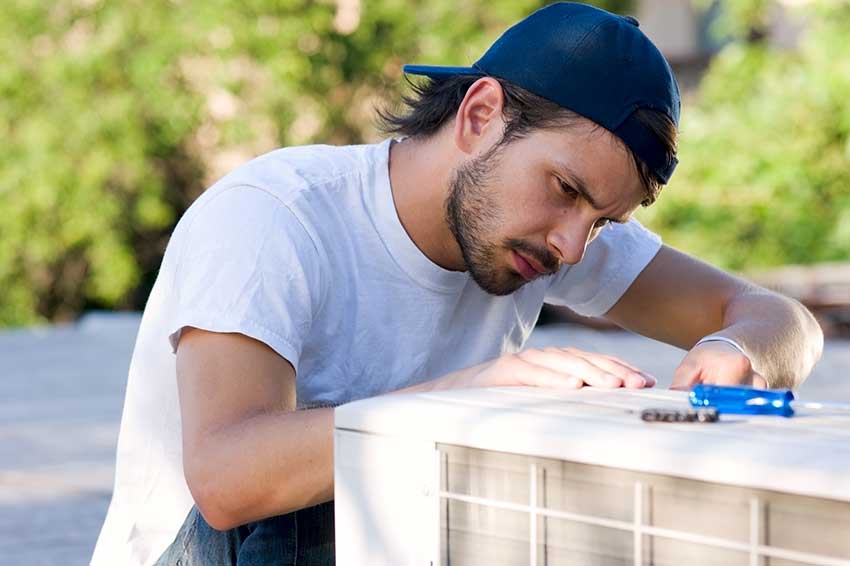
Imagine your outdoor unit suddenly won’t start. A quick online search points to a failed capacitor, so you order one online, install it, and confidently turn the system back on.
Nothing happens. Why?
Because the capacitor wasn’t the problem. The actual issue may have been:
Modern HVAC systems are designed so that several different problems can produce the same symptom.
Replacing parts by trial and error can quickly become more expensive than paying for an accurate diagnosis in the first place.
At Air Rescue, our technicians begin every repair with a complete system evaluation. Rather than guessing, they test electrical components, refrigerant pressures, airflow, thermostat communication, and overall system performance to identify the actual cause of the problem.
This is one of the biggest reasons DIY AC repair often becomes more expensive than homeowners expect.
High Voltage Hazards & Dangerous Electrical Components
Your central air conditioner operates on high-voltage electricity (240 volts). Components like start and run capacitors store dangerous electrical charges even when your breaker is turned off. A simple mistake while handling electrical wiring or testing contactors can cause severe electrical shock, personal injury, or blow out your unit’s main control board, turning a simple repair into a multi-thousand-dollar replacement.
💡 Did You Know?
A single HVAC capacitor can store up to 400 volts of electricity, even when your main circuit breaker is switched OFF.
Capacitors act like high-capacity batteries inside your AC unit. Touching the wrong terminal with a screwdriver without safely discharging it can instantly weld the tool to the metal or send a severe electrical shock through your body. That’s why Florida electrical codes require certified safety equipment for all capacitor testing.
Mistake #2. Adding Refrigerant Without Repairing the Leak
Another common DIY AC repair mistake is trying to recharge a home AC unit yourself. Your air conditioner operates as a sealed system. If refrigerant levels are low, there’s almost always a leak somewhere in the system.
If your AC is blowing warm air because of low refrigerant, adding more or attempting to fix a coil leak on your own breaks federal law.
Professional technicians don’t simply “add refrigerant.” They locate the source of the leak, make the necessary repair, verify proper system operation, and charge the system according to manufacturer specifications.
DIY AC Repair Mistake #3 – Underestimating High-Voltage Electrical Components
Many DIY AC repair videos make replacing electrical components look quick and easy, but they rarely explain the risks involved.
Florida Building Codes & Licensing Standards violation
Many DIY videos make replacing an electrical component look quick and harmless. Unfortunately, they rarely emphasize the risks involved.
Your central air conditioner operates on 240 volts, and some components, particularly capacitors, can store electrical energy even after power has been disconnected.
A simple wiring mistake or accidental contact with stored electrical charge can result in serious injury or damage to the HVAC system.
In Florida, air conditioning isn’t a luxury; it’s vital home infrastructure. Because of this, Florida Statute 489 requires major HVAC mechanical and electrical repairs to be performed by a state-licensed contractor. Unlicensed DIY repairs violate local building codes, which can cause significant issues when selling your home, passing a home inspection, or filing an insurance claim after storm damage.
Real Tampa Bay Case: The $15 DIY Fix That Cost $1,800
Professional UVAC technicians use specialized testing equipment to determine exactly which component has failed before replacing anything.
DIY AC Repair Mistake #4. Voiding Your Manufacturer Warranty
A new air conditioning system represents a significant investment, and most manufacturers provide valuable warranty protection for major components. However, many homeowners don’t realize that improper repairs can affect warranty coverage.
Manufacturers generally expect repairs to follow their installation and service requirements. Incorrect wiring, improper refrigerant charging, incompatible replacement parts, or unauthorized modifications may all create problems if a future warranty claim is submitted.
Attempting a repair to save a few hundred dollars today could potentially cost much more if a future warranty claim is denied because the equipment wasn’t serviced correctly.
Most major HVAC brands (such as Trane, Carrier, Daikin, and Mitsubishi) require proof that all repairs and routine maintenance are performed by certified, licensed professionals. If a manufacturer discovers a broken part was caused by an uncertified DIY repair, they can immediately void your multi-year warranty, leaving you responsible for all future replacement parts.
That’s one reason professional HVAC companies, such as Air Rescue, document repairs, verify system performance, and follow manufacturer specifications throughout the repair process.
The U.S. Department of Energy also recommends professional routine air conditioner maintenance to improve efficiency and reduce the likelihood of unexpected breakdowns.
Mistake #5. Florida’s Extreme Climate Demands Professional Diagnostics
Florida’s intense humidity, salt air, and sudden lightning power surges create complex HVAC problems.
A symptom like an air conditioner freezing up could stem from five different root causes: a clogged filter, low refrigerant, a bad blower motor, duct leakage, or a dirty evaporator coil. Guessing the problem usually leads to buying unnecessary replacement parts while leaving the real issue unresolved.
What Homeowners Can Safely Do Before Attempting DIY AC Repair
Not every AC problem requires professional service immediately. There are several simple maintenance tasks homeowners can safely perform that often improve system performance or help rule out common issues.
These include:
These simple checks may solve minor problems or provide helpful information when you call for service.
However, if your air conditioner continues blowing warm air, repeatedly trips the breaker, leaks refrigerant, freezes up, makes unusual noises, or won’t start at all, it’s time for a professional diagnosis and repair.
Leave It to the Certified Experts at Air Rescue!
While DIY AC repair may seem like the quickest way to restore cooling, guessing at the problem often leads to unnecessary parts, repeat breakdowns, and higher repair costs.
Don’t risk your safety, warranty, or peace of mind. At Air Rescue Air Conditioning, our technicians are fully EPA- and NATE-certified, background-checked, and backed by over 70 years of local Tampa Bay experience.
Best of all, with our famous promise: “We are there when we say, or you don’t pay!” you get fast, safe, and guaranteed service without the hassle.
Thinking About DIY AC Repair?
If replacing the filter and checking the thermostat don’t solve the problem, let Air Rescue identify the real cause before a small issue turns into an expensive repair. Since 1946, we’ve helped Tampa Bay homeowners restore comfort with professional diagnostics, honest recommendations, and reliable AC repairs.
Call Air Rescue 24/7 at (813) 358-3431 or schedule your appointment online today! (Florida License #CMC1251304)
Whether you require installation, repair, or maintenance, our technicians will assist you with top-quality service at any time of the day or night. Take comfort in knowing your indoor air quality is the best it can be with MOE heating & cooling services Ontario's solution for heating, air conditioning, and ventilation that’s cooler than the rest.
Contact us to schedule a visit. Our qualified team of technicians, are always ready to help you and guide you for heating and cooling issues. Weather you want to replace an old furnace or install a brand new air conditioner, we are here to help you. Our main office is at Kitchener but we can service most of Ontario's cities
Source link