
Summer in Huntsville can place a serious demand on your home’s air conditioning system. High outdoor temperatures, humidity, long stretches of direct sunlight, and nearly continuous cooling cycles can push even a dependable AC unit closer to its limits.
It is normal for an air conditioner to run longer during the hottest days of the year. However, your system may need professional attention if it runs constantly without reaching the thermostat setting, produces weak airflow, leaves certain rooms uncomfortable, or causes a sudden increase in your electricity bill.
In many cases, the extreme heat does not create the AC problem. Instead, it exposes an existing issue that was less noticeable during milder weather. Dirty filters, blocked coils, low refrigerant, leaking ductwork, worn electrical components, poor insulation, and aging equipment can all reduce cooling performance when your home needs it most.
Understanding why your AC struggles during Huntsville’s hottest months can help you recognize when routine maintenance is enough and when it is time to schedule professional air conditioning repair with One Source Heating, Cooling, Plumbing & Electrical.
Is It Normal for an AC to Run Longer During Extreme Heat?
An air conditioner removes heat from inside your home and releases it outdoors. As the outdoor temperature rises, the system must work harder and run longer to maintain a comfortable indoor temperature.
Long cooling cycles are not necessarily a sign that something is wrong. A properly sized and maintained AC may operate for extended periods during a hot Huntsville afternoon. Longer, steady cycles can help maintain more consistent temperatures and remove moisture from the indoor air.
The concern begins when the system runs almost continuously but still cannot keep up. Common warning signs include:
- The indoor temperature remains several degrees above the thermostat setting.
- Airflow from the vents feels weak.
- Some rooms are much warmer than others.
- The system blows air that is not sufficiently cool.
- The AC repeatedly turns on and off.
- Ice develops on the refrigerant line or indoor coil.
- Energy costs rise sharply without a major change in household use.
These symptoms suggest that the system may be operating under more strain than hot weather alone should cause.
A Dirty Air Filter Can Restrict Cooling Performance
A dirty air filter is one of the most common reasons an AC struggles during hot weather. The system needs adequate airflow to pull warm air from the home, move it across the evaporator coil, and distribute cooled air through the ductwork.
As dust, pet hair, pollen, and other debris accumulate on the filter, airflow becomes restricted. The blower must work harder, less cooled air reaches the rooms, and the air conditioner may run longer without producing the expected comfort.
Restricted airflow can also cause the evaporator coil to become too cold and freeze. Once ice forms on the coil, heat transfer becomes less effective, and the system’s cooling capacity can drop significantly.
ENERGY STAR recommends checking HVAC filters monthly during heavy-use seasons and replacing them when they appear dirty. At a minimum, filters should generally be changed every three months, although homes with pets, allergies, construction dust, or frequent system use may need more frequent replacement. Review ENERGY STAR’s heating and cooling guidance for additional energy-efficiency recommendations.
Check your filter before assuming that the system needs a major repair. Be sure to use the correct filter size and a filtration level compatible with your equipment. A filter that is too restrictive can also reduce airflow, even when it is new.
Dirty Outdoor Coils Make It Harder to Release Heat
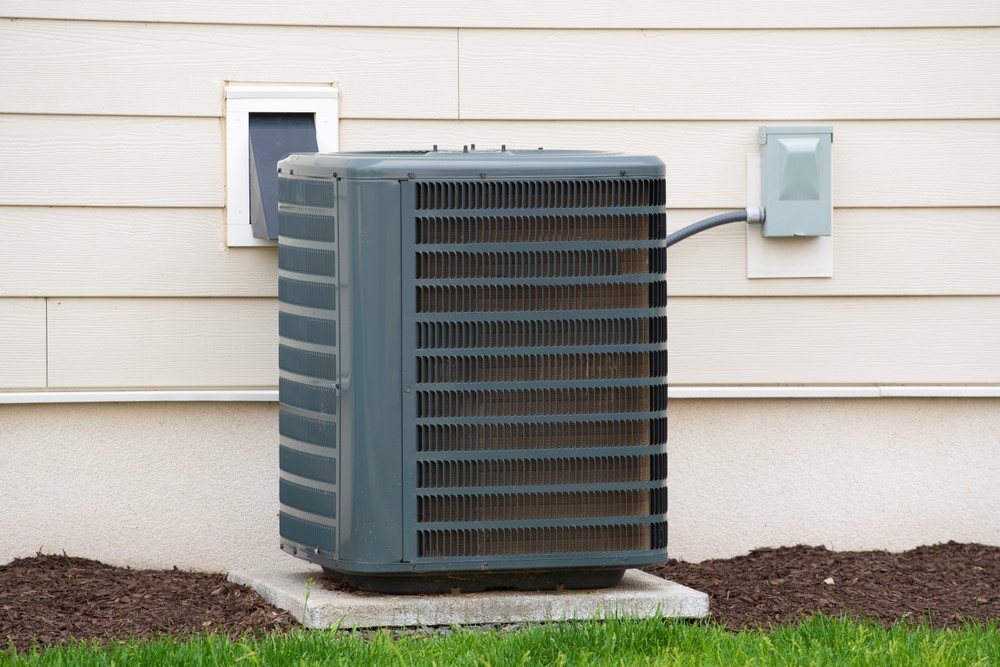
Your outdoor AC unit contains a condenser coil that releases the heat collected from inside the house. To work effectively, the unit needs unobstructed airflow around the coil.
Grass clippings, leaves, weeds, dirt, cottonwood, and other outdoor debris can collect around the condenser. When airflow is blocked or the coil becomes coated with buildup, the system has difficulty releasing heat. The AC may continue running while producing less cooling and using more energy.
Keep shrubs, stored items, and other obstructions away from the outdoor equipment. Visible debris around the unit can be removed carefully, but avoid opening equipment panels or aggressively spraying the coil. The fins are delicate and can be bent easily.
Professional air conditioning maintenance includes inspecting and cleaning important system components, checking the refrigerant charge, evaluating electrical connections, clearing condensate drainage issues, and testing overall system performance. One Source notes that preventive service is designed to identify developing problems before they cause a disruption during severe weather.
Low Refrigerant Can Reduce Cooling Capacity
Refrigerant is the substance that allows your AC to absorb heat indoors and carry it outside. It circulates within a closed system and should not need to be routinely replenished.
When an AC system is low on refrigerant, there is usually a leak or another problem that requires diagnosis. The system may continue operating, but it cannot transfer heat as effectively.
Possible signs of a refrigerant problem include:
- The AC runs continuously without cooling the home.
- The air from the vents is warmer than expected.
- Ice appears on the refrigerant line or evaporator coil.
- The system makes hissing or bubbling sounds.
- Cooling costs increase.
- The home takes much longer to reach the thermostat setting.
Simply adding refrigerant without addressing the cause of the loss is not a complete repair. A trained HVAC technician should evaluate the system, locate the source of the problem when possible, and verify that the refrigerant charge meets the equipment manufacturer’s specifications.
Refrigerant work requires specialized tools and should not be attempted as a do-it-yourself repair.
A Frozen Evaporator Coil Can Make the AC Blow Warm Air
The evaporator coil is located inside the indoor portion of the HVAC system. Warm air passes over the coil so that heat can be absorbed and removed from the home.
If the coil becomes too cold, condensation on its surface can freeze. Ice blocks airflow and insulates the coil, preventing it from absorbing heat properly. The AC may run constantly while little or no cool air reaches the living space.
Frozen coils are commonly associated with restricted airflow, dirty filters, blower problems, dirty coils, low refrigerant, or blocked vents.
You may notice weak airflow, visible ice on the refrigerant tubing, warm air from the vents, or water around the indoor unit after the ice begins to melt.
Do not continue operating the cooling system while it is frozen. Turn off the cooling mode and contact an HVAC professional. Continuing to run the AC could increase strain on the compressor and lead to more extensive damage.
Huntsville Humidity Adds to Your AC’s Workload
An air conditioner does more than lower the temperature. It also helps remove moisture from the indoor air.
During humid North Alabama weather, the system must handle both sensible heat—the temperature you feel—and latent heat associated with indoor moisture. A home with excess humidity may feel warmer and less comfortable even when the thermostat displays a reasonable temperature.
High indoor humidity may be connected to an oversized AC, short cooling cycles, duct leakage, inadequate ventilation, an incorrect blower setting, or a system that is not operating properly.
Signs of excess humidity can include:
- A sticky or clammy feeling indoors
- Condensation on windows or vents
- Musty odors
- Difficulty maintaining comfort
- Visible moisture or biological growth
- The need to set the thermostat unusually low
Lowering the thermostat may provide temporary relief, but it does not address the reason the home feels humid. A professional HVAC evaluation can determine whether the issue involves equipment performance, airflow, ductwork, or indoor air quality.
Leaking Ductwork May Be Losing Cooled Air
Your AC may be producing cold air correctly, but that does not guarantee the air is reaching every room.
Cracked, disconnected, poorly sealed, or inadequately insulated ducts can allow conditioned air to escape into an attic, crawl space, garage, or wall cavity. The thermostat continues requesting cooling because the living area never reaches the desired temperature.
Duct leakage may also draw hot, dusty, or humid air into the system. This can reduce comfort, increase energy use, and contribute to indoor air quality concerns.
Possible signs of duct problems include uneven temperatures, weak airflow at certain vents, excessive dust, unusually high energy bills, and rooms that remain uncomfortable despite long AC cycles.
A professional inspection can help determine whether the problem originates with the cooling equipment, the air distribution system, or both. One Source offers HVAC and indoor air quality services designed to address comfort and airflow problems throughout the home. The company’s Huntsville-area location serves local homeowners from its Madison office.
Insufficient Attic Insulation Can Increase Heat Gain
Even a well-maintained air conditioner can struggle when heat enters the home faster than the system can remove it.
Attics can become extremely hot during sunny summer afternoons. When insulation is insufficient, compressed, damaged, or unevenly distributed, more of that heat transfers into the rooms below.
Poor air sealing can make the problem worse. Openings around attic access points, recessed lights, plumbing penetrations, duct connections, and electrical wiring can allow unwanted heat and humid air to enter the conditioned space.
Common signs of an insulation or air-sealing problem include:
- Upstairs rooms that remain hotter than downstairs rooms
- Large temperature differences between rooms
- An AC that runs long after the sun goes down
- Hot ceilings or walls
- High summer energy bills
- Rooms that become uncomfortable soon after the AC shuts off
One Source provides attic insulation services to help reduce heat transfer and improve temperature stability. The company notes that aging or compromised insulation may lose effectiveness and allow conditioned air to escape through the roof area.
Insulation will not correct a mechanical AC failure, but improving the home’s thermal envelope can reduce the overall cooling load placed on the equipment.
The Thermostat May Be Reading the Wrong Temperature
A thermostat problem can cause the AC to run longer than necessary or prevent the system from maintaining a consistent temperature.
The thermostat may be incorrectly programmed, poorly calibrated, exposed to direct sunlight, or affected by heat from a nearby lamp, appliance, television, or kitchen. If it senses a temperature that is warmer than the rest of the home, it may continue requesting cooling after other areas are already comfortable.
Check that the thermostat is set to “cool” and that the fan is set to “auto.” When the fan is set to “on,” the blower may operate continuously even when the compressor is not actively cooling.
Avoid setting the thermostat dramatically lower in an attempt to cool the house faster. An AC operates at essentially the same rate regardless of how low the temperature is set. A more aggressive setting simply asks the system to run longer.
If the thermostat is unresponsive, loses its settings, displays an inaccurate temperature, or causes irregular cooling cycles, it may need professional evaluation or replacement.
Electrical Components Can Fail Under Heavy Demand
An air conditioner relies on capacitors, contactors, relays, motors, wiring, and other electrical components to start and operate correctly.
During prolonged hot weather, the system may start more frequently and run for longer periods. Weak electrical components that performed adequately during spring may begin failing under the heavier summer workload.
A failing capacitor can prevent the compressor or fan motor from starting properly. A worn contactor may interrupt power to important components. Loose electrical connections can generate heat and contribute to intermittent performance or system shutdowns.
Possible signs of an electrical AC problem include:
- The outdoor unit hums but does not start.
- The system has difficulty starting.
- The AC shuts off unexpectedly.
- A breaker repeatedly trips.
- The outdoor fan stops running.
- The unit produces burning or electrical odors.
Do not continue resetting a breaker that repeatedly trips. Circuit breakers are safety devices, and repeated tripping may indicate an equipment or electrical problem that requires professional diagnosis.
The Air Conditioner May Be Improperly Sized
A cooling system must be sized according to the home’s actual cooling load. Square footage is important, but it is only one factor. Proper sizing also considers insulation, windows, ceiling height, orientation, ductwork, air leakage, household occupancy, and sun exposure.
An undersized air conditioner may work adequately during mild weather but run nearly nonstop during Huntsville’s hottest days. It simply may not have enough capacity to overcome the home’s heat gain.
An oversized AC can create a different set of comfort problems. It may cool the area around the thermostat too quickly and shut off before providing even cooling or adequate moisture removal. This short cycling can lead to temperature swings, humidity problems, and unnecessary equipment wear.
System sizing problems may also appear after a room addition, garage conversion, attic renovation, or other change that increases the home’s conditioned area.
A professional load calculation is the best way to determine the appropriate equipment capacity. Rules of thumb based only on square footage may result in poor performance and should not replace a detailed evaluation.
An Aging AC May No Longer Deliver Its Original Performance
Air conditioners gradually lose performance as motors, coils, compressors, and electrical components wear. An older system may still operate but require longer cycles to produce less cooling than it did in the past.
Age alone does not automatically mean that replacement is necessary. A properly maintained system may provide dependable service for many years. However, replacement may become more practical when the AC:
- Requires frequent or increasingly expensive repairs
- Cannot maintain a comfortable temperature
- Uses significantly more energy than before
- Has an extensively damaged coil or compressor
- Uses outdated refrigerant or difficult-to-source components
- Produces uneven cooling despite completed repairs
- Is improperly sized for the home
One Source provides air conditioning installation and replacement for homeowners whose existing equipment can no longer provide dependable or efficient cooling. The company emphasizes that proper system design and installation are important for achieving the intended capacity, comfort, and efficiency.
A technician can compare the condition of the current system, expected repair costs, equipment age, efficiency, warranty coverage, and long-term operating expenses before recommending repair or replacement.
What Huntsville Homeowners Can Check Before Calling for Service
Start by checking the thermostat settings and inspecting the air filter. Confirm that supply vents and return grilles are open and not blocked by furniture, rugs, curtains, or household items.
Look at the outdoor unit from a safe distance. Remove obvious leaves or debris from the surrounding area, but do not remove panels or touch internal electrical components.
Pay attention to what the system is doing. Is airflow weak throughout the house or only in certain rooms? Is the air cool but insufficient, or is it warm? Is the outdoor fan operating? Do you see ice, water, or unusual condensation around the indoor equipment?
These observations can help an HVAC technician narrow down the problem more efficiently.
Avoid continuing to run the system when it is frozen, repeatedly trips a breaker, emits a burning odor, or makes severe grinding or electrical noises.
How Preventive AC Maintenance Helps During Peak Summer
The best time to identify an AC problem is before the system must operate through prolonged extreme heat.
Professional maintenance can help uncover dirty coils, weak capacitors, loose electrical connections, drainage problems, airflow restrictions, incorrect refrigerant levels, thermostat issues, and other conditions that may reduce performance.
One Source’s maintenance program includes inspections, system adjustments, coil cleaning, refrigerant checks, condensate drain service, electrical testing, filter replacement, thermostat evaluation, and other performance checks.
Maintenance cannot guarantee that an older system will never break down, but it can reduce avoidable strain and give homeowners an opportunity to address developing concerns before peak cooling demand arrives.
When Should You Call for AC Repair in Huntsville?
Schedule professional service when the AC cannot reach the thermostat setting, runs constantly without improving comfort, blows warm air, produces weak airflow, freezes repeatedly, leaks water, or causes an unexpected increase in energy use.
You should also request prompt service when you notice burning odors, unusual electrical sounds, repeated breaker trips, or an outdoor unit that will not operate.
One Source’s AC repair technicians diagnose mechanical and electrical cooling problems, including clogged filters, refrigerant issues, failed components, and condensate drain obstructions. The company also offers 24-hour service for urgent HVAC problems.
Keep Your Huntsville Home Comfortable With One Source
An air conditioner may run longer during Huntsville’s hottest months, but it should still provide meaningful cooling and maintain a reasonably comfortable indoor environment.
When the system cannot keep up, the problem may involve a dirty filter, blocked condenser coil, frozen evaporator coil, low refrigerant, duct leakage, inadequate insulation, thermostat error, electrical failure, improper sizing, or aging equipment.
One Source Heating, Cooling, Plumbing & Electrical serves Huntsville, Madison, and surrounding North Alabama communities with AC repair, maintenance, installation, heating, plumbing, electrical, indoor air quality, and insulation services. The company’s Huntsville-area office is located in Madison and provides local HVAC, plumbing, and electrical support.
Contact One Source to schedule service before a small performance issue becomes a complete AC breakdown during the next stretch of hot weather.
Whether you require installation, repair, or maintenance, our technicians will assist you with top-quality service at any time of the day or night. Take comfort in knowing your indoor air quality is the best it can be with MOE heating & cooling services Ontario's solution for heating, air conditioning, and ventilation that’s cooler than the rest.
Contact us to schedule a visit. Our qualified team of technicians, are always ready to help you and guide you for heating and cooling issues. Weather you want to replace an old furnace or install a brand new air conditioner, we are here to help you. Our main office is at Kitchener but we can service most of Ontario's cities
Source link