A common mistake when servicing refrigeration equipment is stripping or damaging the threads on nuts, bolts or flared connections during reassembly. What begins as a relatively simple repair can quickly become a more complicated and time-consuming job.
Always hand-tighten the connection first. If you cannot engage the first few threads by hand, do not force it on with a wrench — remove it and find out why. Once the threads are damaged, the nut, bolt, or flare will most likely need to be replaced.
When reusing old nuts, bolts, or flare nuts, it is a good practice to always clean the threads before reassembling. Of course, when cleaning the threads on any flared connection, do not allow any debris to enter the system — this is simply trading one problem for another. Debris compacted on the threads is a common cause for not being able to hand-tighten any connection. Using a simple soft-bristle brush is generally the best method for cleaning these threads.
Another common cause of not being able to hand-tighten a connection is alignment. A misaligned connection could easily cause you to not be able to hand-tighten the connection. This could also cause damage to the threads if the connection is forced with wrenches. Again, if hand-tightening the first few threads is not working, disconnect the connection and make sure the threads are clean and properly aligned.
Also, do not overtighten the connection. Many manufacturers will recommend using a torque wrench and tightening to a specific foot-pound specification. When not using a torque wrench, many technicians use the “snug-plus-a-quarter-turn” rule. Tighten the bolt until it is fully seated and meets resistance (snug), then use the wrench to rotate it an additional one-quarter turn.
Avoiding Damage Leaks
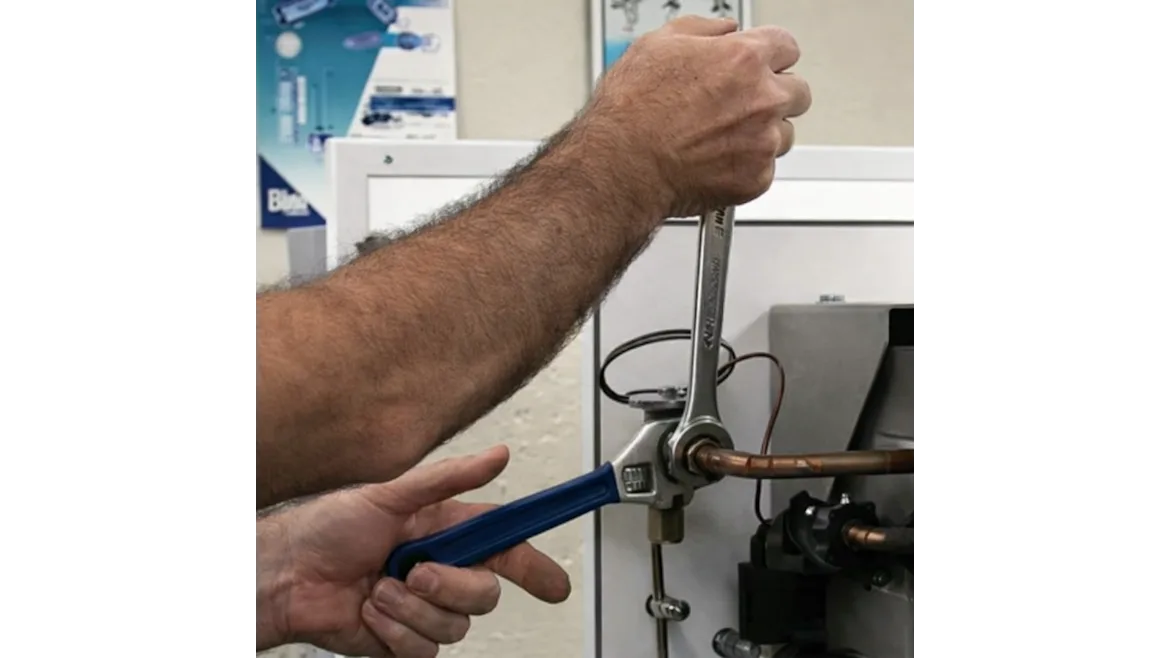
When tightening a flared connection, always double wrench so you do not damage the copper tubing. This is especially important when tightening the flared connections on a thermostatic expansion valve. Using only one wrench could easily snap the tubing connection close to the coil, making for a very difficult repair.
Occasionally, you will encounter a flared connection that is not properly seated and could cause a leak at the connection. Applying more force to the connection can resolve the issue, but generally it does not. In this case, it is best practice to disconnect and examine the flare cone and threads to see if there is any damage. It is also good practice to add a drop of oil to the cone of the flare and add a flare gasket to ensure a good seal at the cone.
Looking for quick answers on air conditioning, heating and refrigeration topics?
Try Ask ACHR NEWS, our new smart AI search tool.
Ask ACHR NEWS
Again, use caution when working with a flared connection. If damaged, you will most likely need to cut off the flare, redo the cone, and replace the flare nut or fitting. If cutting off the flare causes the pipe to be too short, you will need to extend the pipe or reposition the component, which could be an easy task or a complicated one, depending on the original configuration. This all can be quite frustrating, especially since it could have been avoided.
Reconnecting nuts, bolts, and flares is not difficult, but a little patience and experience go a long way to prevent an easy repair from becoming a complicated one.
Whether you require installation, repair, or maintenance, our technicians will assist you with top-quality service at any time of the day or night. Take comfort in knowing your indoor air quality is the best it can be with MOE heating & cooling services Ontario's solution for heating, air conditioning, and ventilation that’s cooler than the rest.
Contact us to schedule a visit. Our qualified team of technicians, are always ready to help you and guide you for heating and cooling issues. Weather you want to replace an old furnace or install a brand new air conditioner, we are here to help you. Our main office is at Kitchener but we can service most of Ontario's cities
Source link