
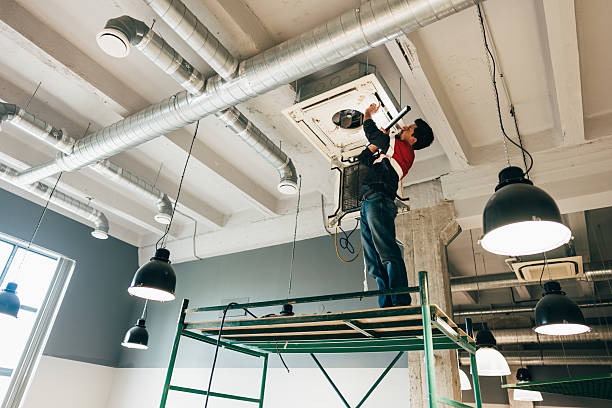
The Short Answer: Commercial AC maintenance is scheduled service that keeps your cooling system running before it fails, usually two to four visits a year depending on the building. For a business in Central Florida, it can be the difference between a planned service call and closing your doors on a July afternoon.
A commercial HVAC system runs harder than anything in a house. It cools more square footage, runs longer hours, and sits on a roof taking the full sun. For most business owners, it is the piece of HVAC equipment that daily business operations quietly depend on.
When it quits, the problem goes past comfort. You are sending customers home, moving product, or explaining to your staff why the building is 88 degrees. This guide covers what a maintenance visit includes, how often your building needs one, and what a good agreement looks like.
At a Glance
- Minimum frequency: two visits a year, more for kitchens, medical offices, and rooftop units
- Biggest cost of skipping it: downtime, which usually outruns the repair bill
- What protects you: a written agreement with priority scheduling and documented reports
- What it buys: lower energy costs, longer equipment life, and reliable cooling through a Florida summer
What Commercial AC Maintenance Actually Includes
A maintenance visit is more than a filter change and a handshake. Here is what a technician should be doing on a commercial building.
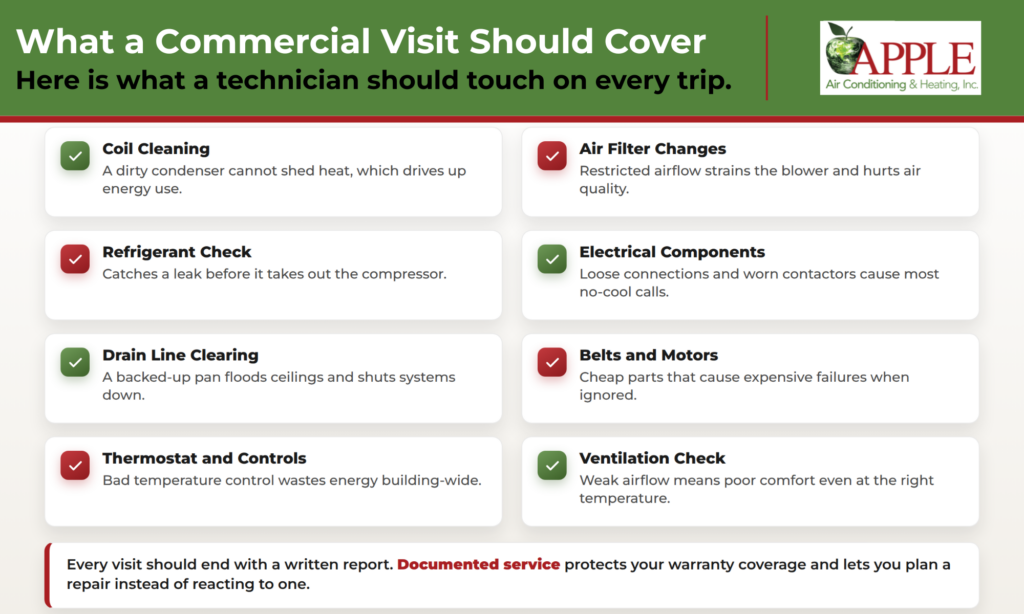
Coil cleaning, filter changes, a refrigerant leak check, electrical components, drain lines, belts and motors, temperature control, and ventilation should all get attention on every visit. Each one protects indoor air quality and holds down energy consumption. Good preventive maintenance also produces something you can read. Each visit should end with notes on what was checked, what was adjusted, and what is starting to wear, so you can plan a repair instead of reacting to one.
Our commercial HVAC services cover all makes and models, including rooftop units and variable refrigerant flow systems, plus commercial heating for the handful of cold weeks. Accurate diagnostics come first, because guessing on commercial equipment gets expensive fast.
What Skipping Maintenance Costs
The bill for deferred maintenance shows up in three places.
Emergency repair calls
A failed compressor on a summer Friday means emergency service at the worst possible time. Most of those failures started as something small that a routine maintenance visit would have caught, which is how minor wear turns into costly repairs. Our commercial AC repair team runs same-day calls, but the cheaper path is catching it early.
Higher energy costs
Dirty coils, low refrigerant, and bad controls all make the system work harder for the same cooling. Energy efficiency drops quietly, month after month, until the bill is the only thing telling you. ENERGY STAR points out that efficient building operation lowers operating costs and extends equipment life without any capital spending.
Lost business
This is the one nobody budgets for. A restaurant that closes at lunch, a retail floor nobody wants to walk, a medical office rescheduling patients. Downtime costs more than the repair almost every time, and customer satisfaction takes the hit alongside the revenue. Consistent cooling is part of the experience you are selling, even when nobody notices it.
How Often Does a Commercial Building Need Service?
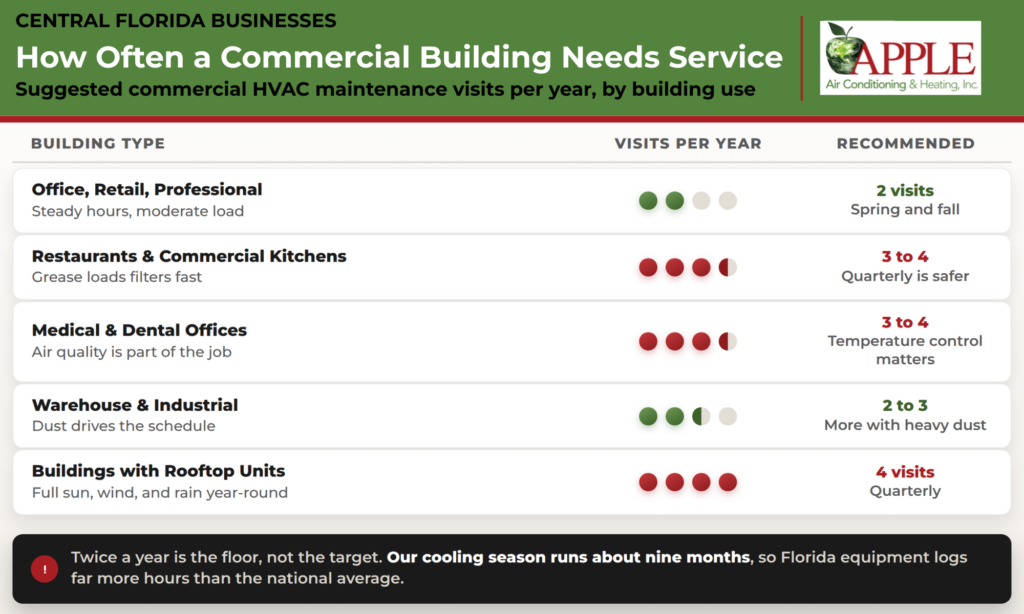
Twice a year is the floor for commercial HVAC maintenance. Offices and retail do fine on two visits a year. Restaurants, medical offices, and any building with rooftop units need three or four. Most Central Florida buildings do better with more since our cooling season runs about nine months. Your maintenance agreement should match how the building is actually used.
Commercial Systems Are Different From Residential Systems
The equipment works differently, and that changes what maintenance looks like.
- Rooftop units take direct sun, wind, and rain year-round. Panels, curbs, and drains all need eyes on them
- Multiple zones mean one weak unit can leave half a building uncomfortable while the thermostat reads fine
- Longer runtimes wear belts, motors, and contactors faster than residential systems ever see
- Building codes and tenant obligations can turn a repair into a legal obligation as well as a comfort one
A technician who works on houses all day is not automatically ready for a 20-ton rooftop unit. Ask any HVAC contractor how much commercial work they actually do and who on the crew handles it. Expert technicians on commercial equipment have a different skill set from residential systems, and the gap shows up on the invoice.
Refrigeration Counts Too
For a restaurant, grocery, or convenience store, the cooling that matters most is not the air. Walk-in coolers, freezers, and ice machines fail the same way air conditioning does, and they take inventory with them when they go.
Apple AC services walk-in coolers, freezers, and ice machines alongside commercial air conditioning, so one call covers the building. Folding refrigeration into the same maintenance schedule means the same technician knows your equipment.
What a Good Maintenance Agreement Looks Like
Not every agreement is worth signing. Compare on these points.
- Visit frequency written into the contract, not left vague
- Priority scheduling so you move to the front of the line during a heat wave
- Documented reports after each visit, which protects warranty coverage
- Discounted repair rates for work outside the scheduled visits
- Named equipment list so nothing gets skipped
Our guide to service agreements walks through the details, and commercial clients get priority service on our plans. Routine maintenance services booked in advance also cost less than the same work ordered under pressure. Our take on what drives HVAC pricing explains why quotes vary so much between companies.
Not every plan is the same, and your plan should be customized to fit your commercial property. A single-tenant office and a strip center with eight rooftop units need different schedules, and the agreement should say so in writing.
Signs Your System Needs Attention Now
Do not wait for the next scheduled visit if you see these warning signs.
Rooms that will not hold temperature
One zone running warm while others are fine usually points to a failing unit or a control problem, not the thermostat.
A jump in the power bill
Compare this month against the same month last year. A system losing efficiency shows up on the bill before it shows up as a breakdown.
New noises on the roof
Grinding, screeching, or hard banging at startup means a motor or bearing is going. That is a cheap fix now and a full repair service call later.
Ice on the lines
Ice usually means low refrigerant or an airflow problem. Running the system that way damages the compressor, and emergency repair costs far more than the leak check would have.
Humidity you can feel
If the space feels sticky while the thermostat reads fine, the system has lost capacity. In Florida that shows up as customer complaints first.
Sizing and Efficiency Are Part of Maintenance
Maintenance keeps a system at peak performance, but it cannot fix equipment that was wrong from the start. ENERGY STAR notes that at least a quarter of rooftop HVAC units are oversized, which raises energy costs and wears equipment out faster.
If your building has never had a load calculation, ask for one before the next replacement. Right-sized, efficient systems cost less to run every month and hold peak efficiency longer between visits.
Proper maintenance and correct sizing work together. One protects system performance day to day, the other decides how much performance there was to protect. When replacement time comes, we handle commercial installation and new construction work across Central Florida, and our guide for builders and developers covers what to plan for.
Keeping Your Doors Open
Commercial AC maintenance is the cheapest line item in your building budget compared to what it prevents. Regular maintenance catches small problems while they are still small, holds your energy costs down, and keeps reliable air moving for the people who pay your bills. Efficient cooling protects business operations in a way nobody notices until it stops.
Apple AC has kept Central Florida businesses running since 1997. We are family owned, our NATE-certified technicians live in the communities they serve, and you get a text with your technician’s name and photo before anyone walks into your building.
Ready to get on a schedule or need emergency service? Schedule service online, call us 24/7, request an estimate, or contact our team about a commercial maintenance plan.
Whether you require installation, repair, or maintenance, our technicians will assist you with top-quality service at any time of the day or night. Take comfort in knowing your indoor air quality is the best it can be with MOE heating & cooling services Ontario's solution for heating, air conditioning, and ventilation that’s cooler than the rest.
Contact us to schedule a visit. Our qualified team of technicians, are always ready to help you and guide you for heating and cooling issues. Weather you want to replace an old furnace or install a brand new air conditioner, we are here to help you. Our main office is at Kitchener but we can service most of Ontario's cities
Source link