
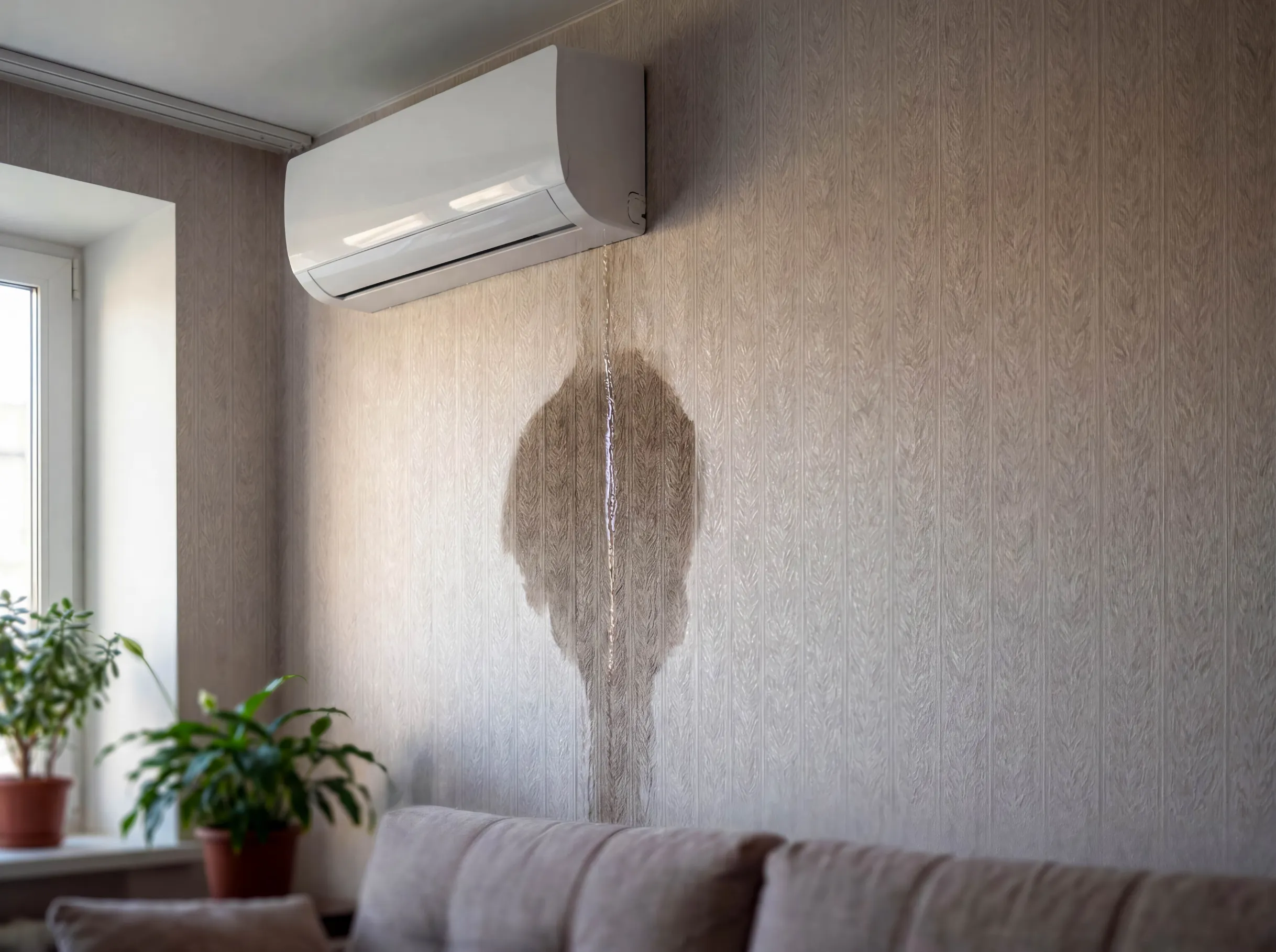
If you’re asking, “Why is my AC leaking water?”, the good news is that some causes are relatively minor, such as a clogged drain line or dirty air filter. However, an air conditioner dripping water can also point to larger issues like a frozen evaporator coil, low refrigerant, or a damaged drain pan.
Understanding the most common AC water leak causes can help you decide whether it’s a simple fix or time to call for professional air conditioning repair. Let’s take a look.
Why Does an AC Produce Water in the First Place?
If your AC is leaking water inside the house, you may be wondering where all that water is coming from. Air conditioners remove humidity from the air inside your home as part of the cooling process. As warm air passes over the cold indoor coil, moisture condenses in much the same way as water on a cold glass. From there, it drips into the drain pan to flow out through the drain line. The reason why you probably never knew this before is that we don’t ever see the water when all is working perfectly.
If your AC is suddenly leaking water, that’s a different story. Let’s explore reasons why this might be happening.
What Are the Most Common Reasons an AC Leaks Water?
One of the most common AC water leak causes is a clogged condensate drain line. Your drain line can easily fill with “gunk” because it’s the pipe that safely carries water created by your AC’s evaporator coil to the outside. It’s also possible that your drain line was incorrectly installed or has dislodged.
You could also be looking at a dirty air filter AC leak. When this happens, you end up with a frozen evaporator coil because a clogged filter restricts the flow of warm air to the coil. Without warm air, the moisture absorbed by the coil can cause it to freeze. Unfortunately, the ice that builds up can melt much faster than the condensate drain system can handle, and the end result is a leak. Frozen coils are also sometimes caused by a refrigerant leak. This happens due to a reduction in system pressure, which triggers a temperature drop.
Have you checked out your drain pan? It’s the metal or plastic tray that’s set just below your evaporator coil to catch condensation that runs off after the cooling process. If it’s broken, water could leak in the wrong direction instead.
What Does a Clogged Drain Line Look Like, and Can You Fix It?
As the connection between your AC and the outside world, the drain line sees a lot of activity. It also sees a lot of junk. It could be that your condensate drain line is clogged by dust, dirt, debris, rust, slime, algae, or mold. During Indiana’s humid summers, algae buildup is a special concern that homeowners need to know about.
A telltale sign that it’s a clogged drain line is a musty or odd odor. You may also notice that water isn’t dripping from your exterior pipe while your AC is running. If water is backed up in the drain line, checking around could get messy. That’s why you should consider calling an HVAC pro to do a flow test or use a camera to get an inside view.
A clogged drain line also creates backup moisture that can freeze your evaporator coils — and frozen coils are one of the same causes behind AC short cycling. If your system has been turning on and off more frequently alongside the leak, those two symptoms are likely connected. Here’s a full breakdown of why an AC keeps turning on and off and what to do about it.
Could a Dirty Air Filter Really Cause a Water Leak?
Yes, a dirty air filter is actually one of the most common reasons why we get calls about an air conditioner dripping water. The good news is that this is also the most preventable cause. As we touched on earlier, a dirty air filter AC leak is caused by air not being able to move through the filter. This causes your coils to freeze up, but that ice eventually melts and overflows into your drain pan. A quick filter check is the first thing we recommend you do when you notice your AC is leaking.
Should You Turn Your AC Off When You Notice a Leak?
Yes, turn off your AC as soon as you see a leak. Allowing your AC to run can increase water damage, accelerate mold risk, and stress your system to the point that it could break down. Your AC’s efficiency during a leak is also at rock bottom, making your monthly electric bills soar. However, you don’t have to panic. Just make sure you’re shutting it off the correct way.
The right way to turn off your AC when you notice a leak is using the “off” setting on the thermostat instead of just turning off the fan setting. In some systems, a float switch will shut off the unit automatically when the drain overflows. You may need to read your manufacturer’s manual to see if this is the case.
Which AC Leaks Can a Homeowner Fix, and Which Need a Pro?
Every homeowner needs an air conditioner water leak fix game plan. If you’re up for it, you can pretty easily handle tasks like checking and replacing the air filter, clearing visible debris from the drain line access point, and checking the drain pan for standing water.
Some more intense causes of your AC leaking water inside the house generally require professional help. This includes diagnosing refrigerant leaks based on low refrigerant AC symptoms, replacing an AC drain pan that’s cracked, cleaning coils, and using a drain line vacuum with the right attachments. Nipping the source of leaking water in the bud feels great once you’re able to figure out what’s going on with your AC with a little help.
When Is It Time to Call an HVAC Technician for a Leaking AC?
If your AC filter is clean, there’s no obvious blockage, and the leak isn’t stopping, it’s time to reach out for air conditioning repair in Indianapolis. When you contact HomeSense, your tech will listen to the symptoms you’ve noticed, assess your AC system, and carefully explain everything they find in simple terms. There’s never any pressure to take their advice or move forward with a repair.
It’s also worth paying attention to any new sounds your system has started making around the same time as the leak. A hissing noise in particular can point to a refrigerant leak, which is one of the causes of both water leaks and frozen coils. Our guide on what different air conditioner noises mean can help you figure out if you’re dealing with more than one issue at once.
The truth is that most AC leaks are fixable. Catching and fixing them early keeps the problem small instead of creating a wet mess. Request an HVAC tech by calling HomeSense at 317-643-7909 or scheduling your service appointment online.
Whether you require installation, repair, or maintenance, our technicians will assist you with top-quality service at any time of the day or night. Take comfort in knowing your indoor air quality is the best it can be with MOE heating & cooling services Ontario's solution for heating, air conditioning, and ventilation that’s cooler than the rest.
Contact us to schedule a visit. Our qualified team of technicians, are always ready to help you and guide you for heating and cooling issues. Weather you want to replace an old furnace or install a brand new air conditioner, we are here to help you. Our main office is at Kitchener but we can service most of Ontario's cities
Source link